


What’s the buzz?
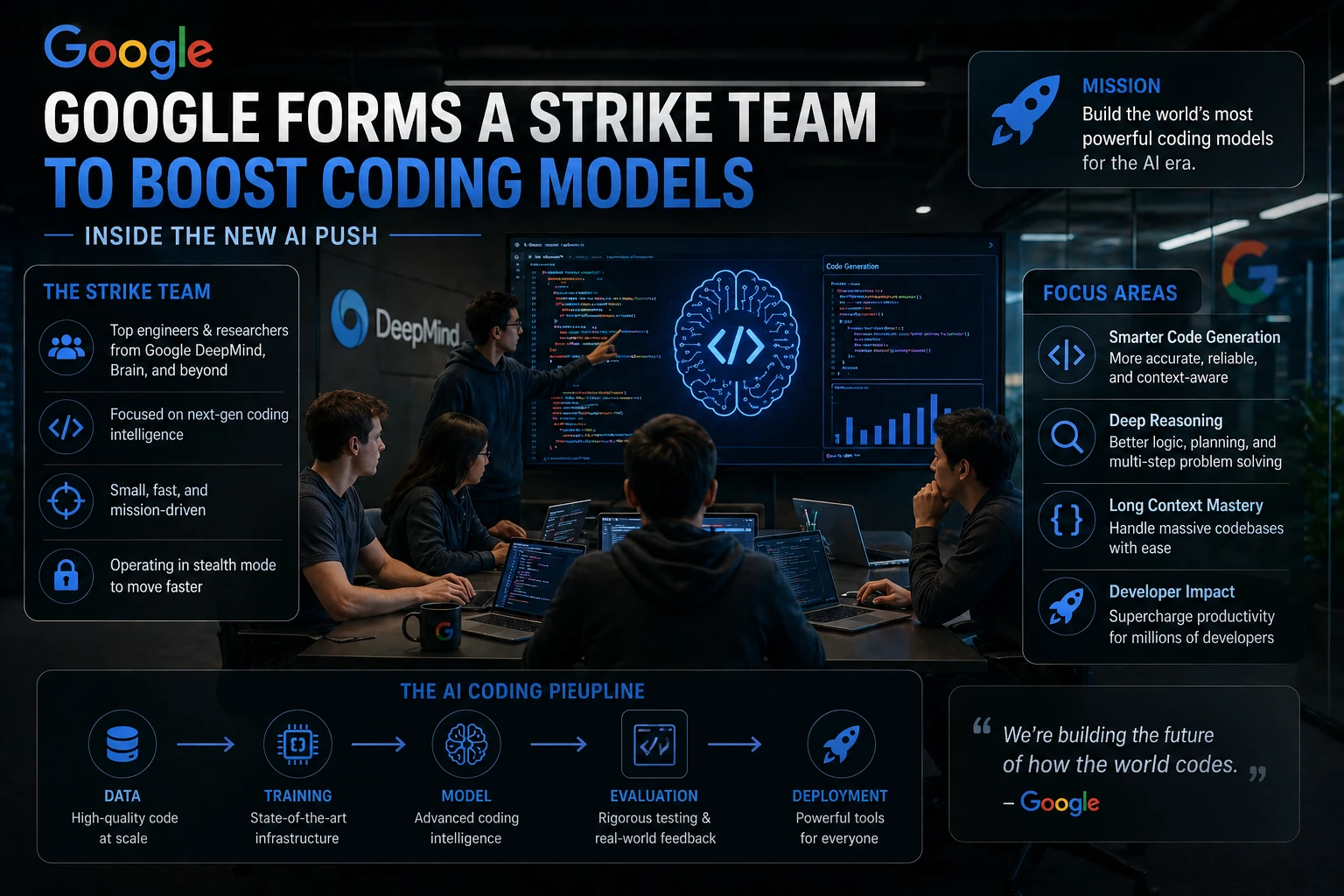
Google just announced an internal strike team whose sole mission is to make its coding‑AI models faster, cheaper and more reliable. At the same time, co‑founder Sergey Brin gave DeepMind engineers a clear warning: pivot aggressively to catch up on AI agents or risk being left behind.
Why a strike team now?
OpenAI’s GPT‑4o and Anthropic’s Claude have been churning out code that can write whole functions, debug, and even suggest architecture. Developers in Bangalore and Hyderabad are already using these tools in daily sprints. Google’s own Codey and Gemini‑Code were good, but they lagged in speed and accuracy. The new strike team is a cross‑functional squad of SREs, ML‑engineers, and product managers whose job is to shave milliseconds off latency and improve the model’s ability to understand complex codebases.
Sergey Brin’s DeepMind memo
During a recent all‑hands, Brin told DeepMind staff that agents – AI systems that can act in the world – are the next frontier. He urged them to “aggressively pivot” and allocate more compute to agent research. The memo stressed that while language models are still valuable, the real competition will be in autonomous agents that can write, test, and deploy code without human prompts.
How this hits Indian developers
India’s startup ecosystem runs on lean teams. A faster, cheaper code‑gen model means:
- Reduced reliance on expensive cloud‑based AI credits.
- Quicker prototyping for fintech apps that need to comply with RBI guidelines.
- Better integration with local tools like JioCLI or Zoho Creator.
For large enterprises, the move could translate into lower TCO for internal developer portals, especially when paired with Google Cloud’s Vertex AI pricing that’s already attractive for Indian firms.
Our take – TamilTech‑ஓட கருத்து
Google is playing catch‑up, but the strike team shows they’re serious about closing the gap. If they can cut inference latency below 30 ms for code suggestions, the tool becomes usable in real‑time IDEs like VS Code – something many Indian devs are already using. However, the real test is data privacy. Indian companies are wary of sending proprietary code to overseas servers. Google will need to roll out on‑prem or edge‑optimized versions to win trust.
What to watch next
Expect a beta of the new model in the next 2‑3 months, likely integrated into Google Cloud Shell and the upcoming Gemini Studio. Keep an eye on DeepMind’s agent demos – if they start releasing code‑writing bots that can push to GitHub automatically, that could rewrite how we do CI/CD in India.
Bottom line
Google’s strike team is a signal that the AI‑code race is heating up. For Indian developers, faster, cheaper code‑gen could mean more time building product features and less time wrestling with boilerplate. Stay tuned – the next wave of AI agents might land in your local dev environment before you know it.





Comments (0)
Be the first to comment!