


This just went live today — here's what's actually changing
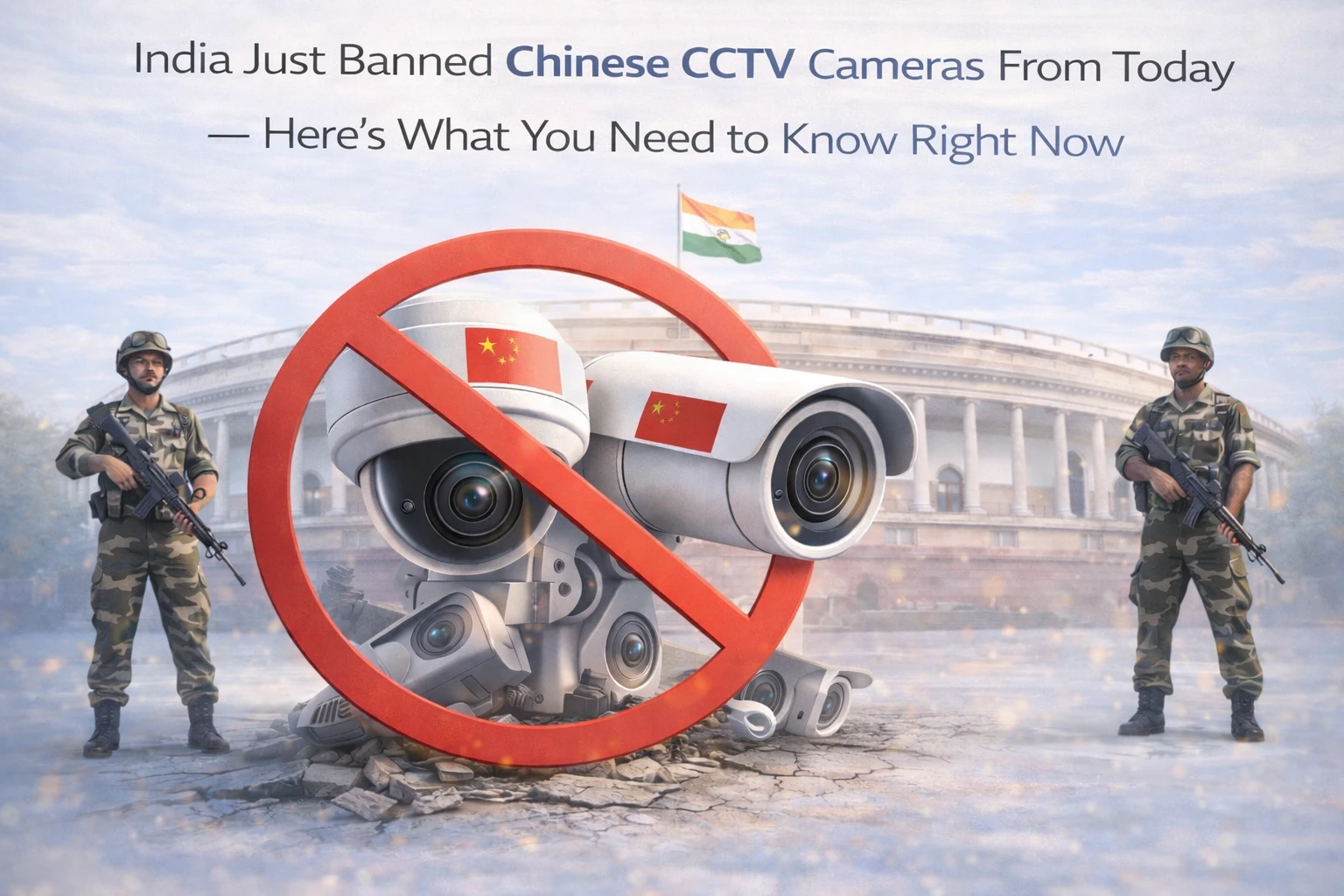
As of April 1, 2026, India's government has activated a new rule that changes how CCTV cameras can be sold in the country. If you've been hearing about an "India CCTV ban" and wondering whether your home camera is about to stop working, relax — it's not. But if you're planning to buy a new security camera, especially one from a Chinese brand, you need to read this first.
The short version: all internet-connected CCTV cameras sold in India now need to be cleared through the STQC (Standardisation Testing and Quality Certification) framework under MeitY (Ministry of Electronics and Information Technology). Chinese manufacturers like Hikvision, Dahua, and TP-Link are being denied this certification because their hardware and firmware traces back to Chinese origins. Without certification, they can't legally sell new units in India.
Already-installed cameras? Those are grandfathered in. They keep working. The ban applies to new sales only.
What is STQC and why does it matter?
STQC is the government's technical testing body. It certifies that electronic products meet India's security and quality standards. Until now, CCTV cameras weren't required to go through this process. Starting today, every internet-connected CCTV camera sold in India has to pass STQC testing before it hits shelves.
The certification tests include: encryption technology (how the camera protects the data it transmits), the origin of the SoC (System-on-Chip — essentially the processor brain of the camera), firmware origin and integrity (whether the software can be tampered with remotely), and whether the camera's data can be accessed by external parties without the owner's permission.
That last test is the critical one. Hikvision and Dahua cameras have been flagged by security researchers and multiple governments globally for potentially sending footage back to servers in China. The US government banned them from federal use back in 2022. The UK restricted them from sensitive government sites. India is now doing the same — but going further by restricting them from commercial sale entirely for new units.
Which brands are affected?
Any brand using Chinese-origin processors, firmware, or software components faces denial of STQC certification. Reports confirm that Hikvision and Dahua are directly impacted. TP-Link's camera division is also affected. These three brands have dominated India's affordable security camera market for years — a Hikvision or Dahua camera was the default recommendation for budget home security setups and small businesses.
Brands that are likely to benefit: CP Plus (Indian brand, though some products use Chinese components — worth checking certification status), Qubo (Hero Group), Godrej Security Solutions, Honeywell (US-based), and Bosch Security. These companies either use non-Chinese hardware or have already invested in localised manufacturing.
Does your existing camera stop working?
No. Cameras already installed continue to function exactly as they do today. The ban only affects new sales and new imports. Your Hikvision or Dahua camera that's been running for two years doesn't lose certification — it never needed it in the first place under the old rules.
However, here's something to think about: if your existing Chinese-brand camera has remote access enabled and sends footage to the manufacturer's cloud servers, the security concern is real regardless of the ban. The government ban addresses the supply chain going forward — it doesn't retroactively secure cameras already in homes and offices.
If you have an older Hikvision or Dahua camera with remote viewing enabled, it's worth reviewing your settings. Disable features like P2P cloud viewing that route footage through manufacturer servers, and use local storage (SD card or NVR) instead.
What this means if you're shopping for a security camera right now
This changes the market significantly. Hikvision and Dahua cameras were the go-to budget option — reliable hardware at ₹1,500 to ₹8,000 depending on the model. Indian alternatives are generally more expensive and, in some cases, still use Chinese components internally (CP Plus in particular uses significant Chinese hardware).
Before buying any camera, check whether it has STQC certification. MeitY's STQC website lists certified products. If a product isn't on that list, don't buy it — regardless of what the retailer tells you about stock being available. Retailers will still have unsold Hikvision and Dahua inventory, and some may continue selling it. Buying an uncertified camera means no guarantee it meets India's security standards.
For home use, Qubo cameras (Hero Group) are STQC-certified and purpose-built for Indian conditions. Godrej and Honeywell have certified options too, though at higher price points. CP Plus's certification status on specific models should be verified before purchase.
Why is India doing this now?
This is part of a broader pattern. India has been systematically reducing its exposure to Chinese technology infrastructure since 2020 — banning hundreds of Chinese apps post-Galwan, restricting Chinese telecom equipment from 5G networks, and now targeting surveillance infrastructure. The concern is consistent: systems that collect sensitive data (location, identity, footage) and run on Chinese hardware or software potentially create pathways for that data to reach the Chinese government under China's National Intelligence Law, which compels Chinese companies to cooperate with state intelligence requests.
CCTV cameras are particularly sensitive because they capture footage of homes, offices, factories, government facilities, and public spaces. A vulnerability in a CCTV camera — whether intentional or accidental — is a significant security problem. India has watched the US, UK, and several European governments act on this and is now implementing its own version of the same policy.
TamilTech's take
This is the right call, even if the timing feels abrupt and the alternatives are more expensive. The security concerns around Hikvision and Dahua aren't conspiracy theories — they're documented, and multiple Western governments have acted on them. India doing the same is consistent security policy. The short-term pain is real: budget-priced, reliable cameras are leaving the market, and the Indian alternatives cost more and have smaller ecosystems. But the long-term outcome — a CCTV market where cameras are certified not to send your footage to unknown servers — is genuinely better for consumers and for national security. If you're in the market for a camera, hold off on buying uncertified stock that retailers are trying to clear, and wait for the certified alternatives to become more available and competitively priced. The market will adjust.





Comments (0)
Be the first to comment!