


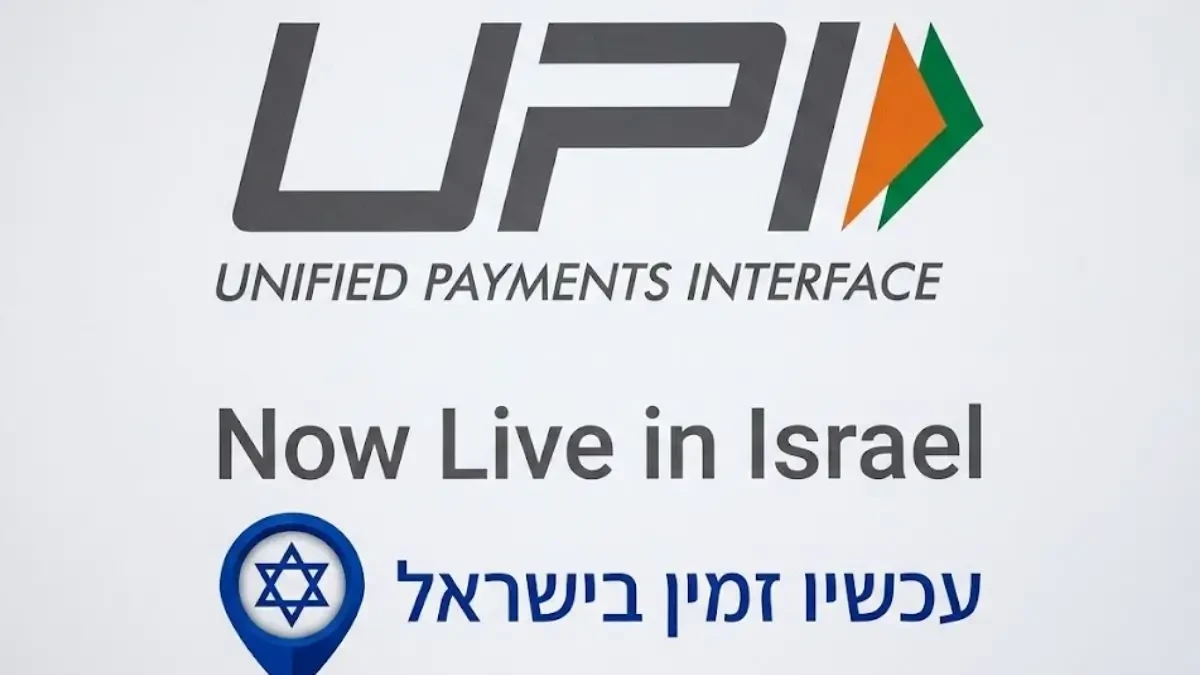
India and Israel Link UPI Payment Systems — A New Era of Cross-Border Digital Payments
On February 26, 2026, Prime Minister Narendra Modi made an announcement that marks another milestone in India's digital payments journey: India's UPI (Unified Payments Interface) will be linked with Israel's Masav payment system, enabling seamless cross-border digital transactions between the two nations. The announcement came during a joint press briefing with Israeli Prime Minister Benjamin Netanyahu, as part of a broader elevation of India-Israel ties to a "Special Strategic Partnership."
This isn't just a payments deal — it's a statement about India's growing influence in global digital infrastructure. UPI, which processes over 14 billion transactions monthly within India, is now systematically expanding its reach across the world. Israel becomes the latest in a growing list of countries where Indian travelers, businesses, and NRIs can use UPI for payments.
What Was Announced?
The UPI-Masav linkage was one of 17 Memorandums of Understanding (MoUs) signed during PM Modi's bilateral meetings. The full scope includes:
Digital and Technology MoUs
- UPI-Masav Payment Linkage: Cross-border digital payment interoperability
- AI Cooperation: Joint research and development in artificial intelligence
- Cybersecurity: Shared threat intelligence and cyber defense frameworks
- Digital Health: Interoperability between digital health platforms
Other Strategic MoUs
- Agriculture technology transfer
- Water management and desalination
- Defense manufacturing cooperation
- Space technology collaboration
- Free Trade Agreement (FTA) negotiations to accelerate
The elevation to "Special Strategic Partnership" is significant — only a handful of countries share this status with India, including the US, Japan, and France.
What Is Masav? Israel's Payment Backbone
Masav (Automated Banking Services) is Israel's electronic clearing house operated by the Bank of Israel. It processes the majority of non-cash payments in Israel, including:
- Salary payments and direct deposits
- Utility bill payments
- Government benefit transfers
- Business-to-business transactions
- Standing orders and recurring payments
Masav processes approximately 3.5 billion transactions annually — substantially smaller than UPI's scale but highly efficient and deeply integrated into Israel's banking infrastructure. The system is known for its reliability and security standards, making it a natural partner for UPI's international expansion.
How the UPI-Masav Link Will Work
While technical implementation details are still being finalized, based on existing UPI international linkages, the system is expected to work as follows:
For Indian Travelers in Israel
- Open your UPI app (Google Pay, PhonePe, Paytm, BHIM) at a merchant in Israel
- Scan the local QR code at the point of sale
- Amount displays in Israeli New Shekel (ILS) with real-time INR conversion
- Authorize payment with UPI PIN
- Payment processed — merchant receives ILS, your account debited in INR
For Israeli Businesses
- Register with a Masav-connected payment processor that supports UPI interoperability
- Display unified QR codes that accept both Masav and UPI payments
- Receive settlements in ILS through existing banking channels
Cross-Border Remittances
The linkage is also expected to enable person-to-person remittances, allowing Indian workers and professionals in Israel to send money home instantly via UPI — bypassing traditional remittance services that charge 3-7% fees.
UPI's Global Expansion: Complete Country List
With Israel, UPI is now operational or in deployment in 8+ countries:
| Country | Local Partner | Status | Year Launched |
|---|---|---|---|
| Bhutan | Royal Monetary Authority | Operational | 2023 |
| Nepal | Nepal Rastra Bank | Operational | 2024 |
| Singapore | PayNow | Operational | 2023 |
| UAE | NIOPAY (NPCI International) | Operational | 2023 |
| Sri Lanka | LankaPay | Operational | 2024 |
| France | Lyra Network | Operational | 2023 |
| Mauritius | Bank of Mauritius | Operational | 2024 |
| Qatar | Qatar Central Bank | In Deployment | 2025 |
| Israel | Masav (Bank of Israel) | Announced | 2026 |
NPCI International (the global arm of National Payments Corporation of India) is actively in discussions with 20+ additional countries including Japan, Saudi Arabia, and several African nations.
India-Israel Trade: Why This Matters
The UPI-Masav linkage directly supports a growing bilateral trade relationship:
- Bilateral trade volume: $10.7 billion (2025) — expected to grow to $15 billion by 2028 with FTA
- Indian diaspora in Israel: ~85,000 Indians live and work in Israel, primarily in healthcare, agriculture, and construction
- Israeli tourism to India: ~70,000 Israeli tourists visit India annually — many are backpackers and long-stay travelers
- Indian tourism to Israel: Growing rapidly — ~45,000 visitors in 2025, expected to double with improved connectivity
- Defense trade: Israel is India's second-largest defense supplier after Russia
For the 85,000 Indians working in Israel, UPI-Masav linkage means they can send money home instantly and at near-zero cost — a massive improvement over Western Union or bank wire transfers that charge $15-30 per transaction and take 2-5 days.
Benefits for Indian Users
For Travelers
- No currency exchange hassle: Pay directly in INR, system handles conversion
- Real-time exchange rates: Market rates applied, not inflated tourist rates
- Zero international transaction fees: Unlike credit cards that charge 2-3.5%
- Familiar interface: Use the same UPI app you use daily in India
For Businesses
- Faster settlements: Cross-border B2B payments settle in hours, not days
- Reduced costs: Transaction fees expected to be 0.5-1%, compared to 3-5% for traditional SWIFT transfers
- SME access: Small businesses can trade internationally without expensive banking relationships
For NRIs in Israel
- Instant remittances: Send money to family in India in seconds
- Near-zero fees: Dramatically lower than Western Union or bank transfers
- Direct to bank account: Money arrives in Indian bank account linked to UPI
Challenges and Limitations
The UPI-Masav linkage isn't without challenges:
- Transaction limits: International UPI transactions currently capped at Rs 2 lakh per transaction — may not suit large business payments
- Currency risk: Real-time conversion means exchange rate fluctuations affect every transaction
- Adoption timeline: Merchant adoption in Israel will take 6-12 months after technical integration
- Regulatory compliance: Both countries' KYC and AML requirements must be harmonized
- Technical integration: Masav and UPI use different technical architectures — interoperability layer needs robust testing
What This Means for India's Digital Payments Leadership
India's UPI is increasingly becoming a global digital payments standard. The numbers tell the story:
- Monthly transactions in India: 14+ billion (February 2026)
- Annual transaction value: Over Rs 200 lakh crore
- International presence: 8+ countries and growing
- Global recognition: G20 nations have studied UPI as a model for instant payment systems
The Israel linkage is particularly significant because Israel is a technology leader with high digital payment adoption. Unlike developing nations where UPI expansion is partly about providing infrastructure, the Israel partnership is between two technologically sophisticated payment systems — a peer-to-peer integration that validates UPI's technical maturity.
Timeline: What Happens Next
- Q1 2026 (Now): MoU signed, technical working groups formed
- Q2-Q3 2026: Technical integration and pilot testing between NPCI International and Bank of Israel
- Q4 2026: Limited merchant rollout in key Israeli cities (Tel Aviv, Jerusalem, Haifa)
- H1 2027: Full commercial launch with QR code payments and P2P transfers
Conclusion
The India-Israel UPI-Masav payment linkage is more than a bilateral payments deal — it's another step in India's systematic campaign to make UPI a global digital payments standard. For the 85,000 Indians in Israel, it means instant, near-free remittances. For Indian travelers, it means paying with their phone just like they do at home. For businesses, it means faster, cheaper cross-border transactions. With 8+ countries now connected and 20+ in discussion, UPI's global footprint is expanding rapidly. The technology that revolutionized digital payments in India is now going global — and Israel's addition strengthens the network significantly.




Comments (0)
Be the first to comment!