


What’s the headline?
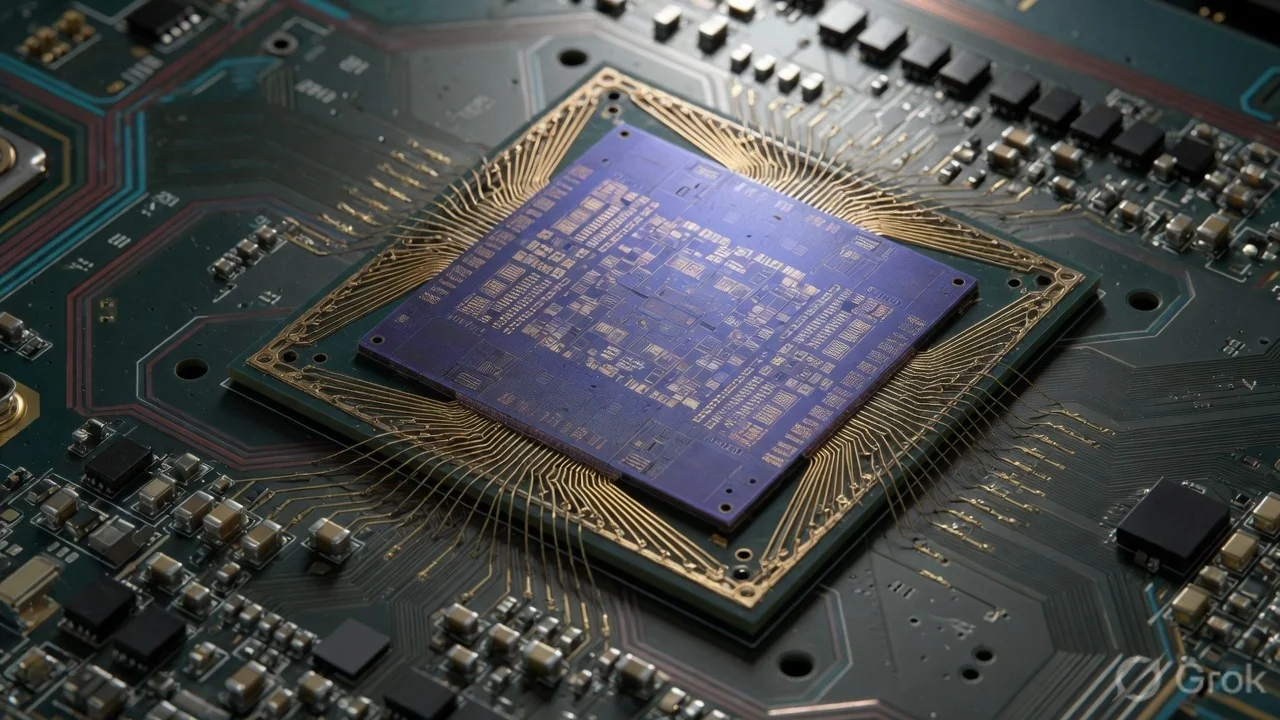
Meta announced an expanded partnership with Broadcom to co‑develop several generations of its next‑gen AI accelerator – the MTIA chip. At the same time, Broadcom’s founder‑CEO Hock Tan said he’ll leave Meta’s board after this year’s annual meeting.
Why does this matter?
Meta’s MTIA (Meta‑Tuned Intelligence Accelerator) is the silicon backbone for Llama‑2, Llama‑3 and future foundation models. By pulling Broadcom’s 12‑nm and 7‑nm process expertise, Meta hopes to slash power draw and boost inference speed. In plain English – faster chat‑bots, smoother AI features on Instagram and cheaper AI‑as‑a‑service for developers.
The nuts and bolts
- First‑generation MTIA will be fabricated on Broadcom’s 12‑nm node, targeting a 30‑40% performance uplift over the current 2024‑grade chips.
- Second‑gen will move to a 7‑nm process, promising up to 2× the throughput and half the wattage.
- Both chips will support Meta’s new “Unified Tensor Engine” – a software stack that lets developers switch between Llama‑2, Llama‑3 and future models without rewriting code.
- Broadcom will also provide its proprietary high‑speed interconnects, cutting latency between GPU clusters.
Boardroom drama
Hock Tan, who co‑founded Broadcom and has been on Meta’s board since 2022, announced his exit. The move is framed as “a natural transition” but analysts see it as a signal that Broadcom wants to focus on its core semiconductor business and avoid any conflict of interest as the AI partnership deepens.
Impact on India
India is a massive consumer of AI‑driven services – from Jio’s AI‑enhanced network to the explosion of generative‑AI startups. Here’s what the partnership could mean for us:
- Cheaper AI compute on the cloud. Meta’s AI services (like Llama‑based APIs) could become more price‑competitive on Indian cloud platforms such as AWS India, Azure India and local players like Netmagic.
- More AI features in Meta apps. Expect Instagram Reels to get real‑time video effects powered by on‑device inference, meaning lower data usage – a win for 4G‑only users.
- Job opportunities. Broadcom has a design centre in Hyderabad; deeper collaboration may lead to more hiring for chip‑design engineers, verification specialists and AI‑software engineers.
TamilTech‑ஓட கருத்து
We think this is a smart play for Meta. By locking in Broadcom’s manufacturing muscle, Meta can keep its AI stack in‑house rather than paying sky‑high fees to rivals like Nvidia. For Indian developers, the ripple effect could be lower API costs and more locally‑optimised AI tools – exactly what the startup ecosystem needs.
On the flip side, Hock Tan’s exit might raise eyebrows. Broadcom could be hedging against any regulatory scrutiny, especially as India tightens rules on foreign board‑members in tech firms. But as long as the engineering teams stay aligned, the partnership should stay on track.
What’s next?
Meta plans to roll out the first 12‑nm MTIA chips in its data centres by Q4 2024, with a public beta of the Unified Tensor Engine slated for early 2025. Broadcom will start sampling the 7‑nm version in early 2025, aiming for full production by mid‑2025.
For Indian users, keep an eye on announcements from cloud providers – they’ll likely advertise lower pricing for Meta‑powered AI services. And for job‑seekers, the Hyderabad design hub might start posting openings as soon as Q3 2024.
Bottom line
Meta‑Broadcom’s deeper bond is less about hype and more about practical engineering – faster chips, lower power, and a tighter software stack. The board change is a side‑note, but it signals Broadcom’s desire to keep its focus on silicon. For India, the partnership could translate into cheaper AI services, richer Meta app experiences and a few new tech jobs. Stay tuned, because the AI race just got a little more interesting.



Comments (0)
Be the first to comment!