


What’s the buzz?
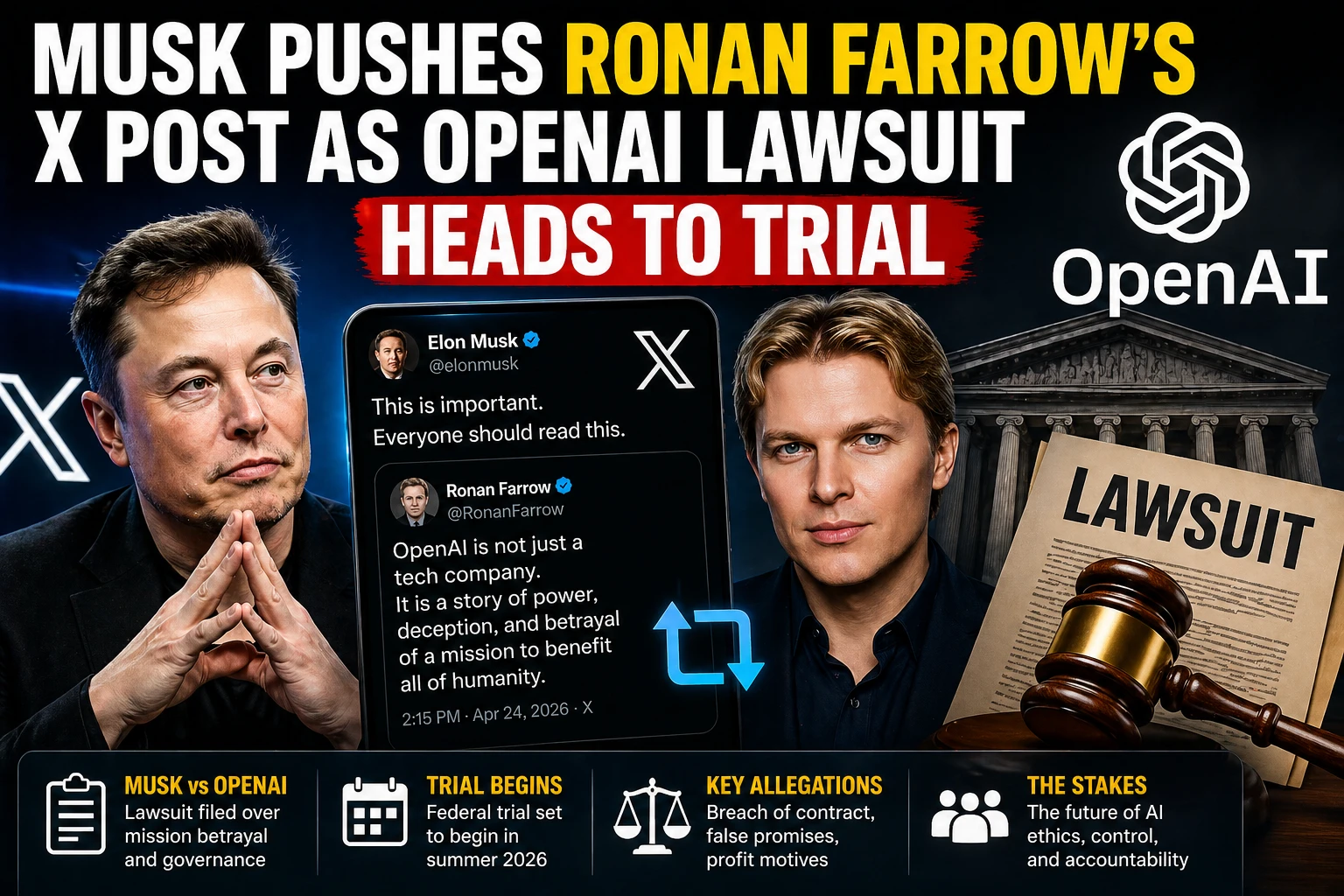
Elon Musk, ever the provocateur, just gave a big boost to a post on X (formerly Twitter) from journalist Ronan Farrow. The post is a teaser for Farrow’s upcoming New Yorker article that claims OpenAI’s CEO Sam Altman misled investors and the public about the company’s AI safety roadmap. Musk’s own lawsuit against OpenAI is set to start trial next week, so the timing feels more than coincidence.
How the story unfolded
On Monday, Farrow posted a short video clip on X that says, “Sam Altman lied about the safety of the AI we’re building.” The clip links to a pay‑walled New Yorker piece that alleges Altman hid internal tests that showed GPT‑4 could generate disallowed content at scale. Within minutes, Musk replied with a heart‑emoji and a comment: “Tell the world.” Then he hit the “Boost” button, pushing the tweet to his 150 million followers.
Meanwhile, Musk’s lawsuit – filed in February – claims OpenAI broke a non‑disclosure agreement, stole trade secrets from his own AI startup xAI, and misrepresented the progress of its safety research. The court scheduled the trial for the week of May 6, and both sides have been filing pre‑trial motions.
Why Musk is amplifying Farrow now
From a strategic angle, Musk’s move does three things:
- Public pressure. By spotlighting allegations that Altman hid safety risks, Musk hopes to sway public opinion and possibly pressure the judge to allow more discovery on OpenAI’s internal docs.
- Brand positioning. Musk wants to cement his image as the “AI watchdog” who warns the world about uncontrolled AI. The X post aligns with his recent posts about AI regulation and the need for a federal AI agency.
- Investor signaling. Musk’s own investors, especially those in the Indian market, watch every move. By showing that a reputable journalist is digging into Altman’s claims, Musk may be trying to reassure his backers that his lawsuit is not a stunt.
What the New Yorker article says
According to the teaser, Farrow’s investigation uncovered internal memos where Altman approved a “risk‑acceptance” framework that allowed certain disallowed content to be released for “research purposes.” The article also alleges that OpenAI’s board was kept in the dark about the scale of these tests.
OpenAI has not commented publicly, but a spokesperson told a reporter that the company “maintains the highest standards of safety and transparency.”
Impact on Indian users and the local AI scene
India is a hotbed for AI startups, many of which rely on OpenAI’s API for products ranging from chat‑bots in Tamil to automated content generation for e‑commerce. If the allegations hold water, it could spark a regulatory push from the Ministry of Electronics & Information Technology (MeitY) to demand more transparency from AI service providers.
For Indian developers, the practical upshot might be:
- Potential slowdown in API access if OpenAI faces legal restrictions.
- Increased scrutiny from the upcoming Data Protection Bill on how AI models handle personal data.
- More opportunities for home‑grown models like IIT‑Madras’s “Mithra” or Jio’s “JioGenAI” to capture market share.
TamilTech’s take
Honestly, this feels like a classic Musk playbook: use media amplification to put pressure on a rival while his own legal battle is heating up. The New Yorker piece, if accurate, could be a bombshell, but it’s still behind a paywall, and we haven’t seen the primary documents.
From an Indian perspective, the bigger story is how quickly the AI debate is becoming a courtroom drama. The Indian tech community should watch this closely, because any ruling that forces OpenAI to disclose internal safety processes could set a precedent for how foreign AI services operate in India.
What’s next?
The trial will start in early May. Expect both sides to file motions to admit or exclude the New Yorker’s evidence. Keep an eye on the Indian Ministry of Communications – they may issue a statement if the case threatens data‑privacy norms.
Meanwhile, if you’re building on OpenAI’s API, consider having a fallback plan: either a local LLM or an alternative provider like Anthropic, Google Gemini, or the upcoming “Mithra” model from IIT‑Madras.
Stay tuned – we’ll update you as the courtroom drama unfolds and as more details about Farrow’s expose surface.




Comments (0)
Be the first to comment!