


Key Takeaways
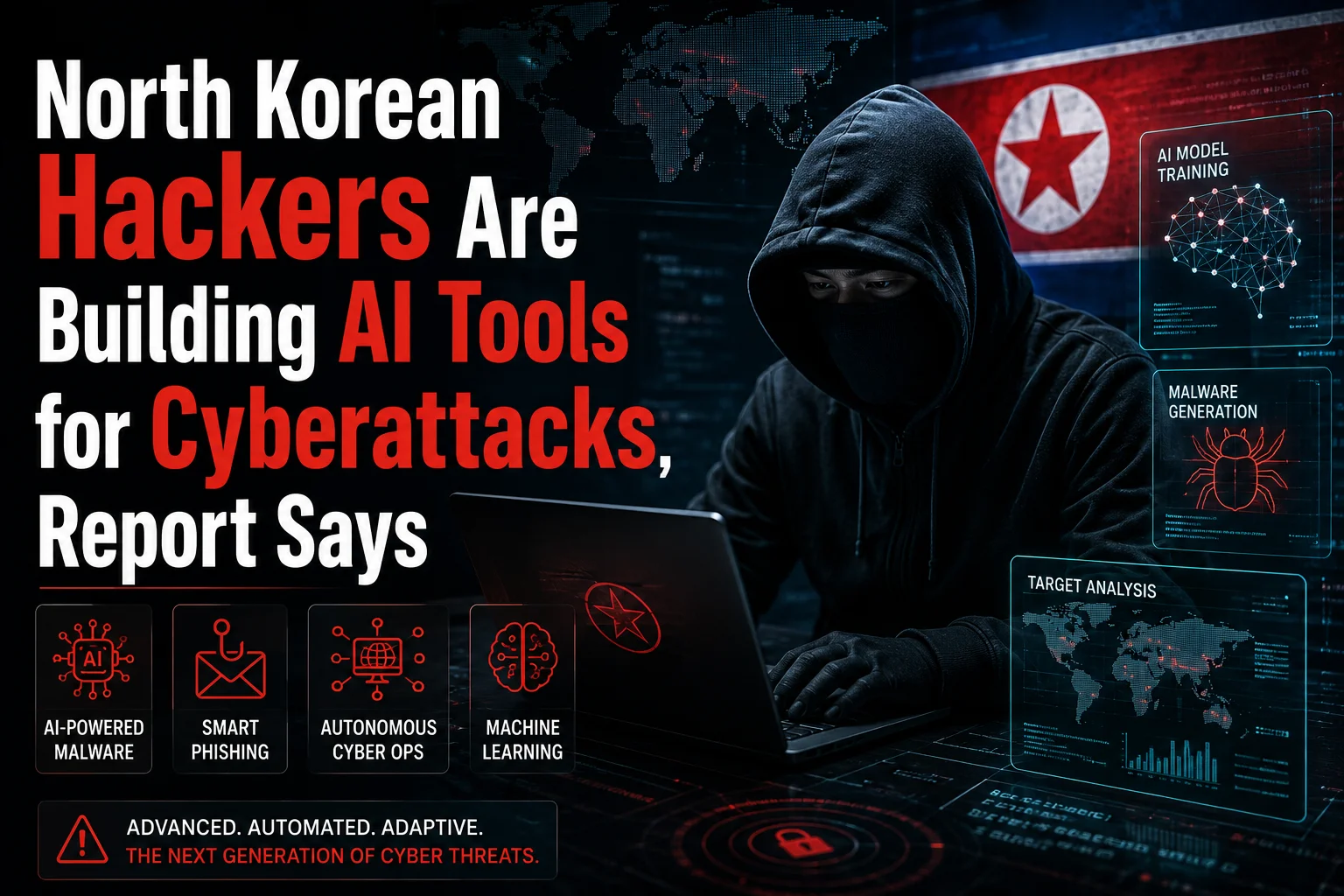
- North Korean state-sponsored hackers are creating AI-powered tools to automate and scale their cyberattacks, moving beyond traditional methods.
- These AI tools can help identify vulnerabilities, craft convincing phishing emails, and even generate malicious code, making attacks faster and harder to detect.
- The rise of AI in cybercrime lowers the technical barrier for entry, potentially allowing less-skilled actors to launch sophisticated attacks that target Indian businesses and government systems.
- Indian organizations, especially in the fintech and critical infrastructure sectors, need to update their security protocols to defend against these AI-driven threats.
- This development signals a dangerous convergence of state-level aggression and advanced technology, marking a new era in digital warfare.
What's the news?
According to a recent cybersecurity report, North Korean hacking groups are no longer just using off-the-shelf tools. They are now in the process of building their own artificial intelligence (AI) capabilities to supercharge their cyberattacks. This marks a significant shift in their strategy, as they aim to create more autonomous, efficient, and harder-to-trace malicious operations. The report, which analyzed activity from groups like Lazarus and APT38, highlights a clear trend towards integrating AI into their existing cybercrime playbook.
Details
The AI tools being developed by these groups reportedly include features for natural language processing (NLP) to generate highly personalized phishing emails, machine learning models to scan for software vulnerabilities, and code-generation systems to create malware. This allows them to operate at a scale and speed that was previously unimaginable. Instead of manually crafting each attack, they can now automate the reconnaissance and exploitation phases, freeing up human operators to focus on high-value targets. The use of AI also makes it easier for them to adapt their tactics on the fly, evading traditional signature-based security systems.
India impact
For India, this development is particularly concerning. Our nation's rapid digital transformation, driven by initiatives like UPI and the proliferation of Jio smartphones, has created a vast and attractive attack surface. North Korean groups have a history of targeting Indian businesses, including cryptocurrency exchanges and IT services firms. With AI in their arsenal, these attacks could become more frequent and more damaging. A successful AI-powered phishing campaign against an Indian bank or a critical infrastructure provider could have severe economic and security consequences. It's a wake-up call for Indian companies to move beyond basic cybersecurity hygiene and adopt more advanced, AI-driven defense mechanisms.
Use cases
While the primary use case is for malicious activities, the underlying technology has legitimate applications. The same AI models that can generate phishing emails could be used for security testing and vulnerability assessment. The code-generation tools could help developers write secure code faster. However, in the hands of North Korean hackers, these capabilities are weaponized. They could be used to: 1) Launch automated attacks on thousands of small and medium-sized Indian businesses simultaneously. 2) Create polymorphic malware that changes its code to avoid detection. 3) Develop sophisticated social engineering campaigns tailored to Indian cultural contexts to trick employees into revealing sensitive data.
Honest take
This is a worrying development that signals the next phase of cyber warfare. The idea that a state-sponsored group is investing in AI for hacking is not just a headline; it's a fundamental change in the threat landscape. It democratizes sophisticated attacks, meaning even smaller groups could leverage similar tools in the future. For the average Indian user or a small business owner, the threat might feel abstract, but the impact could be very real. The focus for India's cybersecurity community must be on building resilient systems and fostering a culture of security awareness. We can't just rely on traditional firewalls and antivirus software anymore. We need to think smarter, faster, and more collaboratively to stay ahead of these AI-powered adversaries.




Comments (0)
Be the first to comment!