


Key Takeaways
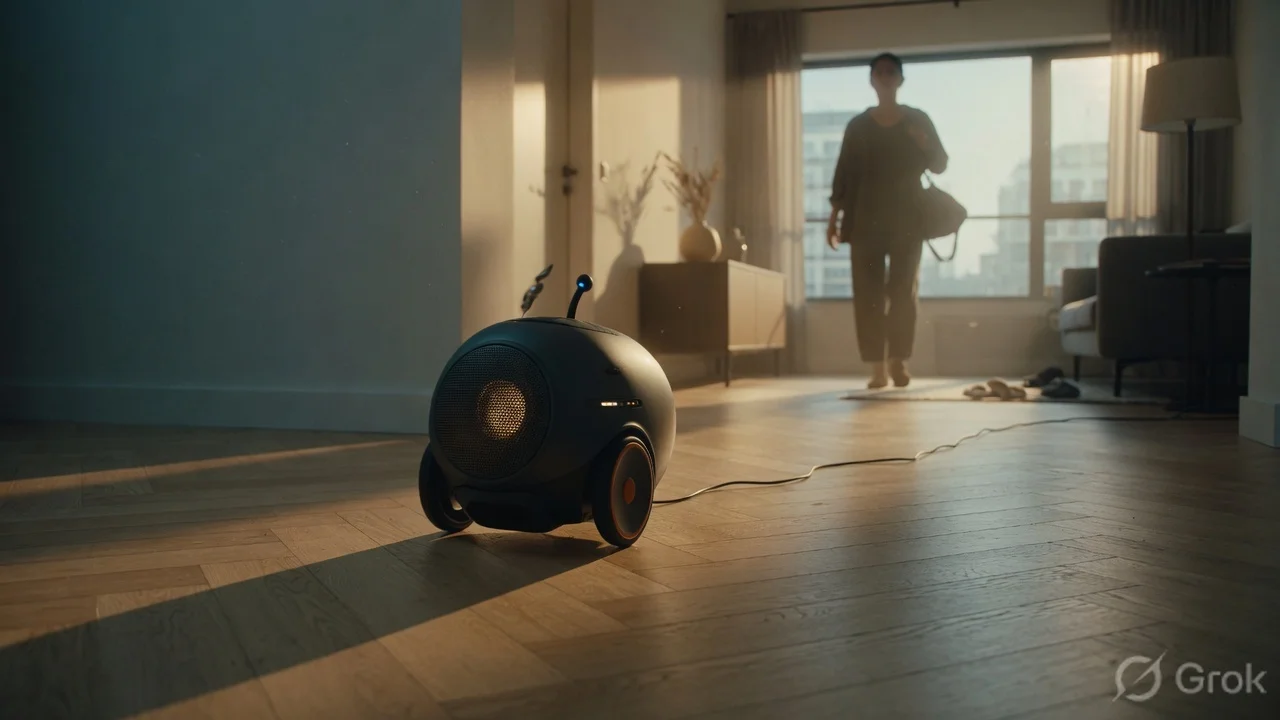
- OpenAI's first hardware device is a screenless, AI-powered speaker that features a robotic base for physical movement.
- The device is built in collaboration with legendary designer Jony Ive and focuses entirely on voice and vision interaction rather than a traditional screen.
- Expected to launch globally in late 2026, the device is projected to cost around ₹45,000 to ₹55,000 in the Indian market.
- It uses a multimodal version of GPT-5, allowing it to see its surroundings through high-res sensors and respond to physical gestures.
The Jony Ive and Sam Altman Collaboration is Real
For over two years, we’ve been hearing whispers about what happens when the man who designed the iPhone meets the man who built ChatGPT. Well, it’s 2026, and we finally have our answer. OpenAI is officially moving beyond your smartphone screen and into your living room. But here is the kicker: they aren't giving us another tablet or a phone. They’ve built a speaker. But not just any speaker—it’s a screenless, sentient-looking device that can actually move. If you think your Amazon Echo is smart, this thing is about to make it look like a calculator from the 90s.
The philosophy here is clear. OpenAI wants to move away from 'screen addiction.' By removing the display entirely, they are forcing us to interact with AI the way we do with humans—through voice, tone, and presence. It’s a bold move because, in a world where we are glued to OLED panels, OpenAI is betting that the future is 'invisible' tech. The device doesn't just sit on a shelf gathering dust; it uses a motorized base to orient itself toward you when you speak, making the interaction feel eerily natural. It’s like having a robotic companion that actually pays attention to you.
Why a Speaker and Why Does it Move?
You might be wondering, why on earth does a speaker need to move? Think about how you use a smart speaker today. You yell 'Alexa' or 'Hey Google' from across the room, and sometimes it hears you, sometimes it doesn't. OpenAI’s device changes that. It features a sophisticated array of sensors and a silent motorized base. When you start talking, the device physically turns its 'face'—which is actually a mesh of high-quality microphones and speakers—toward the sound source. This isn't just for show; it optimizes beamforming technology to ensure it hears every syllable perfectly, even if the TV is blaring in the background.
But the movement goes deeper. The device is equipped with ultra-wideband (UWB) sensors and low-profile cameras (which have physical privacy shutters, thank god). This allows the speaker to follow you as you move around the kitchen or your office. If you’re following a recipe and move from the stove to the sink, the AI 'eyes' follow your position to ensure the audio is always directed perfectly at your ears. It’s spatial audio on steroids. It creates a bubble of sound that follows you, meaning you don't have to crank up the volume to hear it from another room. It’s a hardware solution to a software problem we’ve dealt with for a decade.
The Power of GPT-5 in a Box
Inside this sleek, fabric-wrapped cylinder is a custom chip designed specifically to run a localized version of GPT-5. In 2026, we’ve seen AI get faster, but having it run locally on hardware is the real game-changer. Because it doesn't have to send every single word to a cloud server and wait for a response, the latency is almost zero. You talk, it responds. No 'thinking' lights, no 'I'm sorry, I didn't catch that'—just instant conversation. It feels less like a gadget and more like a person standing in the room with you.
The multimodal capabilities are what really set it apart. Since it has vision sensors, you can hold up a bag of masala and ask, 'How much of this should I put in the chicken curry?' and it will see the brand, the size, and give you an exact answer based on your past preferences. It remembers that you like your food spicy but your partner doesn't. It’s this level of context—knowing who is in the room, what they are holding, and what the vibe is—that makes this hardware feel like a leap forward. It’s not just a speaker; it’s an observer that helps you navigate your physical world.
India Impact: Pricing and Local Languages
Now, let's talk about the Indian context. We love our smart home tech, but we are also price-conscious. This OpenAI device isn't going to be cheap. Early estimates suggest a price point of $500 to $600, which translates to roughly ₹45,000 to ₹55,000 after import duties and taxes in India. That puts it squarely in the premium segment, competing with high-end Bose or Sonos systems rather than the budget Echo Dot. However, for the Indian market, the real value lies in language support. OpenAI has been working heavily on 'Project Bhasha,' ensuring that the device can understand and speak fluently in Hindi, Tamil, Telugu, and Bengali with local accents.
Imagine a device that doesn't just understand 'Book a cab,' but understands a mix of Tamil and English (Tanglish) like 'Enakku oru Ola book pannu.' That is the level of localization OpenAI is aiming for. In a country like India, where multi-generational homes are common, a screenless device is actually more accessible for elders who might struggle with complex smartphone UIs but can easily talk to a 'moving' speaker in their native tongue. We expect Flipkart and Amazon India to be the primary launch partners, with potential bundles for ChatGPT Plus subscribers.
TamilTech’s Honest Take: Is it Overkill?
Look, we need to be honest here. Do you need a speaker that follows you around the room? Probably not. For most people, a ₹5,000 Echo does the job of setting timers and playing music just fine. But this isn't just a speaker. This is OpenAI's attempt to build the 'Body' for their 'Brain.' By moving into hardware, they are trying to own the entire ecosystem—the software, the model, and the physical device you talk to. It’s a direct challenge to Apple’s Siri and Google’s Gemini-integrated Home devices.
The lack of a screen is a double-edged sword. On one hand, it’s great for digital detox. On the other hand, sometimes you just want to see the weather forecast or a YouTube video. OpenAI is betting that their AI is so good at describing things that you won't need to look at them. We think this will be a hit with tech enthusiasts and people who want a high-end home assistant, but for the average user in India, the price might be a huge barrier. It’s a 'luxury' AI experience. If you’ve got the budget, it’s going to be the coolest thing in your house. If not, you’re better off waiting for the 'Lite' version that will inevitably come in 2027.
What Happens Next?
The manufacturing is reportedly being handled by the same partners that build the iPhone, so expect top-tier build quality. We are looking at a late 2026 release, likely timed with the holiday season. Between now and then, expect a lot of 'leaked' videos of the device moving and interacting with people. The big question remains: how will Google and Amazon respond? They have the advantage of being in millions of homes already, but OpenAI has the 'cool factor' and the most advanced AI models on the planet. The smart home war just got a lot more interesting, and for the first time, the devices are starting to move.






Comments (0)
Be the first to comment!