


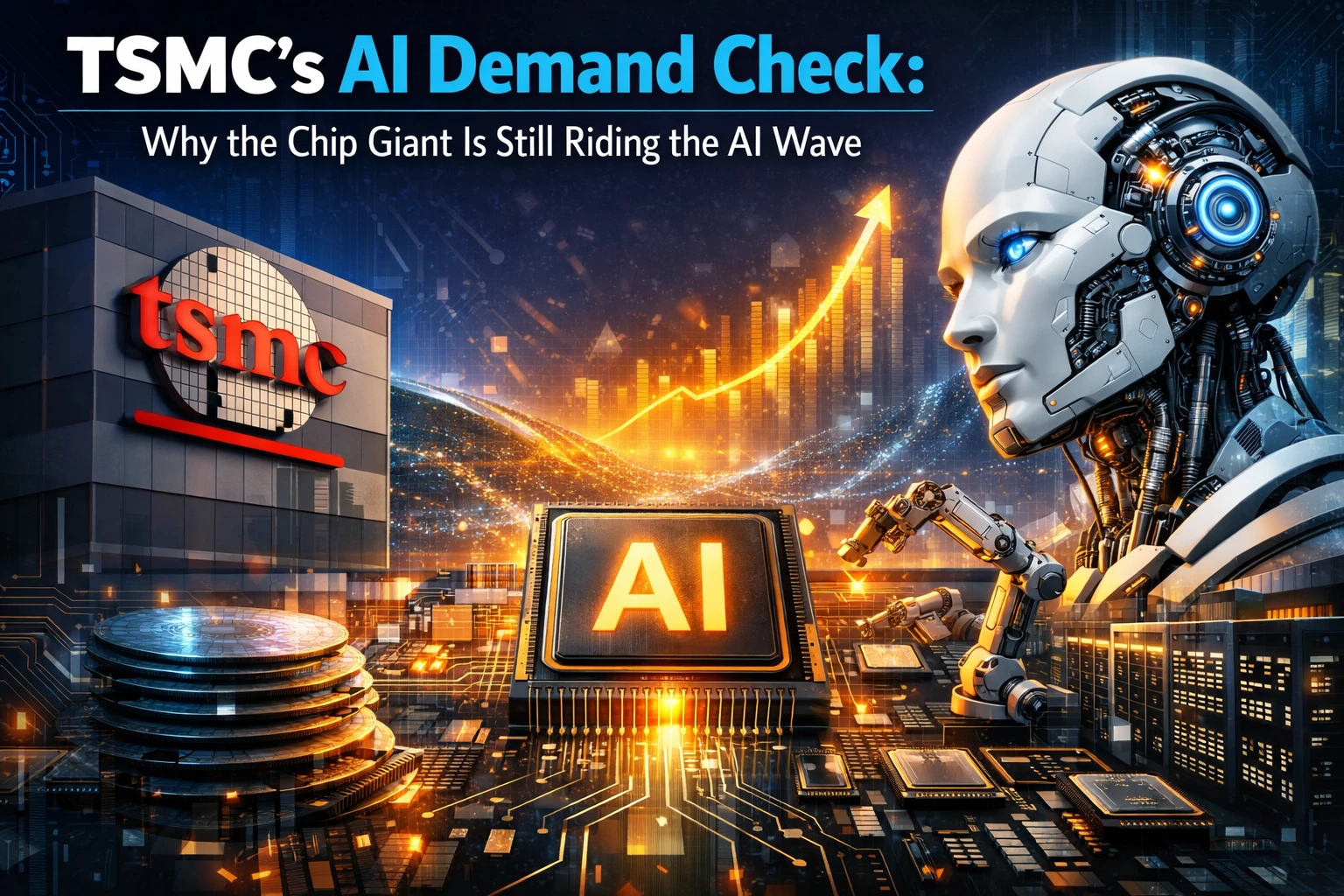
What’s the buzz?
TSMC’s head honcho, C.C. Wei, just told investors that the foundry giant went around asking its biggest customers – the likes of Nvidia, AMD and Apple – “Is AI still a priority for you?” The answer was a loud “YES”. Even with the Israel‑Iran skirmish heating up, chip makers say AI workloads are far from cooling down.
Why TSMC cares about a simple poll
TSMC isn’t just a supplier; it’s the world’s most advanced silicon factory. Its 5‑nm and 3‑nm nodes are the only places where the most power‑hungry AI accelerators can be built today. If its customers start pulling back, TSMC’s fab utilisation would dip, and the whole ecosystem – from equipment makers to silicon‑test labs – would feel the tremor.
Wei’s reassurance came just as the company lifted its FY2024 revenue forecast by about 5%, citing strong AI demand. That bump translates to roughly $2‑3 billion extra cash flow, a figure that can fund new fab expansions in Arizona and Japan.
Numbers that matter
- AI‑driven wafer orders up ~30% YoY in Q2 2024.
- TSMC’s 3‑nm capacity utilisation now sits at 80% – a record high.
- Revenue guidance: $78 billion ± 2% (up from $74 billion last year).
- Capital expenditure: $30 billion planned for 2024‑2025, with $12 billion earmarked for AI‑centric nodes.
India angle – why this matters to us
India’s AI startup boom is hitting a critical inflection point. Companies like InMobi, Freshworks and a slew of generative‑AI unicorns need cutting‑edge GPUs and ASICs to train large language models (LLMs). Most of those chips are fabricated at TSMC.
With TSMC confirming strong demand, Indian firms can breathe easier about supply‑chain continuity. It also means local data‑centres – think Amazon Web Services (AWS) Mumbai region or Google Cloud Hyderabad – will likely see faster rollout of AI‑optimised instances.
On the pricing front, the ripple effect could be a slight dip in GPU costs for Indian cloud users. Historically, when TSMC ramps up capacity, the fab‑cost per wafer drops by 5‑7%, and that savings eventually filters down to end‑customers.
TamilTech’s take – the pros and cons
Pros
- Supply stability: No sudden shortage scares for Indian AI startups.
- Cost‑benefit: Potential marginal price drops on Nvidia H100‑class GPUs.
- Ecosystem boost: More fab capacity could attract more fab‑less design houses to set up R&D hubs in Bengaluru or Hyderabad.
Cons
- Geopolitical risk: While the Iran‑Israel flare didn’t dent demand now, any escalation affecting semiconductor logistics could bite later.
- Capital intensity: TSMC’s massive cap‑ex means they’ll be picky about which customers get priority access – smaller Indian players might still face allocation delays.
What’s next?
Expect TSMC to announce a new 2‑nm prototype roadmap by late‑2025, aimed at the next generation of AI accelerators. For Indian firms, the smart move is to lock in wafer allocations now, maybe through a direct partnership or via a local fab‑less aggregator.
In short, the AI chip tide isn’t receding – it’s just getting a bigger, more stable boat. Indian innovators should ride it, but keep an eye on the geopolitical horizon.




Comments (0)
Be the first to comment!