


Key Takeaways
- Anthropic analyzed 310,000 anonymized conversations to study how Claude’s values and behaviors manifest in real-world usage.
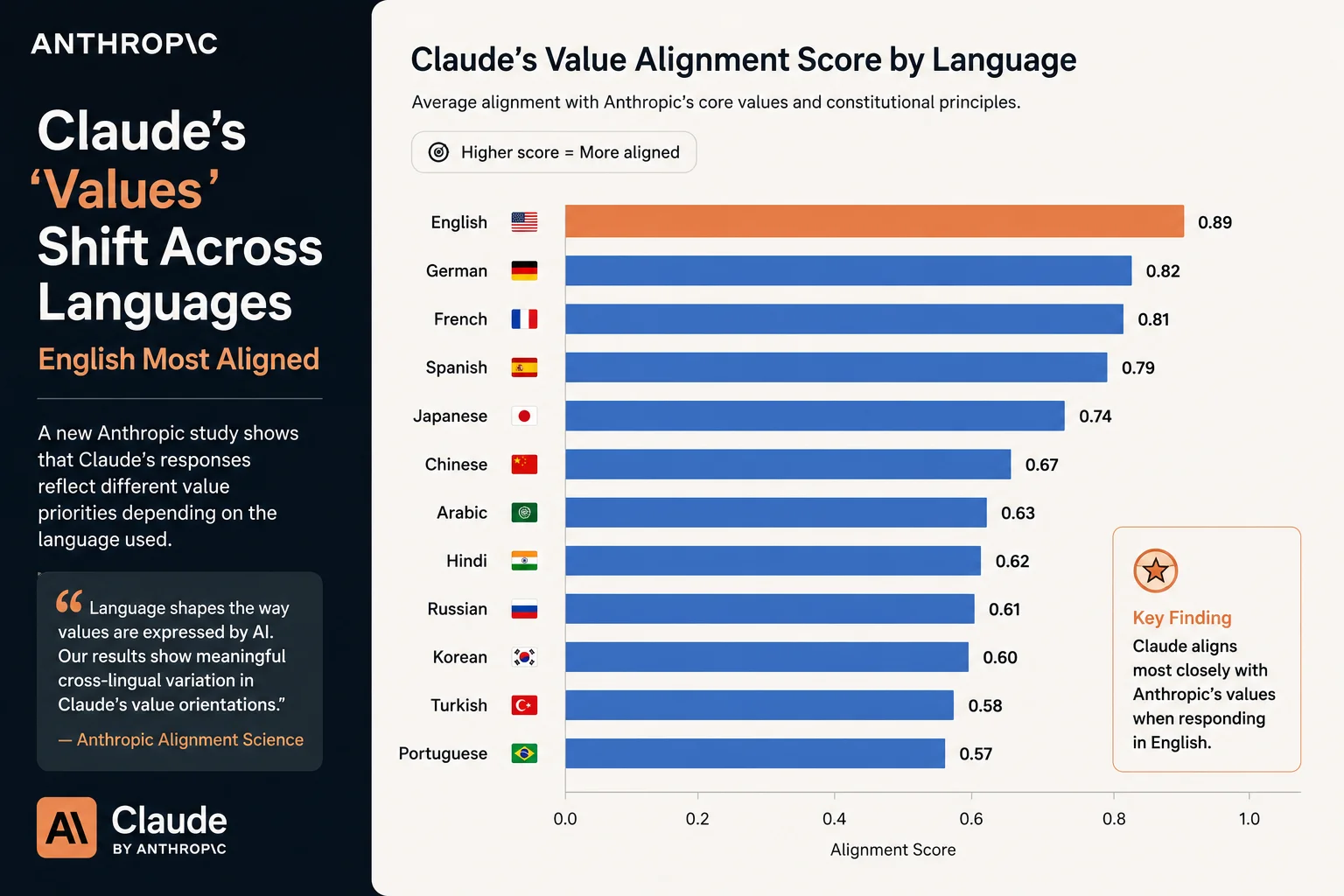
- The research found that Claude’s helpfulness and harmlessness scores fluctuate depending on the language used, with English often being the most 'aligned.'
- Privacy was prioritized by stripping all Personal Identifiable Information (PII) before the research team accessed the chat logs.
- For Indian users, this means Claude is becoming more culturally aware, though there is still a gap between English and regional language performance.
- The bottom line: AI isn't a static robot; its 'personality' is a reflection of the data and language it's interacting with at that moment.
The Big Reveal: What Happens in 310,000 Conversations?
So, here is the thing—we all talk to AI like it is just one big brain sitting in a server room. But have you ever felt like Claude is a bit more formal in English but maybe a little more 'relaxed' or even slightly confused in other languages? Well, Anthropic just confirmed that your hunch might be right. They recently conducted a massive research project involving about 310,000 anonymized conversations. This isn't just a small lab test; this is real-world data from people like you and me using Claude for everything from coding to writing poems.
The goal was simple: Anthropic wanted to see if the 'Constitutional AI' (that is the set of rules they give Claude to keep it safe) actually works the same way across different models and languages. What they found is fascinating. It turns out that Claude’s expressed values—things like being helpful, honest, and harmless—aren't just hard-coded numbers. They actually shift. If you are using the latest Claude 4.5 or the budget-friendly Haiku model, the way it responds to a tricky question can change based on the language you use. This is a huge deal for us in India where we switch between English, Hindi, and Tamil constantly.
How the Research Actually Worked (Without Spying on You)
Now, I know what you are thinking. 'Wait, are they reading my private chats?' Before you go and delete your account, let's clear that up. Anthropic was very specific about how they handled this. They used 'anonymized' data. This means before any researcher looked at the logs, a separate automated system went through and scrubbed out names, phone numbers, addresses, and emails. They weren't looking for 'who' said 'what,' but rather 'how' the model responded to different types of prompts.
They looked at how different versions of Claude—from the older Claude 3 series to the latest 2026 models—handled human values. They used a technique called 'Reward Modeling.' Basically, they compared what the AI said against what their safety constitution says it should say. The researchers found that as the models get smarter (like the jump from Claude 3.5 to the newer versions), they get much better at sticking to their values. However, the 'language gap' still exists. English is the 'gold standard' for these models because that is where most of the training data comes from. When you switch to a language with less data, the AI’s 'moral compass' can sometimes get a bit wobbly.
The India Impact: Why This Matters for Us
In India, we are currently seeing a massive surge in AI adoption. Whether it is a student in Chennai using Claude to explain a complex physics problem in Tamil or a developer in Bengaluru using it for Python scripts, the language matters. This research shows that while Claude is incredibly safe, its performance in regional Indian languages might not always perfectly mirror its English performance. For example, a safety guardrail that works perfectly in English might be slightly bypassed or misunderstood when translated into a complex Hindi or Tamil sentence.
But there is good news. Anthropic's data shows that they are closing this gap. By analyzing these 310K conversations, they are learning exactly where the AI fails to understand cultural nuances. If Claude understands that a specific phrase in Tamil is actually a subtle insult or a dangerous request, it can be trained to handle it better. For those of us using these tools for business or education in India, this means we can expect much more 'culturally aligned' AI in the coming months. We aren't just getting a Western AI translated into Tamil; we are moving toward an AI that understands the soul of the language.
How to Get the Best Out of Claude Right Now
If you want to make sure you are getting the most 'value-aligned' and accurate responses from Claude, here is a quick guide based on what we have seen from this research. First, if you are asking something extremely critical—like legal advice or complex medical explanations—try to prompt it in English first, and then ask it to translate the explanation into your local language. This ensures you are tapping into the model's strongest 'value' core.
Second, be specific with your persona. Since the research shows Claude adapts to the conversation, tell it exactly how you want it to behave. If you want a professional tone, say 'Act as a professional consultant.' If you want a casual chat, say 'Talk to me like a friend.' This helps the model lock into a specific set of behaviors rather than drifting based on the language's default settings. Lastly, always use the latest model available. The jump in value-alignment from 2024 models to the current 2026 versions is massive. The newer models are much less likely to 'hallucinate' or give biased answers compared to the older ones.
TamilTech’s Verdict: Is Claude Leading the Race?
Look, we have tested ChatGPT-5, Gemini 2.0, and all the latest iterations this year. What sets Claude apart, and what this research proves, is that Anthropic is obsessed with safety and ethics. While other companies are racing for raw power, Anthropic is spending time analyzing 310,000 chats just to see if their AI is being 'nice' enough in Spanish or Japanese. That is a level of detail we have to respect. However, we also have to be realistic. No AI is perfect. The fact that values vary across languages means you should still keep your 'human brain' switched on.
In the next few months, we expect Anthropic to use this data to launch more localized 'Constitutions' for different regions, including India. Imagine a Claude that doesn't just speak Tamil, but understands the specific ethical and cultural values of a Tamil user. That is the future of AI. For now, Claude remains our top pick for creative writing and deep analysis because of this very focus on human-like values. Keep an eye on the updates—2026 is turning out to be the year where AI finally starts 'understanding' us, not just 'processing' us.





Comments (0)
Be the first to comment!