


Key Takeaways
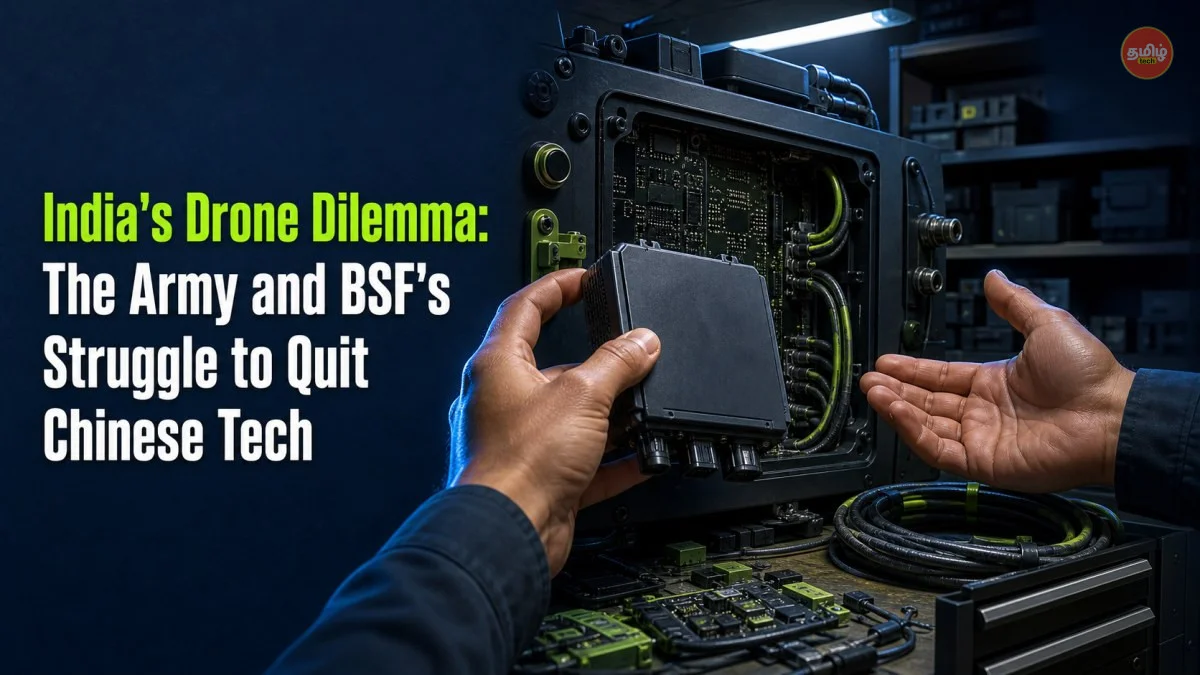
- India officially banned the import of finished Chinese drones in 2022 and restricted Chinese components for military use in 2023-24 to prevent data leaks.
- Over 70% of the components in many 'Made in India' drones used by the Army and BSF are still sourced from China due to lack of local manufacturing for motors and flight controllers.
- The Indian Army and CRPF often prefer DJI-style drones for tactical surveillance because of their superior software stability and ease of use compared to early-stage Indian prototypes.
- Security concerns remain high as Chinese-made communication modules could theoretically transmit sensitive border coordinates to foreign servers.
- The bottom line: India needs at least 3-4 more years of heavy investment in component manufacturing to truly achieve 'Drone Atmanirbhar' status.
The Ban is Real, but the Reality is Complicated
So, here is the thing—India has been very vocal about banning Chinese drones. If you look at the official papers from 2022 and 2024, the government was crystal clear: no more importing finished drones from China, especially for our defense forces. The logic was simple. These drones are basically flying computers with cameras and GPS. If the software has a backdoor, every secret move our Army makes at the LAC (Line of Actual Control) could be visible in Beijing. It’s a massive security nightmare. But as we stand here in August 2026, the ground reality is a bit messy. While we aren't buying 'ready-to-fly' DJI drones anymore, our forces are finding it incredibly hard to let go of the technology that actually works.
I’ve been talking to folks in the industry, and the situation is quite ironic. On one hand, we have a booming Indian drone startup ecosystem. Companies like IdeaForge and others are doing great work. On the other hand, when a BSF jawan is patrolling the thick forests of the Northeast or the high-altitude deserts of Ladakh, they need something that just works. They don't want a drone that glitches or loses connection. For years, Chinese drones have set the gold standard for 'it just works' at a cheap price. Transitioning away from that while maintaining 24/7 surveillance is proving to be a mountain of a task for the Ministry of Defence.
How We Got Here: The Security Scare
Why did we even start this ban? It wasn't just about 'Vocal for Local.' It was about survival. Around 2023, security agencies found that many drones used by our paramilitary forces were sending data packets to servers located outside India. Think about it—a drone capturing high-res footage of a sensitive army base and then 'syncing' that data to a cloud server in China. That is a direct threat to national security. This led to the 2023 directive where the government told drone manufacturers that if they want to sell to the Indian military, they cannot use components from 'countries sharing a land border with India'—which is a polite way of saying China.
This move was supposed to kickstart a local revolution. The goal was to have 100% Indian-made drones. But here is the catch: making the plastic frame of a drone is easy. Making the carbon fiber wings is doable. But making the flight controller (the brain), the BLDC motors (the muscles), and the CMOS sensors (the eyes) is where India is still struggling. Even in 2026, if you open up a 'Made in India' drone, there is a high chance the motor or the communication chip was originally made in a factory in Shenzhen. We’ve replaced the brand name, but the DNA inside is still often Chinese.
The Component Crisis: Why Local Isn't Easy
Let's talk numbers because that’s where the real story is. To build a truly Indian drone, you need a local supply chain for microchips and high-torque motors. Currently, India's semiconductor mission is still in its early stages. We are building the factories, but mass-producing drone-grade chips is still a few years away. Most Indian drone companies are basically 'system integrators.' They buy the best parts from around the world and assemble them here. When you cut off China, you are left with European or American components, which are often 3x to 5x more expensive. This makes a single surveillance drone cost significantly more than what the government initially budgeted.
Then there is the software issue. DJI and other Chinese giants have spent a decade perfecting their flight algorithms. Their drones can handle high winds and signal interference like a pro. Some of the newer Indian alternatives, while improving, have faced 'stability issues' in high-altitude zones like Galwan or Siachen. Our soldiers can't afford a 'trial and error' approach when they are monitoring enemy movements. This is why, behind the scenes, many units still rely on their existing stock of older drones or look for 'exemptions' to keep using reliable tech until the Indian versions catch up.
The Impact on Indian Forces: Army, CRPF, and BSF
For the BSF and CRPF, drones are a godsend for anti-insurgency operations. In the red corridors of Bastar or the borders of Punjab where drones are used to drop drugs and weapons from the other side, our forces need 'counter-drone' tech and surveillance drones that are always up. The ban has created a temporary vacuum. While the Army has been aggressive in funding 'iDEX' (Innovations for Defence Excellence) challenges to help startups, the scale of requirement is massive. We don't need ten drones; we need tens of thousands.
Currently, the CRPF is experimenting with 'hybrid' models—drones that use Indian software but might still have some non-critical hardware from global suppliers. The BSF is also pushing for more 'tethered' drones which are safer because they are physically connected to a base station by a wire, making data theft nearly impossible. But for free-flying tactical drones, the dependency remains. The soldiers on the ground often feel the pinch when they are told they can't use a certain 'user-friendly' drone because of policy, but the replacement isn't quite ready for the battlefield yet.
The Step-by-Step Transition: How India is Fixing This
So, how is the government actually fixing this in 2026? It’s a three-step process. First, they have created a 'Trusted Source' list. Only companies that can prove their supply chain doesn't have 'malicious' Chinese hardware can get on this list. Second, the PLI (Production Linked Incentive) scheme for drones has been doubled this year to encourage companies to make motors and batteries locally. Third, the military is now doing 'white-box' testing—where they literally strip the drone down to its code to ensure no data is leaking.
If you are a startup looking to enter this space, here is the roadmap: 1. Focus on the software stack (GCS - Ground Control Station) first. 2. Partner with Taiwanese or Japanese firms for sensors to avoid the Chinese ban. 3. Use the iDEX platform to get direct grants from the Army. It’s a long road, but the 'Atmanirbhar' push is finally moving from just assembly to actual core manufacturing. It’s not just about flying; it’s about flying securely.
Comparison: Chinese Drones vs. Indian Alternatives
If we compare a standard DJI Mavic 3 (which is what everyone wants) with a typical Indian tactical drone in the same category, the differences are stark. The DJI model is sleek, has a 46-minute flight time, and a 15km range for about ₹2-3 lakhs (if you could buy it). The Indian equivalent might cost ₹8-10 lakhs, have a 30-minute flight time, and a slightly bulkier design. Why the price gap? Because the Indian company is buying parts in smaller quantities from expensive non-Chinese sources. However, the Indian drone wins on 'Customization.' Our startups are building drones specifically for 'High Altitude, Low Temperature' (HALT) conditions, which standard Chinese drones often fail in. So, while we lose on price, we are slowly winning on specialized performance.
TamilTech’s Take: Security over Convenience
Honestly, we at TamilTech believe this 'painful' transition is absolutely necessary. Yes, it’s annoying for our forces right now. Yes, the costs are higher. But can we really put a price on national security? If a ₹2 lakh Chinese drone helps the enemy track our troop movements, then that drone is actually costing us lives, not saving money. We’ve seen how drone warfare changed the game in the Russia-Ukraine and Middle East conflicts. Drones are the new artillery.
What we expect to see by the end of 2026 is the first wave of 'True Indian Drones' with local flight controllers. Once we own the 'brain' of the drone, the security risk drops to almost zero. For the average tech enthusiast, this means the 'Made in India' drones you might buy for photography in 2027 will be more secure, more rugged, and hopefully, more affordable. It’s a tough climb, but we are getting there. Stay tuned to TamilTech for more updates on this—this is a space that's changing every single week!



Comments (0)
Be the first to comment!