


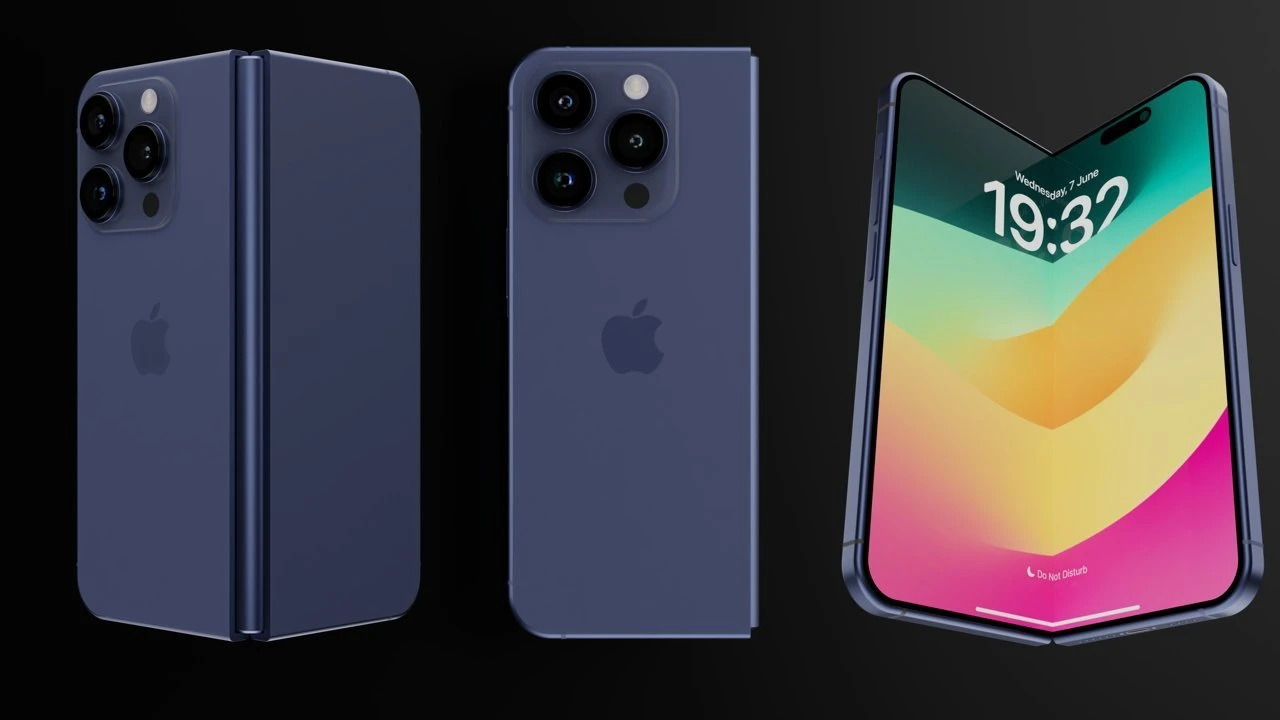
The iPhone Fold is real — Apple just hasn't told you about it yet
Apple has never officially said the words "iPhone Fold." But at this point, calling it a rumor feels like calling the sun a heat source — technically unconfirmed, completely obvious. Multiple supply chain reports, accessory maker leaks, and analyst notes have painted a detailed picture of Apple's first foldable iPhone, and the picture is getting clearer every week.
Here's what the rumor consensus looks like right now: the iPhone Fold will use a book-style design — it folds like a small book, not like a flip phone. When closed, the external display measures around 5.3 to 5.5 inches — about the size of a compact smartphone. Open it up, and you get an internal screen of approximately 7.6 to 7.8 inches — closer to a small tablet. When fully unfolded, the device is reportedly around 4.5mm thin, which would make it one of the thinnest iPhones ever built.
The display protection story is getting interesting. Apple is reportedly working on multiple layers of protection for the inner foldable screen — a problem that has plagued every foldable Android phone since the category launched. Samsung and Google have both improved their crease situation, but it's still visible. Apple's approach reportedly involves a self-healing glass layer, a seamless hinge design, and dual-layer ultra-thin/ultra-flexible glass architecture. Whether this actually eliminates the crease or just reduces it remains to be seen.
On the chip side: A20, with 12GB RAM — that's more RAM than even the current iPhone 16 Pro Max. Face ID is reportedly NOT coming to the Fold; instead, Touch ID via a side power button is the plan. And notably, the Fold will have two rear cameras, not three — a significant departure from the Pro-tier camera experience. The price is expected to start above $2,000, which in India would likely translate to somewhere in the ₹1,75,000–₹2,00,000+ range after import duties and Apple India's pricing premiums.
September or December? The launch date debate
The majority view among Apple observers has been a September 2026 launch alongside the iPhone 18 Pro and iPhone 18 Pro Max. That makes sense — Apple's September event is its biggest annual showcase, and launching a new iPhone category alongside its flagship lineup would maximize attention.
But a Barclays analyst threw a curveball recently, suggesting supply chain issues could push the Fold's sales start to December. His argument: manufacturing a new type of device at Apple's scale, with all the hinge and display complexity involved, might not be ready for September shipping. It's worth noting that this analyst has a mixed track record with Apple predictions — he incorrectly called the iPhone X and iPhone 16 timelines — and every other analyst watching Apple's supply chain still expects September.
The honest answer: nobody outside Apple knows for certain. But September is still the strongest bet. If it slips to December, it wouldn't be a disaster — Christmas holiday launch for a $2,000 device might actually make commercial sense. Either way, India launch will likely follow 2-4 weeks after the US release date, if Apple follows its typical pattern.
Who is Apple competing against with the Fold?
By the time the iPhone Fold launches, Apple will be the last major smartphone brand to enter the foldable category. Samsung has been doing this since 2019. Google launched the Pixel 10 Pro Fold. Motorola has the Razr Fold. OnePlus has the OnePlus Open. Xiaomi has the Mix Flip. The foldable smartphone market has been a real category for years — Apple is not pioneering anything here, they're catching up.
What Apple brings is the ecosystem. If you're already invested in iPhone, Mac, AirPods, Apple Watch — using a foldable that runs iOS natively, with FaceTime, iMessage, continuity features across devices, Apple Pay UPI integration — that's a different proposition than switching to an Android foldable. For the Indian market specifically, the ₹2 lakh+ price point limits this to a very narrow buyer profile: early adopters with existing Apple ecosystem investment who want the newest possible device.
The more interesting comparison is Samsung Galaxy Z Fold 7, which will be Apple's primary competitor. Samsung has 7 years of foldable experience. Apple has zero. That gap will show in the first-generation Fold — but Apple's ecosystem advantage might compensate for the hardware learning curve.
Siri is getting rebuilt from scratch — finally
The other massive Apple story this week: Siri is about to become a completely different product. The redesigned Siri is expected to be announced at WWDC 2026 on June 8, alongside iOS 27 and macOS 27.
The biggest change: Siri becomes a standalone app. Right now Siri is a system-level assistant that activates with a voice command or button hold — it doesn't have its own app icon, conversation history, or chat interface. The new Siri app will work like a chat interface, similar to Apple's Messages app, where you can see a full history of your previous Siri interactions, follow up on earlier questions, and manage ongoing tasks. This is how ChatGPT, Google Gemini, and every modern AI assistant works — Apple is several years behind on this specific design pattern, and they're finally catching up.
There's also a new "Ask Siri" button being added inside Apple's built-in apps. The idea: when you're inside the Calendar, Notes, Mail, or Maps app, you'll see an Ask Siri option that provides contextually relevant help based on what's actually on your screen. Ask Siri to summarize your notes for today, find the nearest restaurant based on your current Maps view, or draft a reply based on the email you're reading. This kind of deep in-app integration is what makes AI assistants actually useful in daily life rather than just for weather queries and timer setting.
The web results experience is also being upgraded. Today, when Siri needs to look something up online, it returns a basic result. The new version will return summaries, bullet points, and images — more like a Perplexity or ChatGPT web search response than a link dump.
There's even speculation that Siri integration might come to the Dynamic Island — the pill-shaped cutout on iPhone 14 Pro and newer. Imagine having a persistent Siri indicator or quick access point right in the Dynamic Island without needing to invoke the full assistant experience.
What this means for Indian Apple users
For iPhone users in India, the Siri overhaul is actually the more immediately relevant story — because it'll come to existing iPhones (A17 Pro and A18 chip devices that support Apple Intelligence), not just to a ₹2 lakh foldable.
India has been one of the last major markets to get full Apple Intelligence features — language support, on-device processing, all of it. Siri's Hindi and Tamil language capabilities have been basic compared to Google Assistant and even Alexa. If the new Siri brings genuine multilingual depth — actual Tamil or Hindi conversation ability, not just accent recognition — that changes Siri's relevance for the Indian market significantly.
iOS 27 is reportedly also optimized for the foldable with side-by-side app functionality — running two apps simultaneously on the large unfolded screen. This matters for productivity: imagine having your email open on one half and your calendar on the other, or Zomato open next to your bank app when you're deciding on a food order budget. Android foldables have had this for years. iOS 27 will bring it to Apple's foldable when it launches.
TamilTech's take
The iPhone Fold launch, whenever it happens, will be one of the biggest Apple product events in years — bigger than any iPhone 18 Pro launch. A new device category from Apple generates a level of market attention that annual iPhone refreshes don't. Watch for the announcement, but don't pre-order on impulse. First-generation foldables from any brand have always had teething issues — screen crease visibility, hinge durability over time, app optimization gaps. Apple's first Fold will probably be exceptional in some ways and rough in others. Year two or three is usually when foldables become genuinely daily-driver reliable.
Siri's overhaul, on the other hand, can't come fast enough. Apple Intelligence has been a feature launch that's moved slower than anyone expected. A proper Siri chatbot app with conversation history and in-app integration would be the biggest AI upgrade Apple has shipped since the Apple Intelligence announcement. If WWDC 2026 delivers on the rumors, June 8 is going to be a very big day for iPhone users.



Comments (0)
Be the first to comment!