



Key Takeaways
- Meta's automated AI systems mistakenly flagged and removed a post by PM Narendra Modi for over 45 minutes before restoration.
- The company issued a formal apology, citing a 'technical glitch' in their updated 2026 content moderation algorithm.
- This incident highlights the ongoing struggle between India's IT Rules 2026 and Silicon Valley's reliance on AI-driven censorship.
- For regular users, this serves as a reminder that even high-profile accounts are vulnerable to 'false positive' flags by social media bots.
The PM Modi Post Glitch: What Actually Happened?
Imagine being the Prime Minister of the world's most populous nation, posting a significant update, and then seeing it vanish into thin air. That is exactly what happened earlier today. Meta, the parent company of Facebook and Instagram, found itself in hot water after their automated systems took down a post from PM Narendra Modi's official page. This wasn't a manual takedown by some employee; it was the 'bots' doing their job a bit too aggressively. The post remained invisible for nearly an hour, leading to a massive wave of speculation across social media platforms before Meta's team stepped in to manually override the system and restore the content.
We have seen glitches before, but when it happens to a head of state, it becomes a global tech headline. Meta was quick to respond, issuing a statement that the removal was an error and not a deliberate policy action. However, the damage was done in terms of optics. In the fast-paced world of 2026, an hour is a lifetime on the internet. Millions of followers were left wondering if there was a new policy change or if the account had been compromised. Meta's spokesperson later clarified that the post was flagged by an automated safety tool designed to catch 'coordinated inauthentic behavior,' which clearly misfired in this high-stakes scenario.
How Meta's 2026 AI Algorithms Are Breaking
To understand why this happened, we need to look at how Meta handles content today. In 2026, Meta uses a hyper-advanced AI moderation layer that processes billions of posts per second. Unlike the older systems of 2024, these new models use 'predictive sentiment analysis.' They don't just look for bad words; they try to guess the intent behind a post. While this sounds great for stopping hate speech, it often leads to 'false positives.' In this case, the algorithm likely saw a surge in rapid engagement or specific keywords and incorrectly categorized the PM's post as a violation of community standards.
The irony here is that Meta has been bragging about their 'Llama-5' integrated moderation tools being 99% accurate. But as we always say at TamilTech, that 1% error margin is where the real trouble lies. When you have a platform with billions of users, 1% translates to millions of mistakes every single day. This time, the 1% hit the biggest account in India. It raises a serious question: if the Prime Minister's post can be silenced by an algorithm, what happens to the average user who doesn't have a direct line to Meta's executive team to get their post restored?
The India Impact: IT Rules and Compliance
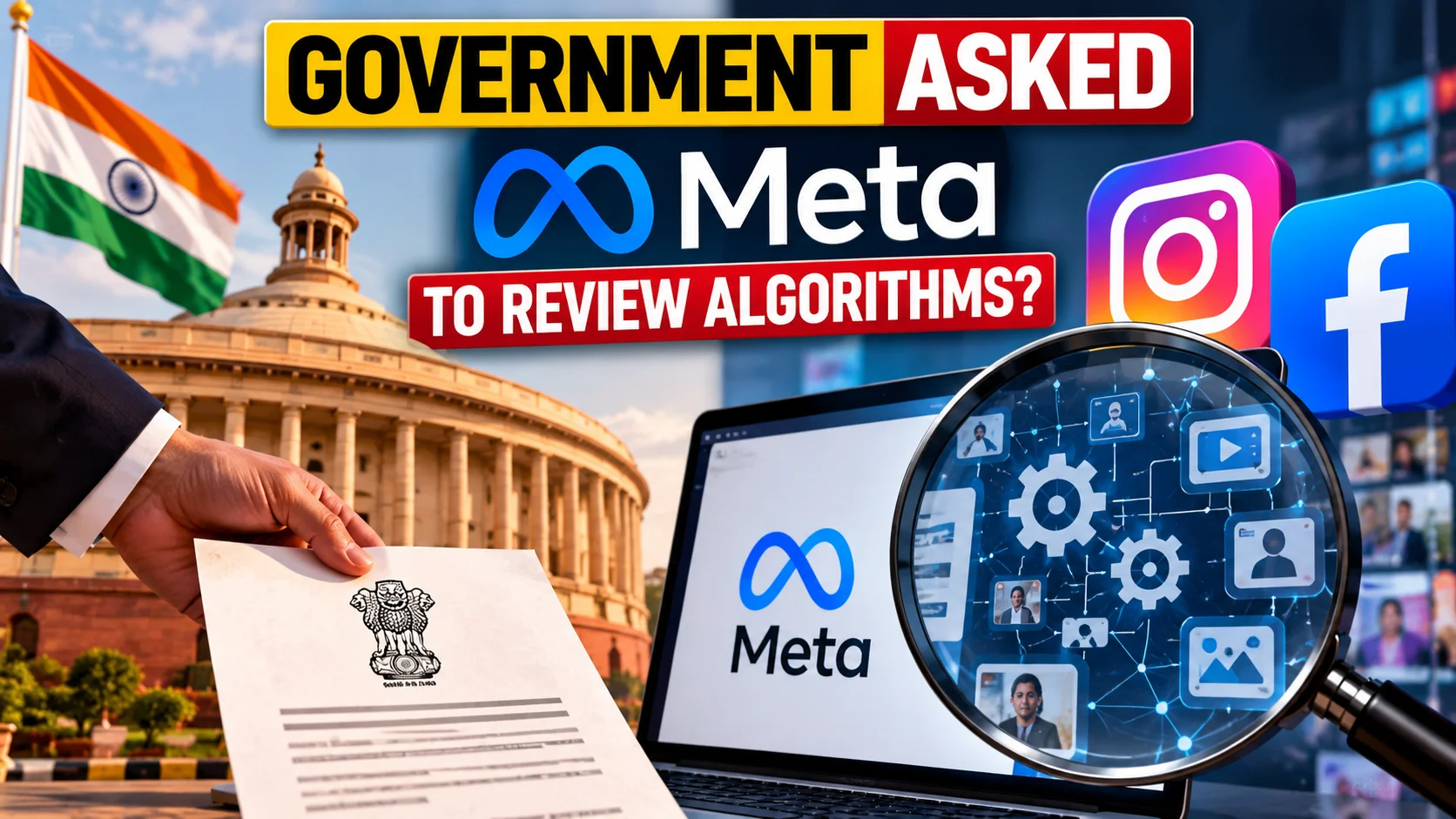
This incident isn't just a technical oopsie; it has massive legal implications. Under India's updated IT Rules of 2026, social media intermediaries are required to have a robust grievance redressal mechanism. If a post is removed, the platform must provide a clear reason and a way to appeal. While Meta restored the post quickly, the fact that it was removed without a valid policy violation puts them in a tight spot with the Ministry of Electronics and Information Technology (MeitY). We expect a formal notice to be issued soon, asking Meta to explain the 'algorithmic failure' that led to this situation.
For Indian users, this is a wake-up call. We are seeing more and more 'shadow banning' and accidental removals because platforms are trying to comply with local laws using automated tools that aren't fully ready. If you are a content creator or a business owner in India, you've probably felt this frustration. One wrong keyword and your reach drops to zero. Meta’s apology to the PM is a rare admission of guilt, but it doesn't solve the underlying problem of over-censorship by bots that don't understand local context, sarcasm, or cultural nuances.
TamilTech's Honest Take: Is AI Moderation Failing Us?
Look, at TamilTech, we love technology, but we also believe in accountability. Meta's reliance on AI for moderation is purely a cost-saving move. Hiring enough human moderators to review Indian content in 22 different languages is expensive, so they let the bots do the heavy lifting. But bots don't have common sense. They don't know who the Prime Minister is unless they are specifically programmed to whitelist certain IDs—and even then, glitches like this happen. This apology feels like a 'band-aid' on a much deeper wound in the social media ecosystem.
What we expect to see next is a push for 'Human-in-the-loop' moderation for high-reach accounts. Meta might be forced to ensure that any post from a verified government official or a major public figure is never taken down by a bot without a secondary human verification. But for the rest of us? We are still at the mercy of the algorithm. Our advice? Don't rely on just one platform for your digital presence. Whether you are a politician or a tech enthusiast, the 'delete' button is currently controlled by an AI that doesn't always know what it's doing. Stay tuned to TamilTech for more updates on how this develops!


Comments (0)
Be the first to comment!