


Key Takeaways
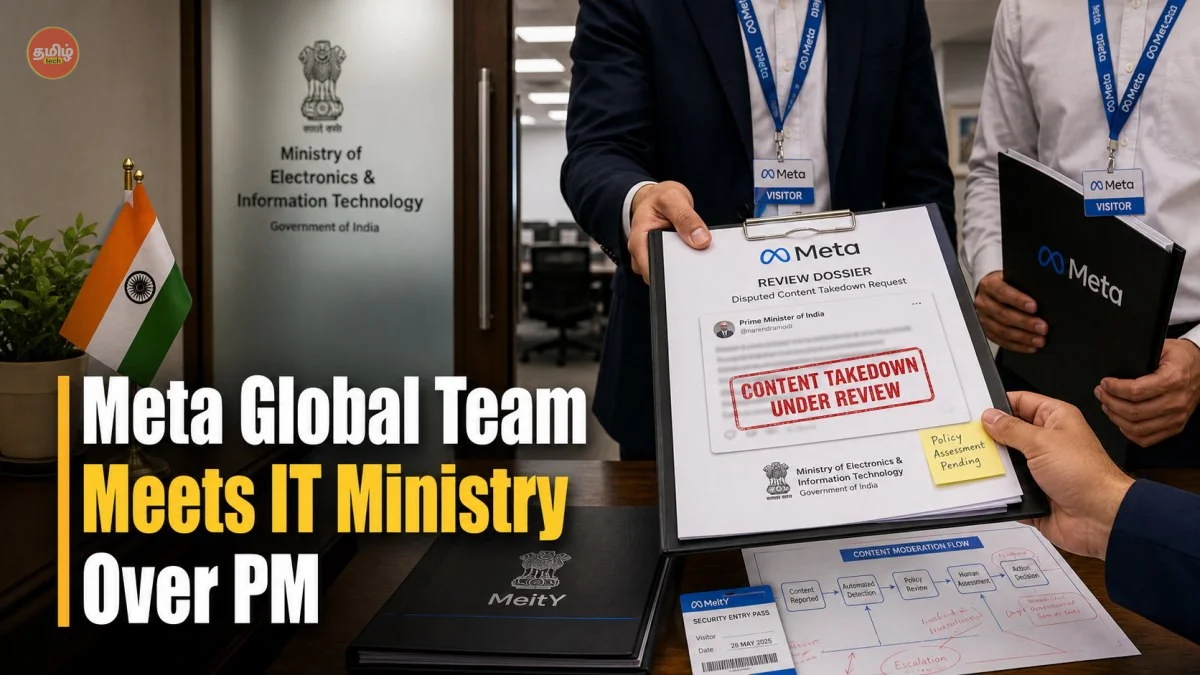
- Meta's Global Vice President and legal heads met with India's IT Ministry officials on August 4, 2026, following a formal summons.
- The controversy stems from the 'accidental' removal of a post by the Prime Minister of India, which Meta's AI flagged as a violation of community standards.
- Government officials have warned of strict penalties and potential changes to the Digital India Act 2026 if 'algorithmic bias' is not addressed.
- Meta has issued a formal apology, citing a technical glitch in their automated moderation system that affected several high-profile accounts globally.
- The IT Ministry is now demanding a 'human-in-the-loop' verification process for all constitutional authorities' social media handles.
The Delhi Showdown: Why Meta is in Hot Water
It’s not every day that the global leadership of a trillion-dollar company flies into New Delhi on short notice. But when you accidentally delete a post from the Prime Minister of the world’s largest democracy, you don’t just send an email—நீங்க நேர்ல வந்து தான் பதில் சொல்லணும் (you have to answer in person). This week, the corridors of the Ministry of Electronics and Information Technology (MeitY) were buzzing as Meta’s global team sat down for a marathon meeting with senior Indian officials. The atmosphere was reportedly tense, and for good reason. In the middle of 2026, where social media is the primary battlefield for narratives, a 'technical glitch' that silences the head of state is seen as more than just a bug; it’s seen as a sovereignty issue.
For those who missed the drama earlier this week, Meta’s automated systems flagged and removed a post by the PM regarding a major national infrastructure project. The reason? A generic 'Community Standards' violation. While the post was restored within an hour, the damage was done. The Indian government didn't take it lightly, issuing a summons that basically said, 'Explain yourselves or face the consequences.' This isn't just about one post; it's about who really controls the digital discourse in India—the government or a bunch of algorithms written in Menlo Park.
The Background: A History of Friction
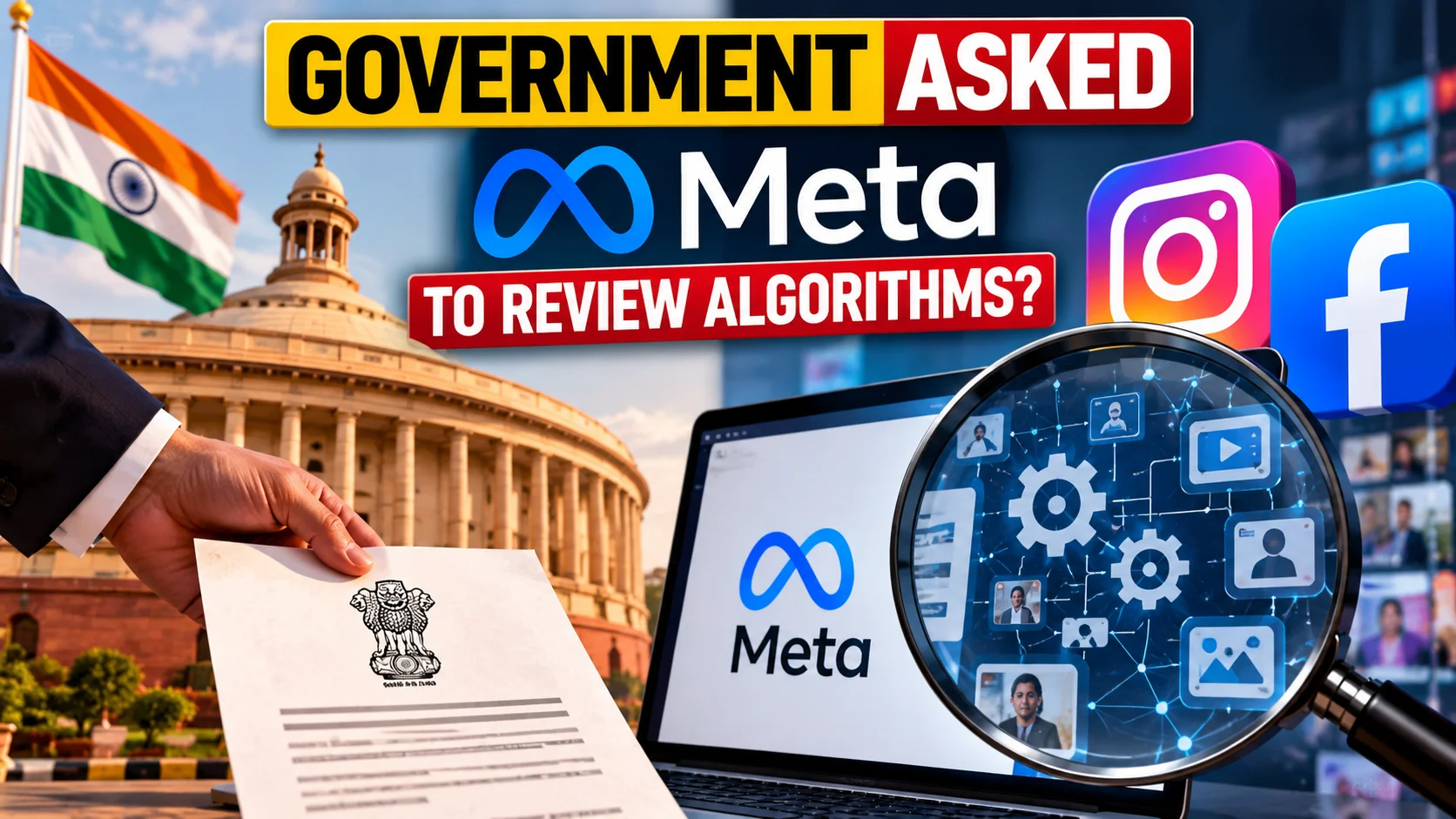
This isn't the first time Meta (Facebook and Instagram) has clashed with the Indian government, but the stakes in 2026 are much higher than they were back in 2021 or 2024. Over the last two years, India has tightened its grip on Big Tech through the Digital India Act and various amendments to the IT Rules. The government has been pushing for 'algorithmic accountability,' demanding that platforms explain exactly why certain content is promoted or demoted. Meta, on the other hand, has always hidden behind the 'black box' of their AI, claiming that the volume of content is too massive for human eyes to track everything.
The current friction reached a boiling point because this wasn't an isolated incident. Several other Indian ministers and high-ranking officials have reported 'shadow-banning' or reach-restriction on their posts over the last six months. When the PM's post was taken down, it was the final straw. The government’s argument is simple: if your AI is smart enough to sell ads with surgical precision, it should be smart enough to recognize the Prime Minister of a country. Meta’s defense of 'oops, it was a glitch' is starting to wear thin with the IT Ministry.
The Meeting: What Actually Happened Behind Closed Doors?
According to our sources in the capital, the Meta team, led by their Global VP of Public Policy, spent over four hours in the MeitY office. The government didn't just ask for an apology; they asked for the source code logic. They wanted to know why the PM’s post was flagged. Was it a specific keyword? Was it a mass-reporting campaign by bot farms that the AI fell for? Or was it a manual error by a moderator? Meta reportedly admitted that their '2026 Core AI' update—designed to combat deepfakes—had become overly aggressive and misidentified the PM's official video as 'manipulated media.'
The IT Ministry officials were not satisfied with the 'aggressive AI' excuse. They pointed out that while the PM’s post was removed, several other posts containing actual misinformation remained active for hours. This discrepancy is what the government calls 'algorithmic bias.' Meta has been given a 14-day deadline to submit a detailed technical audit of their moderation systems in India. If they fail to provide a satisfactory explanation, the government could invoke Section 69A of the IT Act, which allows for blocking specific services or imposing massive financial penalties based on global turnover.
India Impact: Why You Should Care
You might think, 'This is just a fight between the government and a big company, why does it matter to me?' Well, it matters because the outcome will change how you use Facebook and Instagram in India. If the government forces Meta to implement a 'human-in-the-loop' system for Indian users, it could mean slower content takedowns for real issues like scams or harassment, or it could mean a much stricter environment where the platform is afraid to flag anything. We are also looking at the possibility of Meta being forced to store more data locally and hire thousands of more Indian moderators to ensure 'cultural and political sensitivity.'
Moreover, this sets a precedent. If Meta bows down, Google, X (formerly Twitter), and even emerging AI platforms like OpenAI will have to follow suit. We could see a future where social media platforms in India look very different from their global versions. For the average user, this might mean more 'verified' content and less 'organic' reach for controversial topics. The government is also considering a 'Digital Sovereignty Tax' for platforms that repeatedly fail to comply with local moderation norms. This could eventually lead to these platforms becoming paid services or showing even more ads to cover the costs of compliance.
How Content Moderation Actually Works (and Fails)
To understand why this happened, we need to look at the tech. Meta uses a multi-layered approach. First, there’s the 'Hash Matching' layer that looks for known prohibited images or videos. Then comes the 'Natural Language Processing' (NLP) layer that reads text in 100+ languages, including Tamil, Hindi, and Telugu. Finally, there’s the 'Predictive Model' that tries to guess if a post will cause 'real-world harm.' In the PM's case, the NLP likely misinterpreted a specific technical term or the AI thought the high engagement rate in a short time was 'inauthentic behavior' (bot activity).
The problem is that these AI models are trained on global datasets, often heavily skewed towards Western contexts. When they are applied to the complex political and social landscape of India, they fail. A phrase that is a common political slogan in Tamil Nadu might be flagged as 'incitement to violence' by an AI trained in California. This is the core of the 'algorithmic bias' argument. Meta’s global team promised to 'localize' their AI training sets further, but experts say this is a task that could take years, not weeks.
Comparison: Meta vs. X vs. Google
Compared to other tech giants, Meta has had a rockier relationship with the Indian government. X (Twitter) had a very public fallout a few years ago but has since become more 'compliant' under new leadership. Google usually stays under the radar by complying quietly with most government requests. Meta, because of its sheer size and the influence of WhatsApp, is always in the spotlight. While Google’s YouTube also uses AI moderation, they have a more robust 'appeals' process for high-profile creators, something Meta is now being forced to emulate for political figures.
Pros of Meta's approach: High automation allows for rapid removal of truly dangerous content (like self-harm or child safety issues). Cons: Lack of nuance, frequent 'false positives,' and a perceived lack of transparency. The Indian government clearly prefers the 'X model' where there is a clear line of communication with local leadership, rather than dealing with a global team that doesn't understand the local context.
TamilTech’s Honest Take: The Balance of Power
At TamilTech, we think this is a classic 'David vs. Goliath' story, except in this case, David is a sovereign nation and Goliath is a tech giant. While we believe in a free and open internet, platforms cannot be allowed to operate with zero accountability. If an algorithm can 'accidentally' silence a Prime Minister, it can certainly silence a journalist, a small business owner, or a regular citizen without any recourse. That is a dangerous territory.
However, we also need to be careful. If the government gains too much control over 'algorithmic audits,' it could lead to a situation where only 'approved' narratives are allowed to go viral. The solution isn't just more government control; it's more transparency. Meta should publish their moderation criteria clearly, and there should be an independent judicial body—not just a government ministry—to oversee these disputes. What to expect next? Expect a lot of 'updates' to Meta’s terms of service in India and perhaps a new 'Verified Government Official' badge that comes with algorithmic immunity. Stay tuned, because the rules of the Indian internet are being rewritten as we speak.
Frequently Asked Questions
Q: Why did Meta delete the PM's post?
A: Meta claimed it was a technical glitch where their AI incorrectly flagged the content as a violation of community standards, specifically related to 'manipulated media' filters.
Q: Can the Indian government ban Facebook or Instagram?
A: Under Section 69A of the IT Act, the government has the power to block apps if they threaten national security or public order, but a total ban is unlikely. Heavy fines are the more probable outcome.
Q: What are the new IT Rules of 2026?
A: The 2026 rules focus on 'Algorithmic Accountability,' requiring platforms to explain their recommendation engines and provide a 24-hour resolution window for grievances from constitutional authorities.

Comments (0)
Be the first to comment!