


Key Takeaways
- Michael Polansky's startup keeps living human skin tissue alive outside the body for weeks using advanced technology
- His AI model analyzes this living tissue to discover new skincare compounds that could revolutionize the Indian beauty market
- Polansky, known as Lady Gaga's partner and former deputy to Sean Parker, has been quietly building this company for years
- The technology could reduce India's dependence on imported skincare ingredients by enabling local discovery
- The startup is only now going public about their breakthrough, which could disrupt the $15bn Indian skincare industry
What's the news
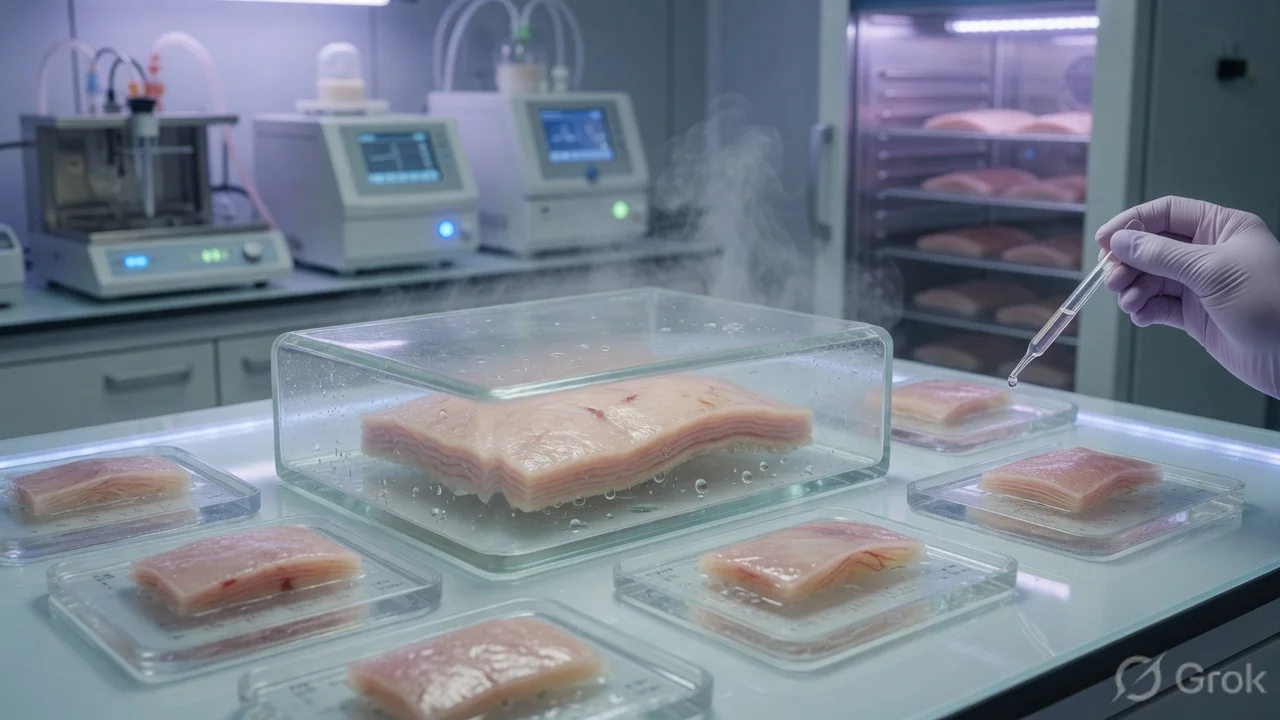
Michael Polansky, better known publicly as Lady Gaga's partner and a former top deputy to Sean Parker, has quietly spent years building an AI-driven startup that keeps living human skin tissue alive for weeks outside the body to discover new skincare compounds, and is only now going public about this breakthrough technology.
Details
The technology developed by Polansky's company represents a significant leap forward in skincare research. Unlike traditional methods that use dead skin cells or computer simulations, this approach maintains living human skin tissue in a controlled environment for extended periods. The AI model then analyzes how this living tissue responds to various compounds, identifying potential skincare ingredients that could address specific skin concerns.
What makes this particularly groundbreaking is the ability to observe real-time cellular responses. The living tissue maintains its natural characteristics and behaviors, allowing researchers to see exactly how skin cells react to different substances. This level of observation was previously impossible with traditional skincare testing methods.
Polansky's background in technology and business, combined with his connections in entertainment and Silicon Valley, has positioned him well to bridge the gap between cutting-edge biotechnology and commercial skincare applications. His experience working with Sean Parker at various tech ventures provided him with insights into scaling innovative technologies.
India impact
For India's massive skincare market, which is valued at over $15 billion and growing rapidly, this technology could be transformative. The country currently imports many active skincare ingredients, but this AI-driven approach to discovering new compounds could help develop locally-relevant solutions tailored to Indian skin types and environmental conditions.
Indian consumers are increasingly demanding skincare products that address specific concerns like hyperpigmentation, pollution damage, and sensitivity to tropical weather. The ability to test compounds on living human tissue could accelerate the development of products that work effectively for these specific needs.
Furthermore, India's strong pharmaceutical and biotechnology sectors could leverage this technology to position the country as a global leader in skincare innovation. Companies in cities like Bangalore, Hyderabad, and Pune could potentially license or adapt this technology for their own research and development efforts.
Use cases
The applications of this technology extend beyond traditional skincare products. The living tissue model could be used to test cosmetics for safety and efficacy, reducing the need for animal testing. It could also help develop medical treatments for skin conditions like eczema, psoriasis, and wound healing.
In the beauty industry, brands could use this technology to create personalized skincare solutions based on an individual's specific skin characteristics. The AI model could analyze how living tissue responds to different compounds and recommend customized formulations.
The technology could also accelerate anti-aging research by allowing scientists to study how living skin cells respond to various anti-aging compounds over time. This could lead to more effective treatments for wrinkles, fine lines, and other signs of aging.
Honest take
While the technology is promising, there are challenges to consider. Maintaining living human tissue outside the body requires significant infrastructure and expertise. The cost of developing and commercializing new skincare compounds using this method could be high initially.
Additionally, regulatory approval for new skincare ingredients can be a lengthy process. However, the potential benefits for India's beauty industry and consumers could outweigh these challenges in the long run.
FAQs
How long can the living skin tissue be maintained?
The technology allows living human skin tissue to remain viable for several weeks outside the body in a controlled environment.
What makes this different from traditional skincare testing?
Unlike traditional methods that use dead cells or computer models, this approach uses living tissue that responds naturally to compounds, providing more accurate results.
How could this benefit Indian consumers specifically?
The technology could lead to skincare products specifically formulated for Indian skin types and environmental conditions, addressing concerns like hyperpigmentation and pollution damage.
Is animal testing still required?
This technology could significantly reduce the need for animal testing in skincare research, though it may not eliminate it entirely for all types of testing.
When might we see products developed using this technology in India?
While the technology is still relatively new, products developed using this method could potentially reach the Indian market within the next few years as the technology matures and becomes more widely adopted.





Comments (0)
Be the first to comment!