


Key Takeaways
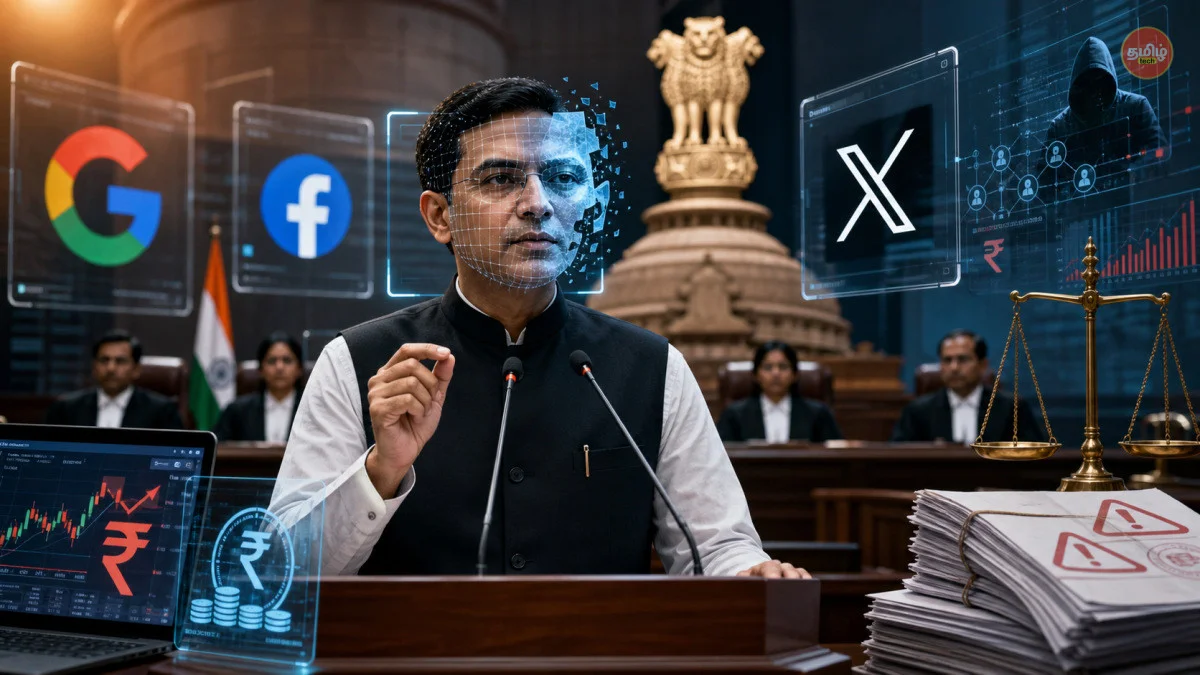
- Union Minister Nitin Gadkari filed a lawsuit in July 2026 against Meta, X, and Google over AI-generated deepfake videos falsely using his likeness.
- The deepfakes involved sophisticated voice cloning and face-swapping to promote fraudulent investment schemes.
- The lawsuit seeks to strip tech platforms of their 'Safe Harbor' protection if they fail to proactively block AI-generated misinformation.
- This legal move marks a turning point for Indian internet laws, potentially making AI-detection filters mandatory for social media companies.
The Minister vs. The Algorithms: What’s Happening?
Imagine scrolling through your YouTube feed or X (formerly Twitter) timeline and seeing a video of a high-ranking Union Minister like Nitin Gadkari. He’s speaking directly to the camera, his voice is unmistakable, and he’s telling you about a 'revolutionary' investment scheme that promises to double your money. You trust the face, you trust the voice, and you might almost click that link. But here is the catch—it was never him. It was a sophisticated AI model trained on thousands of hours of his public speeches to mimic his every nuance. This isn't a scene from a sci-fi movie; this is the reality of 2026, and Nitin Gadkari has finally said 'enough is enough.'
The Union Minister for Road Transport and Highways has officially moved the courts against Meta, X, and Google. This isn't just about a single video; it’s a full-blown legal war against how these platforms handle—or fail to handle—AI-generated deepfakes. We’ve seen celebrities like Rashmika Mandanna and cricketers like Virat Kohli fall victim to this in the past, but when a sitting Union Minister takes the tech giants to court, the stakes reach a whole new level. This case is set to become the blueprint for how India deals with the dark side of Artificial Intelligence.
How the Deepfake Scam Actually Worked
So, how did they pull this off? The scammers used what we call 'Generative Adversarial Networks' or GANs, which have become incredibly easy to access in 2026. By feeding an AI model high-definition footage of Gadkari’s past rallies and interviews, they created a digital puppet. They didn't just stop at the face; they used 'Voice Cloning' technology. If you’ve been following tech lately, you know that with just a 30-second clip of someone’s voice, AI can now generate hours of speech that sounds 99% authentic, including the specific Marathi-accented Hindi that Gadkari is known for.
These videos were then boosted using paid advertisements on Meta (Facebook and Instagram) and Google (YouTube). People were seeing these 'scams' as legitimate ads. The Minister’s legal team argues that the platforms didn't just host the content—they profited from it by taking ad money from the scammers. This is the core of the frustration. When a regular user reports a video, it often takes days for a human moderator to look at it. By then, the damage is done, and thousands of people might have already been duped into giving away their hard-earned money to these fake schemes.
The 'Safe Harbor' Shield is Under Attack
For years, tech giants have hidden behind something called 'Section 79' of the IT Act, often referred to as 'Safe Harbor.' Essentially, this law says that if someone posts something illegal on Facebook, Facebook isn't responsible; only the person who posted it is. It’s like saying a postman isn't responsible for the contents of a letter. However, Gadkari’s lawsuit challenges this fundamental concept. His legal team argues that in the age of AI, the 'postman' now has an X-ray machine and an automated sorting system, but chooses not to use them.
The argument is that Google, Meta, and X have the world’s most advanced AI detection tools. If they can use AI to show you personalized ads for shoes you just searched for, why can't they use that same AI to detect a deepfake of a public figure? The lawsuit demands that these platforms be treated as 'publishers' rather than just 'intermediaries' when it comes to AI content. If this goes through, it would mean that platforms could be held legally liable for every second a deepfake stays online after it’s been flagged, or even before it’s flagged if it’s an obvious manipulation.
What This Means for You and Me in India
This isn't just a fight between a politician and a tech company. This affects every single person in India who uses a smartphone. If Gadkari wins this case, or even if it leads to a settlement, we are looking at a massive shift in how the Indian internet works. We might see the introduction of a 'Mandatory AI Labeling' system. Every video uploaded would have to pass through a deepfake scanner, and if AI is detected, it would be watermarked automatically. This would make it much harder for scammers to use the likeness of famous people to sell fake products or spread political misinformation.
Moreover, this case is happening at a time when the Indian government is already tightening the screws with the Digital India Act of 2026. The government wants 'proactive monitoring.' They don't want to wait for a complaint; they want the platforms to stop the content at the gate. For the average user, this means a safer internet, but it also raises concerns about privacy and over-censorship. If an AI is deciding what is 'real' and what is 'fake,' what happens when it makes a mistake and takes down a genuine parody or a piece of satire? That’s the thin line the courts will have to walk.
TamilTech’s Take: Why the Tech Giants are Scared
At TamilTech, we’ve been tracking the rise of AI for years, and honestly, we think this legal move was inevitable. The platforms have been playing a cat-and-mouse game for too long. They claim they are doing their best, but their 'best' usually involves waiting for a court order or a government notice before taking action. In 2026, where a video can go viral to 100 million people in three hours, waiting for a court order is like bringing a bucket of water to a forest fire.
We believe that Google and Meta have the tech to solve this today. They just don't want to do it because it’s expensive and slows down their systems. This lawsuit by Nitin Gadkari is a wake-up call. It’s telling these companies that they cannot enjoy the profits from the Indian market without taking responsibility for the safety of Indian citizens. Whether you like his politics or not, Gadkari taking this to court is a win for digital safety in India. It’s high time these platforms stopped acting like passive observers and started acting like the powerful entities they are.
How to Protect Yourself from Deepfakes in 2026
Until the law catches up, you are your own best defense. Here is how you can spot these AI scams: First, look at the eyes. AI still struggles with natural blinking patterns. If the person in the video doesn't blink for a long time or blinks weirdly, it’s a red flag. Second, listen for the 'robotic' pauses. Even the best voice cloning can sometimes have unnatural gaps between words. Third, always check the source. If Nitin Gadkari is announcing a new scheme, it will be on his verified official handle and reported by major news outlets, not some random account with 50 followers.
Lastly, remember the golden rule of the internet: If it sounds too good to be true, it probably is. No Minister is going to ask you to 'invest ₹5000 to get ₹50,000' through a social media ad. Stay vigilant, stay updated with TamilTech, and don't let the algorithms fool you. The legal battle has just begun, and we will be watching every move in this Meta vs. Gadkari saga very closely.



Comments (0)
Be the first to comment!