


Introduction: A Personal Crisis Amidst an Industry Boom
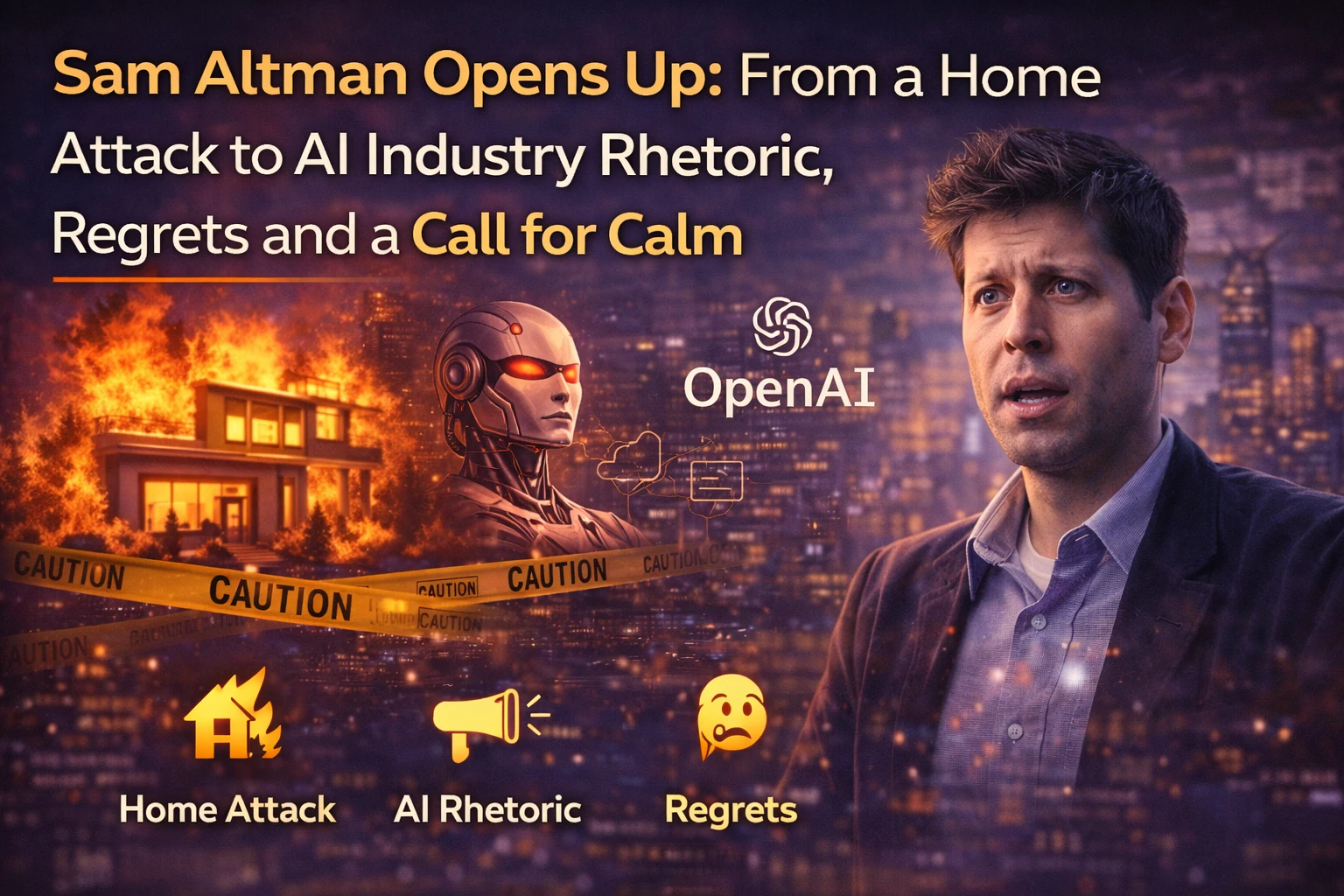
When Sam Altman, the charismatic CEO of OpenAI, posted a photo of his family with the caption “I love them more than anything,” the world paused. The image, shared on X (formerly Twitter), came just days after a shocking break‑in at his San Francisco residence. The incident, which left the family shaken but unharmed, sparked a wave of sympathy and curiosity about the man behind the AI juggernaut.
In a candid interview that followed, Altman opened up about the attack, reflected on OpenAI’s unprecedented success, confessed personal regrets, and, perhaps most importantly, called for a de‑escalation of the combative language and tactics that have come to dominate the AI industry. For Indian tech enthusiasts, investors, and policymakers, his words are more than a personal diary—they’re a bellwether for how the AI revolution might unfold in India.
The Break‑In: What Happened and Why It Matters
According to police reports, a group of unknown individuals forced entry into Altman's home in the Mission District on the night of March 28, 2024. While no one was physically harmed, valuable equipment and personal items were stolen, and the family’s sense of security was irrevocably altered. Altman’s public response was measured: he thanked law‑enforcement, expressed gratitude for his family's safety, and emphasized that the incident reinforced his commitment to privacy and security—both personal and digital.
Why does a home invasion matter to the AI community? Altman’s reaction highlighted a growing realization: the lines between personal safety and digital security are blurring. As AI systems become more integrated into everyday life, the people building them are increasingly seen as high‑value targets—whether for espionage, activism, or simple opportunistic crime. This incident serves as a cautionary tale for Indian founders who are scaling AI startups in crowded co‑working spaces and often lack robust personal security protocols.
OpenAI’s Meteoric Rise: From GPT‑4 to a Global Powerhouse
OpenAI’s journey from a nonprofit research lab to a $29 billion valuation unicorn has been nothing short of spectacular. The launch of ChatGPT in late 2022 captured public imagination, but it was the rapid iteration to GPT‑4, and now GPT‑4‑Turbo, that cemented OpenAI’s dominance. The company now powers everything from Microsoft’s Copilot suite to Indian ed‑tech platforms like BYJU’s and Unacademy, which have integrated OpenAI’s APIs to create personalized tutoring experiences.
Altman’s reflection on this success is tinged with humility. He acknowledged that the company’s growth was propelled not just by brilliant engineering but also by a “perfect storm” of market demand, strategic partnerships, and a willingness to push ethical boundaries—sometimes faster than regulators could keep up.
For Indian startups, OpenAI’s trajectory offers both inspiration and a warning. While the appetite for AI‑driven solutions is soaring—evidenced by the $13 billion AI market in India projected for 2027—founders must grapple with scaling responsibly, navigating nascent regulations, and managing public expectations.
Personal Regrets: The Human Side of a Tech Icon
In the same interview, Altman spoke candidly about regrets that many tech leaders share but seldom voice publicly. He mentioned three key areas:
- Work‑Life Balance: The relentless pace at OpenAI meant missing milestones in his children’s lives. He admitted that no amount of AI breakthroughs can replace a missed bedtime story.
- Early Transparency: Altman wished he had been more forthright about the potential misuses of generative AI in its early days, believing that a more open dialogue could have mitigated some of the backlash that followed the release of GPT‑4.
- Community Engagement: He expressed remorse for not fostering a broader, more inclusive AI research community earlier, which could have diversified perspectives and reduced the concentration of power.
These reflections are particularly resonant in India, where work‑culture fatigue is a growing concern among engineers and entrepreneurs. The “hustle” narrative often glorifies sleepless nights, but Altman’s admission underscores the long‑term cost of such a mindset.
De‑Escalating Rhetoric: A Call for Civility in the AI Battlefield
Perhaps the most consequential part of Altman’s message was his plea to “de‑escalate the rhetoric and tactics” that have become common in AI discourse. Over the past two years, the industry has been plagued by a war of words: CEOs accusing rivals of “dangerous shortcuts,” governments issuing stern warnings, and activist groups staging high‑profile protests.
Altman argued that this adversarial tone fuels a feedback loop of secrecy, competition, and ultimately, risk. He suggested three practical steps:
- Establish Open Forums: Regular, multi‑stakeholder roundtables—bringing together researchers, policymakers, ethicists, and civil society—to discuss emerging threats and opportunities.
- Adopt Shared Safety Standards: Similar to the ISO standards for information security, a globally accepted AI safety framework could reduce the need for competitive secrecy.
- Promote Responsible Competition: Encourage “coopetition,” where firms collaborate on safety research while competing on product innovation.
For India, where the AI policy landscape is still evolving, adopting such collaborative mechanisms could accelerate trustworthy AI adoption while avoiding a regulatory arms race.
Implications for the Indian Market
1. Heightened Security Concerns
The home attack underscores that AI leaders are becoming high‑profile targets. Indian startups must invest in physical security for key personnel, especially as they attract foreign investors and media attention. Companies like Freshworks and Zoho have already instituted security protocols for senior executives; similar measures should become industry norm.
2. Regulatory Momentum
Altman’s call for shared safety standards dovetails with India’s draft National AI Strategy, which emphasizes ethical AI, data privacy, and cross‑border collaboration. The Ministry of Electronics and Information Technology (MeitY) is expected to release a “Responsible AI Framework” by year‑end, aligning with global efforts like the OECD AI Principles.
3. Talent Retention and Well‑Being
Altman’s regret about missing family moments resonates with Indian engineers who often face 12‑hour workdays. Companies such as Tata Consultancy Services (TCS) and Infosys are experimenting with flexible work models and mandatory “offline” days to combat burnout—practices that could become a competitive advantage in attracting top AI talent.
4. Market Opportunities for Safer AI Products
Indian enterprises are increasingly wary of deploying black‑box AI solutions that could expose them to compliance risks. Altman’s emphasis on transparency opens a window for Indian firms to develop explainable AI (XAI) platforms, a niche that could attract both domestic and foreign clients seeking regulatory‑friendly solutions.
5. Community‑Driven Innovation
Altman’s regret about limited community engagement is a rallying cry for Indian academia and open‑source communities. Initiatives like the AI for All programme by IIT Madras and the open‑source “BharatAI” project can foster a more inclusive ecosystem, ensuring that AI benefits a broader segment of society.
What This Means for Indian Tech Users/Industry
For the average Indian tech user, Altman’s reflections translate into tangible outcomes:
- More Trustworthy Products: As companies adopt shared safety standards, end‑users can expect AI tools that are less prone to bias, misinformation, or privacy breaches.
- Better Work‑Life Balance for Developers: Companies that heed Altman’s personal regrets may introduce policies that reduce overtime, leading to healthier, more creative engineering teams.
- Increased Transparency: OpenAI’s willingness to discuss its missteps may encourage Indian platforms to publish model cards and data sheets, helping users understand how AI decisions are made.
- Enhanced Security: With heightened awareness of physical threats to AI leaders, firms are likely to invest in stronger cybersecurity and data protection measures, benefitting all users.
Ultimately, Altman’s message is a reminder that the AI revolution is not just about technology—it’s about people, ethics, and the social contract between innovators and society. For India, a country poised to become a global AI hub, embracing this holistic view could be the difference between a boom that fuels inclusive growth and a frenzy that amplifies inequality.
Conclusion: A Path Forward Grounded in Humanity
Sam Altman’s recent reflections blend personal vulnerability with a strategic vision for the AI industry. By acknowledging his own regrets, championing de‑escalation, and highlighting the importance of safety and community, he offers a blueprint that resonates far beyond Silicon Valley.
For Indian entrepreneurs, policymakers, and users, the takeaways are clear: invest in security, champion transparent standards, prioritize employee well‑being, and build ecosystems that value collaboration over confrontation. If the Indian tech community can internalize these lessons, the country will not only ride the AI wave but steer it toward a future that benefits everyone.




Comments (0)
Be the first to comment!