


முக்கிய விஷயங்கள்
- Sarvam AI-யின் புதிய Vision 2.1 Model, Indian language documents-ஐ structure மற்றும் script - இரண்டையும் சேர்ந்து படிக்க designed செய்யப்பட்டது.
- Invoice, insurance claim, KYC form மாதிரி documents-ல Tamil, Hindi, Telugu, Bengali text இருந்தா, பழைய OCR tools table structure-ஐ இழந்துடும். இந்த Model அதை தீர்க்கும் நோக்கத்தில வந்தது.
- Google Vision, AWS Textract மாதிரி global tools English-க்கு super, ஆனா Indian script mixed layouts-ல consistent-ஆ இல்ல.
- இது Finance, Insurance, Logistics, Government document processing teams-க்கு நேரடியா உபயோகம்.
- இது ஒரு Consumer App இல்ல - Enterprise/Developer tool, ஆனா இதன் தாக்கம் சாதாரண மக்கள் பயன்படுத்தும் services-ல தெரியும்.
What just happened?
Here's a problem every finance team in India quietly deals with. You scan an invoice that has an English header, a Tamil or Hindi vendor name, and a table full of numbers. Run it through a standard OCR tool, and one of two things happens.
Either the text comes out right but the table turns into a jumbled mess, or the table structure survives but the regional language text turns into gibberish. You've probably seen this yourself if you've ever tried to digitise an old ration card, a Tamil Nadu land record, or a regional insurance form using a free OCR app.
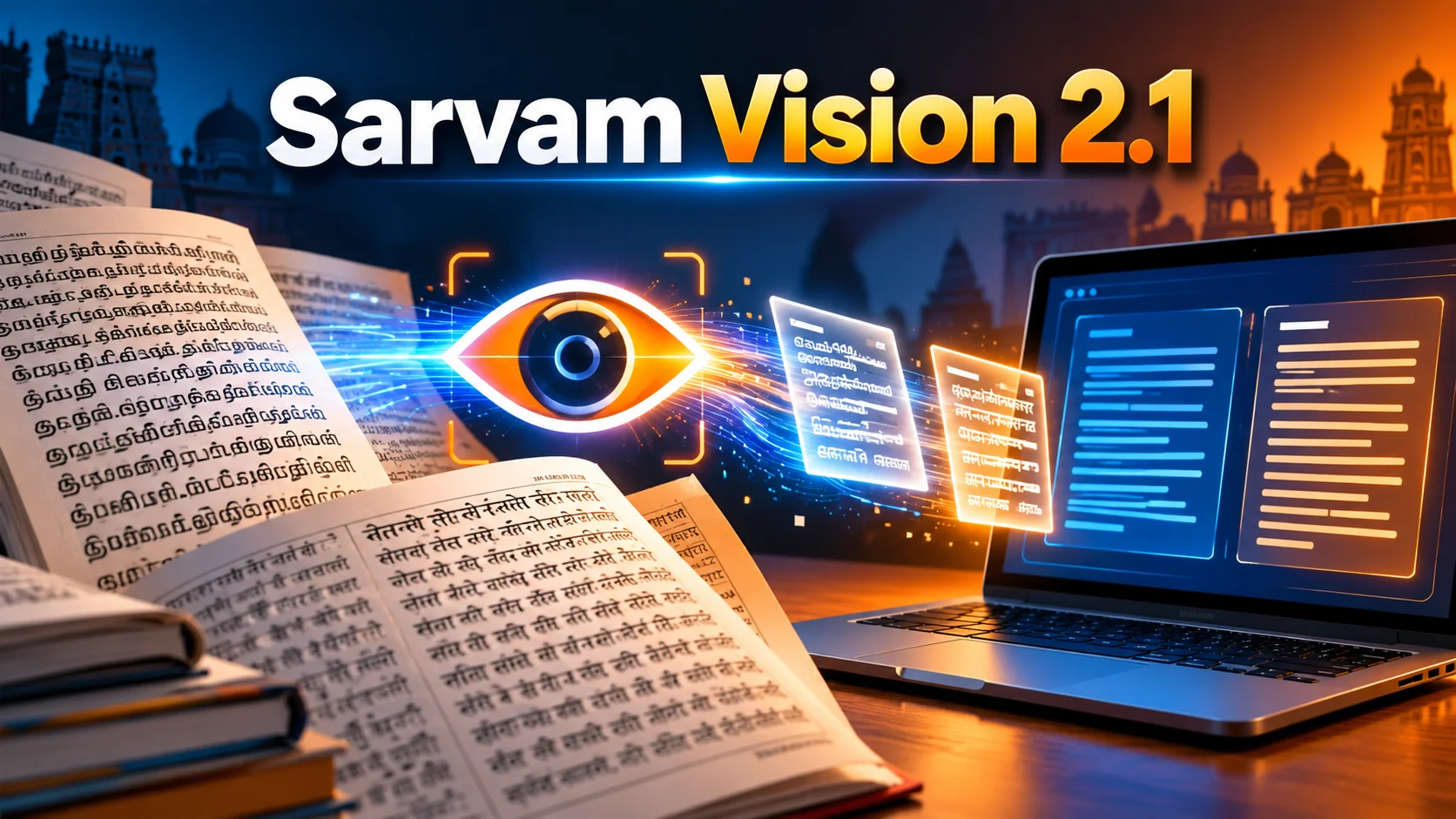
Sarvam AI, the Bengaluru-based AI company that has been building India-focused language models for a couple of years now, has put out a new model called Sarvam Vision 2.1. The pitch is simple on paper but genuinely hard in practice - read the structure of a document and the Indian-language script in it, at the same time, without one breaking the other.
This isn't a flashy consumer launch. There's no app you'll download on your Phone this weekend. It's a model aimed at developers and enterprises - the kind of teams building invoice automation, claims processing, or document digitisation pipelines. But the ripple effect of this reaches further than it looks.
How does this actually work?
Let's break down why this was such a stubborn problem in the first place. OCR, for anyone who needs the refresher, stands for Optical Character Recognition - அதாவது, ஒரு scanned image-ல இருக்கிற எழுத்துகளை Computer படிக்கிற Technology.
Western OCR models like Google's Document AI or AWS Textract were trained mostly on English, Latin-script documents - invoices, receipts, forms from the US and Europe. They got really good at understanding structure: where a table starts, which cell is a price, which line is a date. That's called structural document parsing.
Indian-language OCR tools, on the other hand, usually came from a different lineage - built specifically to recognise Tamil, Devanagari, Telugu, or Bengali script. They're decent at reading the text itself, but they were never trained hard on layout. Give them a complex multi-column insurance form, and they'll read the words but lose track of which word belongs to which field.
Sarvam Vision 2.1 tries to collapse this into one model. எளிமையா சொன்னா, இது ஒரே Model-ல இரண்டு திறமையையும் வெச்சிருக்கு - document-ன கட்டமைப்பை புரிஞ்சுக்குறது, அதே நேரம் அதுல இருக்கிற Indian script-ஐயும் சரியா படிக்குறது. உதாரணமா, ஒரு insurance claim form-ல Tamil-ல கையெழுத்து குறிப்பு இருந்தா, அந்த குறிப்பு எந்த field-க்கு சேர்ந்தது என்பதையும் இந்த Model புரிஞ்சுக்கும்.
According to early reviews of the model, this dual capability is what sets it apart from both the global OCR giants and the smaller, script-only Indian tools that have been around for a while. Whether it holds up across messy real-world scans - torn paper, bad lighting, handwritten overlays - is something only wider usage will prove.
What changes for people in India?
You, as a regular Phone user, probably won't open an app called Sarvam Vision anytime soon. But think about how many Indian businesses run on paper that mixes English and a regional language.
A Chennai-based NBFC processing loan documents with Tamil guarantor signatures. A Hyderabad insurance office handling claim forms with Telugu handwritten notes. A Kolkata logistics firm digitising delivery receipts half in Bengali, half in English. Every one of these teams today either hires people to manually type out data, or accepts a high error rate from existing OCR tools.
If a model like Sarvam Vision 2.1 genuinely nails both structure and script, it directly cuts down this manual load. That means faster invoice processing, quicker insurance claim settlements, and fewer data-entry errors - the boring backend stuff that nobody notices until it breaks.
There's a bigger India-specific angle here too. Government and semi-government document digitisation - land records, ration cards, pension forms - has always struggled with regional scripts at scale. A capable Indian-language OCR model, if it's reliable and affordable, becomes infrastructure for exactly this kind of work, not just a corporate tool for finance teams.
It also says something about where Indian AI companies are choosing to compete. Instead of chasing another general chatbot to rival ChatGPT, Sarvam is picking a problem that's narrow, unglamorous, and extremely real - documents that actually exist in Indian offices, not documents that exist in a demo video.
What should you do now?
If you're a developer or a startup founder dealing with document automation - invoices, KYC, insurance, logistics paperwork with Indian languages in them - this is worth testing against whatever OCR pipeline you're currently running. Compare it on your own messy real documents, not clean sample PDFs.
If you run a small business that still manually types out vendor invoices or customer forms because your current OCR tool mangles the regional language parts, keep an eye on how Sarvam's offering gets packaged - likely as an API that developers can plug into existing billing or CRM software.
For everyone else, there's nothing to install today. But the next time your insurance claim gets processed faster than you expected, or your UPI-linked loan application clears without a human manually re-typing your Aadhaar details, there's a decent chance a model built exactly for this problem is quietly doing the work behind the scenes.
What's the catch, and what should you actually watch for next?
No model walks in without caveats, and Sarvam Vision 2.1 is no exception. Right now, there's no confirmed public pricing sheet floating around for Indian startups to budget against - expect this to roll out the way most Sarvam products have, through API access and enterprise deals rather than a self-serve dashboard with a credit card form. That matters because for a ten-person fintech in Coimbatore or a regional insurance broker in Indore, the real question isn't "does it work" but "can we afford to run this at the volume we process invoices at every month". Until Sarvam publishes clear per-page or per-document rates, every claim about cost savings for Indian businesses stays theoretical.
There's also the honesty check nobody likes doing but everyone should. Early numbers on dual structure-plus-script accuracy are coming from the company and early reviewers, not from a large, independent, multi-industry benchmark run across thousands of real Indian office documents. Handwriting - especially the kind you find on a decade-old land record or a hastily filled insurance claim - remains the hardest test for any OCR system, Indian or global. A model can read clean printed Tamil beautifully and still stumble on a shaky signature next to a stamp mark. Teams evaluating this should run their own torture tests: bad scans, coffee stains, phone-camera photos taken at an angle, not just the tidy PDF samples vendors love to demo with.
What to watch next is fairly clear. First, whether Google and AWS respond by quietly improving Indian-script support in Document AI and Textract, since competition here benefits every Indian developer regardless of which company wins. Second, whether Sarvam opens any lighter version of this model for smaller developers to experiment with, the way some Indian AI labs have started doing to build goodwill before enterprise sales. Third, and most tellingly, whether any state government digitisation project - the kind dealing with ration cards, pension records, or land registries in regional scripts - actually pilots a model like this at scale. That's the real test of whether this stays a finance-team tool or becomes something closer to public digital infrastructure.



Comments (0)
Be the first to comment!