


Key Takeaways
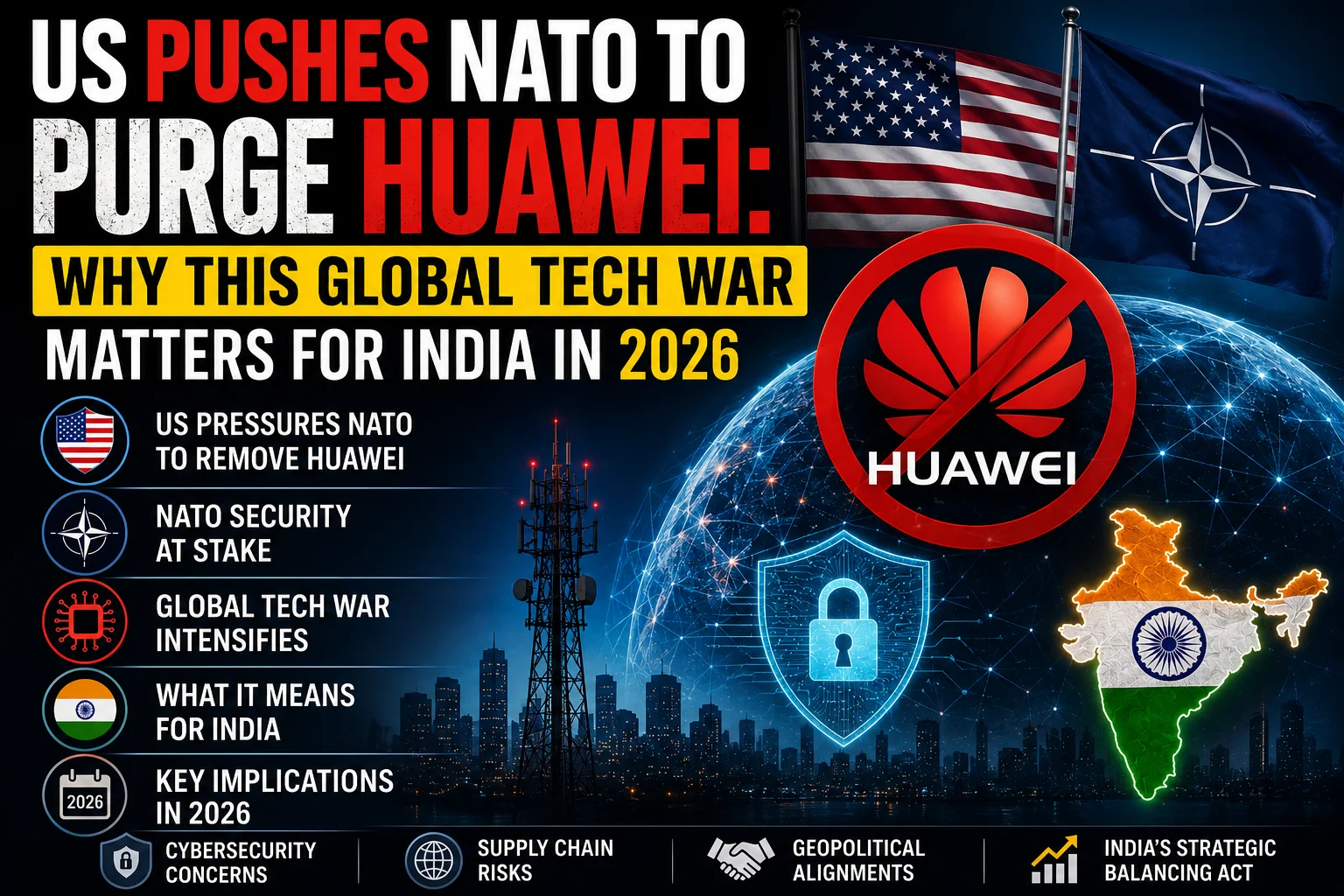
- The US government has officially urged NATO allies to set a hard deadline for removing all Huawei components from their critical infrastructure by 2028.
- Replacing existing Huawei gear is estimated to cost European nations over $25 billion in the next two years.
- India’s 'Trusted Sources' mandate has already successfully kept Huawei out of its 5G core, making India a blueprint for the West.
- The shift is driving massive growth for alternatives like Nokia, Ericsson, and the emerging OpenRAN technology.
The 2026 Tech Cold War Just Got Real
Look, if you’ve been following tech news for the last few years, you know the drama between the US and Huawei isn't new. But as of June 2026, things have shifted from 'suggestions' to 'serious demands.' The US has just issued a fresh directive to its NATO allies, basically saying, "It's time to rip it out." We are talking about thousands of cell towers, core switches, and data center components that have been the backbone of European telecom for a decade. The US argument is simple: as long as Chinese hardware is in the mix, the entire NATO defense network is potentially compromised. At TamilTech, we’ve been watching this closely because what happens in the NATO backyard usually dictates the global supply chain for the gadgets we use every day.
Why is this happening now? Well, with 6G research picking up pace this year and 5G Advanced becoming the standard, the security stakes are higher than ever. It's not just about your phone calls anymore; it's about autonomous tanks, drone swarms, and smart power grids. The US is worried that in a conflict scenario, a single 'kill switch' in a Huawei router could take down an entire city's communication. While Huawei has constantly denied these allegations, the political pressure is now at a boiling point. This isn't just a tech upgrade; it's a massive geopolitical statement that is going to change how the internet is built for the next 20 years.
How We Got Here: A Decadel-Long Suspicion
To understand why the US is so aggressive in 2026, we have to look back. For years, Huawei was the king of telecom because their gear was cheaper and often better than the competition. They dominated the 4G era. But then came the 5G rollout, and the US started flagging 'backdoors'—basically secret ways for the Chinese government to peek into data. Many European countries, like Germany and the UK, were hesitant to switch because Huawei was already deeply integrated into their systems. Ripping it out meant spending billions and delaying their 5G dreams. But the US didn't back down, using everything from trade sanctions to intelligence-sharing threats to get their way.
By 2025, we saw a massive shift where even the most stubborn allies started seeing the risk. The rise of sophisticated cyber warfare has made everyone paranoid. In 2026, the US is no longer just talking about 'new' equipment; they are demanding the removal of 'legacy' components. This is the 'Rip and Replace' strategy on steroids. It’s a logistical nightmare, but the US is offering some financial incentives and tech partnerships to make the pill easier to swallow. It’s a classic case of 'security over savings,' and it’s a lesson the whole world is learning the hard way.
The Multi-Billion Dollar Price Tag
Let’s talk numbers because that’s where it gets painful. Replacing Huawei isn't as simple as swapping a SIM card. We are talking about physical hardware on top of mountains, inside high-security buildings, and under the streets. Industry experts suggest that the total cost for NATO countries to fully purge Huawei could exceed $25 billion. For a country like Germany, which has been a major Huawei customer, this is a massive hit to their economy. They have to find that money while also dealing with the rising costs of energy and defense. It's a tough spot to be in, and honestly, some smaller NATO members are struggling to figure out who is going to pay the bill.
But there’s a flip side. This vacuum is creating a massive opportunity for other players. Nokia and Ericsson are the obvious winners, seeing their stock prices climb as they sign 'replacement' contracts. But the real dark horse here is OpenRAN (Open Radio Access Network). This technology allows companies to mix and match hardware and software from different vendors, so they aren't stuck with just one brand. The US is pushing OpenRAN hard because it would eventually make it impossible for any single company—or country—to control the network. It’s a tech revolution disguised as a security mandate.
The India Angle: We Saw This Coming
Now, why should we in India care? Because we were actually ahead of the curve on this one! Back when the 5G trials started, the Indian government introduced the 'Trusted Sources' list. We didn't officially 'ban' Huawei by name, but we made the security requirements so strict that Chinese vendors were effectively sidelined. Today, in 2026, when you look at Jio or Airtel’s 5G networks, they are built on a mix of European and homegrown Indian tech. We dodged the 'Rip and Replace' bullet that Europe is currently facing. Our networks are cleaner and arguably more secure because we made the hard choice early on.
Moreover, India is now positioning itself as a global alternative. With the 'Make in India' push in telecom gear, we are starting to export components that could fill the gap left by Huawei in other countries. If you are using a 5G phone in India today, chances are the signal is coming from a Nokia or Ericsson base station, or even a local Indian solution. This has kept our data safer and ensured that our telecom infrastructure isn't a pawn in global power games. We’ve shown that you can have a world-class network without relying on controversial vendors, and now the rest of the world is trying to follow our lead.
How to Secure Your Own Home Network
While the big battles are happening at the NATO level, you might be wondering about your own home. Even in 2026, many older routers and smart home devices in India still use components from various Chinese manufacturers. If you want to stay safe, here is what we recommend. First, check your router’s brand. If it’s an older model from a brand like Huawei or ZTE, it might be time for an upgrade to something like a TP-Link (Global version), Asus, or even a localized Indian brand. Security patches for older Chinese gear are becoming rare, making them easy targets for hackers.
Second, always change your default passwords. It sounds basic, but most 'backdoor' exploits rely on people leaving their settings as 'admin/admin.' Third, keep your firmware updated. Manufacturers release security patches every few months to fix vulnerabilities. If your router is more than 4 years old, it’s likely not getting these updates anymore. In 2026, your home network is the gateway to your UPI, your bank accounts, and your personal life. Don't let a ₹2,000 old router be the weak link in your digital security. It’s worth spending a little more for a 'Trusted' device.
TamilTech’s Honest Opinion: Security or Politics?
So, what do we think at TamilTech? Is this really about security, or is the US just trying to kill a competitor? Honestly, it’s a bit of both. There is no 'smoking gun' that proves Huawei is spying on everyone, but in the world of national security, you don't wait for the fire—you act when you smell smoke. The Chinese government’s laws require their companies to cooperate with intelligence agencies, and that’s a risk the US and NATO aren't willing to take anymore. It’s a logical move, even if it feels a bit like a trade war tactic.
For us in India, this global shift is actually good news. It forces more competition, which eventually leads to better tech and lower prices. It also validates our government's 'Trusted Sources' policy. The era of 'cheap and risky' tech is ending, and the era of 'secure and verified' tech is here. We expect to see more Indian companies entering this space, providing hardware to the world. The next few years will be messy for Europe as they rip out those old wires, but in the long run, a more diverse and open telecom market is better for everyone. Stay safe, stay updated, and always question who is behind the tech you use.




Comments (0)
Be the first to comment!