


Key Takeaways
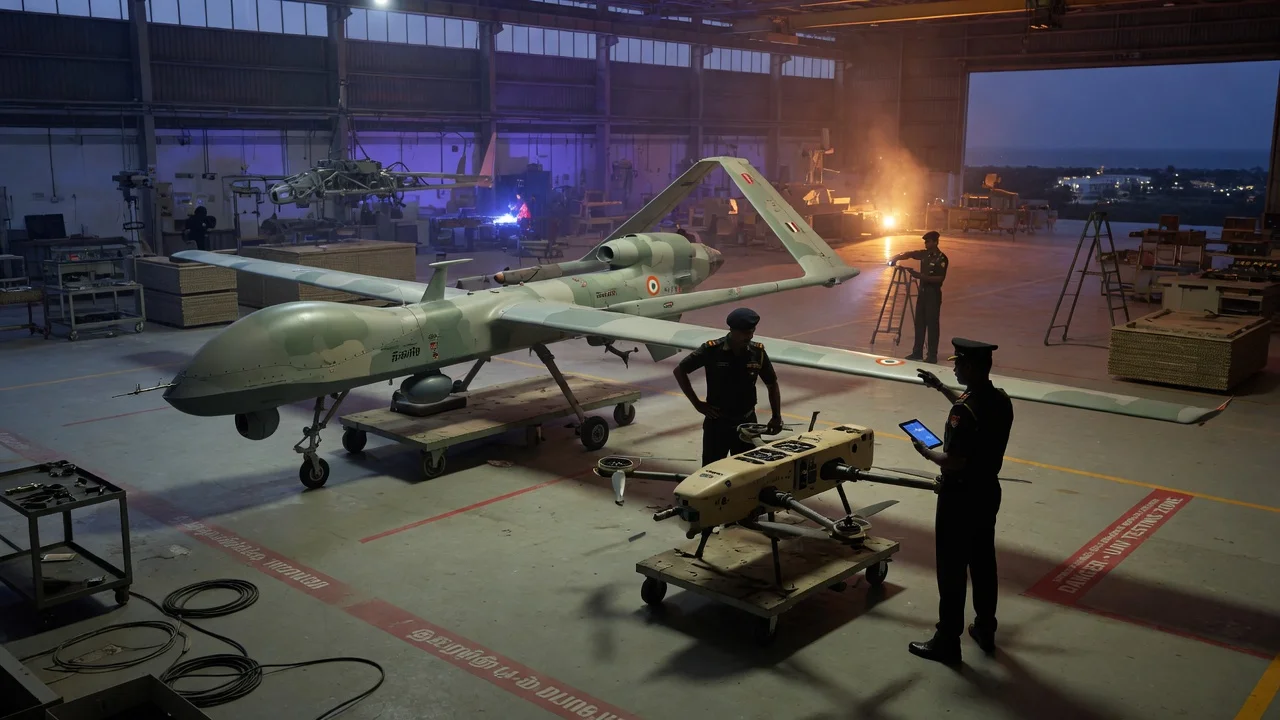
- Major General Gopal Kapoor of the Army Design Bureau visited Garuda Aerospace’s Chennai facility to review indigenous defence drone work.
- The tour covered manufacturing lines, testing ranges and R&D labs focused on military-grade UAVs.
- Garuda Aerospace is a Chennai-based Indian drone maker pushing Atmanirbhar defence tech for the armed forces.
- The visit signals growing Army interest in privately built Indian drones for surveillance and tactical roles.
- Chennai continues to emerge as a serious hub for defence drone manufacturing in 2026.
What's the news
The Army Design Bureau just paid a serious visit to Garuda Aerospace’s drone facility in Chennai. Major General Gopal Kapoor walked through the plant to check out how the company builds, tests and develops indigenous defence drones. This is not a casual photo-op. When the Army Design Bureau shows up at a private facility, it usually means they are scanning for tech that can actually move into service or get funded for further trials.
Garuda Aerospace has been building drones out of Chennai for years — agriculture, logistics, and increasingly defence-oriented platforms. The latest stop by the Army Design Bureau puts a spotlight on their military-grade manufacturing and R&D setup. For anyone following India’s push to cut import dependence on drones, this visit is a clear signal that private Indian players are now on the Army’s radar in a more structured way.
Timing matters too. In 2026 the Indian Army continues to expand its UAV inventory across borders and internal security roles. Visits like this help match what private firms can deliver with what soldiers actually need on the ground.
Details
According to the topic notes around the visit, Major General Gopal Kapoor reviewed three core areas at the Chennai facility: indigenous defence drone manufacturing, testing capabilities and R&D work. That covers the full loop — from design and component integration to flight testing and iteration.
Garuda Aerospace’s Chennai base has grown into a proper production and development campus. The company works on multi-rotor and fixed-wing platforms that can be adapted for surveillance, mapping and tactical support. Defence versions typically need tougher airframes, secure links, longer endurance and the ability to operate in contested environments. The Army Design Bureau looking at exactly those manufacturing and test setups suggests they want to see how ready the hardware is for real-world Army conditions.
The Army Design Bureau itself acts as a bridge between the service and Indian industry. Its job is to spot promising tech, reduce the usual red-tape delays and push indigenous solutions into trials faster. A facility tour like this often precedes deeper technical evaluations or requests for information. No one is claiming contracts were signed on the spot — and we are not inventing any — but the presence of a Major General level officer underlines that Garuda’s defence drone line is being taken seriously.
Chennai’s industrial ecosystem helps here. The city already hosts auto, electronics and aerospace suppliers. That makes it easier for a drone maker to source components, hire skilled technicians and run test flights without shipping everything across the country. Garuda has used that advantage to scale production while keeping R&D close to the factory floor.
What the visit specifically checked: manufacturing quality for defence-grade drones, how testing is done (range safety, endurance, payload integration), and the R&D pipeline for next-generation features. Those three pillars decide whether a private drone stays a demo or becomes something the Army can actually induct.
India impact
India still imports a chunk of its specialised military drones and critical components. Every serious private facility that can build and test indigenous platforms chips away at that dependence. A visit from the Army Design Bureau to Garuda Aerospace’s Chennai plant fits squarely into the Atmanirbhar Bharat and Make in India defence story that has been running for years.
For the Indian Army the upside is faster access to drones tuned for Indian terrain — high-altitude borders, desert stretches, dense urban pockets and long maritime approaches. Private firms can iterate quicker than traditional DPSUs on certain UAV classes. When the Design Bureau engages directly, it shortens the feedback loop between soldier requirements and factory changes.
Chennai and Tamil Nadu gain too. Defence manufacturing clusters create skilled jobs, attract ancillary suppliers and pull in more R&D talent. Drone tech spills over into civilian uses — agriculture spraying, infrastructure inspection, disaster response — so the same facility that hosts Army visitors also feeds the broader Indian drone economy. UPI-style digital payments and Jio-level connectivity already make it easier for drone operators across India to run fleets; indigenous defence hardware adds another layer of strategic depth.
Policy-wise this kind of engagement supports the government’s push to raise the share of private industry in defence production. It also puts quiet pressure on other Indian drone startups to raise their manufacturing and testing game if they want similar attention. Competition inside India is healthy — better that than waiting for foreign OEMs to clear export licences.
One practical India angle: logistics and spare parts. An Army unit operating Indian-built drones can theoretically get faster local support than waiting for overseas shipments. That matters when drones are flying daily along the LAC or LoC.
Use cases
What can these indigenous defence drones actually do once they clear Army scrutiny? Start with persistent surveillance. Small and medium UAVs give battalions eyes over valleys, ridgelines and approaches without risking manned aircraft. Garuda-style platforms can carry electro-optical and infrared payloads for day-night monitoring.
Next is tactical logistics. Drones that ferry medical kits, ammunition or batteries across short but dangerous stretches save time and lives. Testing facilities like the one reviewed in Chennai are exactly where you prove whether a drone can handle payload weight, wind and rough landing zones.
Border and coastal watch is another clear fit. Long-endurance fixed-wing or hybrid drones can patrol stretches that would otherwise need multiple manned sorties. R&D work on secure data links and anti-jamming features becomes critical here — something the Army Design Bureau would naturally probe during a facility visit.
Training and simulation also benefit. Indigenous drones mean more flying hours for Army operators without burning through expensive imported airframes. Once manufacturing scales, units can maintain larger training fleets.
Finally, rapid response in disaster or internal security scenarios. The same manufacturing lines that serve defence can pivot to flood mapping or crowd monitoring when needed. Having tested, documented processes — the kind reviewed during this visit — makes that dual-use switch smoother.
Honest take
Look, one visit does not equal an order book. The Army Design Bureau touring Garuda Aerospace’s Chennai facility is a strong positive signal, not a purchase order. Still, in the defence tech world these visits are how relationships and technical trust get built. Garuda has put in the work on manufacturing, testing and R&D; getting a Major General through the door means that work is visible at the right level.
Indian drone makers have matured a lot by 2026. The gap with global players is narrower on many tactical UAV classes, especially when you factor in local support and cost. The remaining hard problems — engines, advanced sensors, secure autonomy, electronic warfare resilience — still need serious R&D money and patient testing. Facility visits like this help the Army see which companies are actually investing in those areas instead of just assembling kits.
Chennai as a drone hub feels right. The city has the industrial base, the talent pipeline from engineering colleges, and growing aerospace activity. If more Army and DRDO teams keep showing up at private plants, the ecosystem compounds. That is how you eventually get reliable, India-built drones in larger numbers instead of endless pilots and PowerPoint decks.
My honest take: celebrate the visit, then watch what happens next — trials, RFPs, or quiet follow-on technical discussions. The real win for India is when indigenous drones move from facility tours into regular Army inventory with local spares and upgrades. Garuda Aerospace just took another visible step on that path. Keep an eye on Chennai’s drone scene; it is getting more serious by the month.




Comments (0)
Be the first to comment!