


முக்கிய விஷயங்கள்
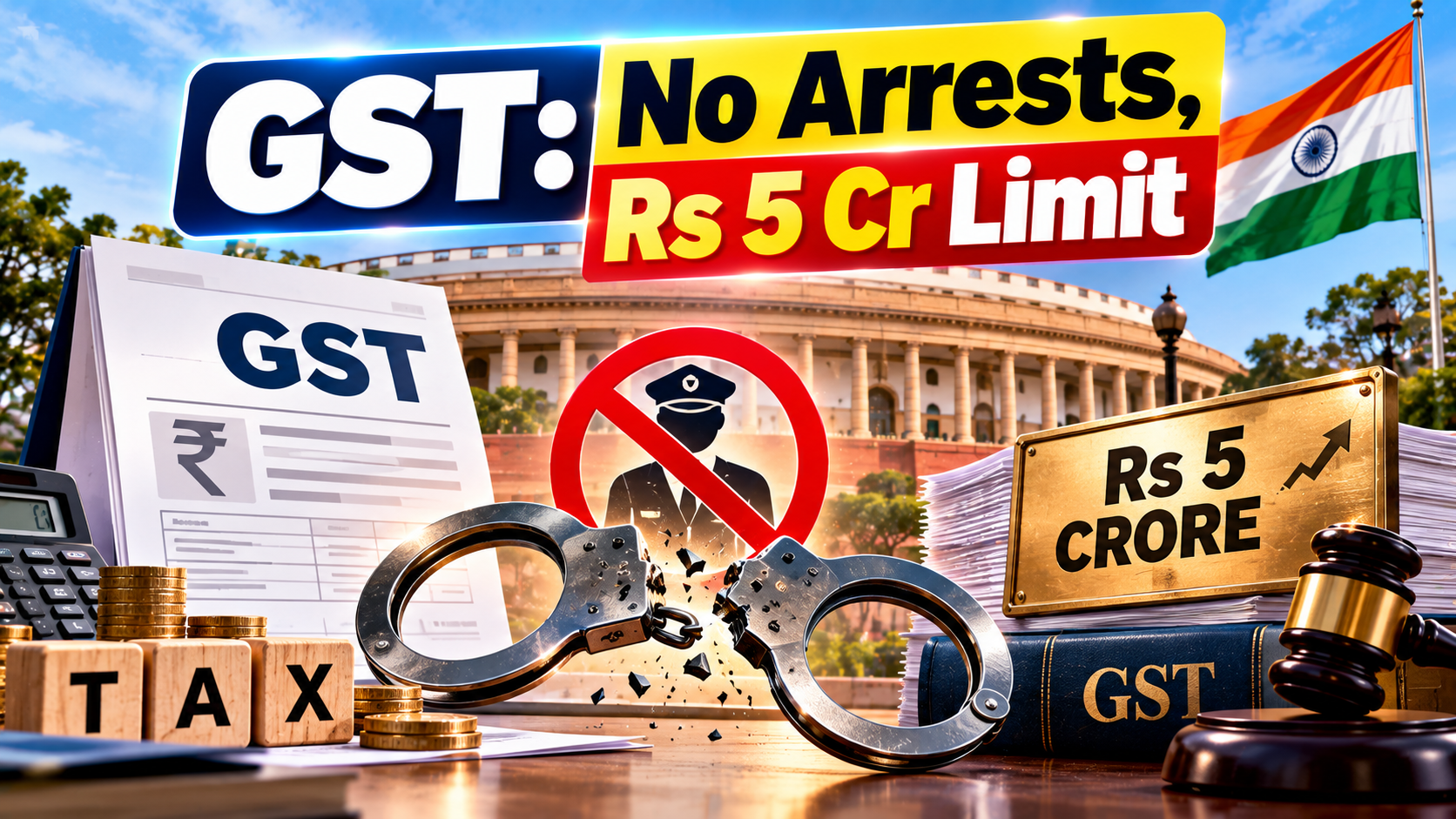
- GST Council தனது 57வது meeting-ல் (Thursday, October 8) arrest provisions-ஐ நீக்க recommend செஞ்சிருக்கு.
- Prosecution-க்கான threshold Rs 5 crore ஆக உயர்த்தப்பட்டிருக்கு, முன்னாடி இது குறைவா இருந்தது.
- இது small businesses, traders-க்கு tax officials-ஓட நேரடி பயத்த குறைக்கும் ஒரு move.
- Compliance simplify செய்யும் நோக்கத்துல இந்த மாத்தங்கள் வருது, ஆனா implementation எப்போ, எப்படி னு இன்னும் clear ஆகணும்.
- இது final law ஆக மாறணும்னா, CBIC notification மற்றும் GST law amendment தேவை.
What just happened?
Pull up any trader WhatsApp group in Tamil Nadu or anywhere else, and GST notices come up in conversation more often than cricket scores. That fear just got a little lighter.
At the 57th GST Council meeting held on Thursday, October 8, the Council recommended two big changes. First, removing the arrest provisions that currently exist under GST law. Second, raising the threshold for launching prosecution to Rs 5 crore.
Simply put, if these recommendations become law, GST officers will lose the power to arrest a business owner for tax disputes below this new limit. And criminal prosecution, which used to kick in at a lower amount, will now only apply when the alleged evasion crosses Rs 5 crore.
This is not some random tweak. This is the Council directly responding to years of complaints from traders, CAs, and industry bodies who said GST enforcement had turned into a hammer for even small, genuine mistakes in filing.
How does this actually work?
Right now, under GST law, certain offences — like deliberate tax evasion above a set amount — can lead to arrest, even before a court has decided anything. That power sits with tax officials, not just investigating agencies.
For a business owner, that's a scary place to be. Imagine running a small manufacturing unit, you make a genuine error in an invoice, the department reads it as evasion, and suddenly arrest is on the table. That's the exact pain point this move is trying to fix.
Removing arrest powers means officials can still investigate, issue notices, demand tax, interest, and penalty — but the extreme step of arrest won't be automatically available the way it is today.
The prosecution threshold change works alongside this. Earlier, prosecution — meaning actually filing a criminal case in court — could be triggered at a lower evasion amount. Pushing that up to Rs 5 crore means only genuinely large-scale, serious evasion cases will reach that level of legal action. Smaller disputes stay in the tax and penalty zone, not the criminal court zone.
Think of it like this: earlier the net was wide and caught big fish along with a lot of small fish. Now the net is being redesigned to mainly catch the big fish.
What changes for people in India?
For small and medium businesses, this is a genuine relief signal. A trader in Coimbatore or a startup founder in Bengaluru dealing with GST compliance won't have to live with the worst-case scenario of arrest hanging over an accounting error.
For CAs and tax consultants, this changes how they advise clients. A lot of GST compliance advice until now has been built around avoiding officer discretion and minimizing any chance of coercive action. With arrest powers off the table, that risk calculus shifts.
For genuinely large evaders — the ones running fake invoice rackets or large-scale fraud — this doesn't mean a free pass. The Rs 5 crore threshold is still a serious amount, and prosecution remains very much on the table for those cases.
There's also a signal here for ease-of-doing-business rankings and investor sentiment. Aggressive tax enforcement has been a recurring complaint in India's business environment conversations. A move like this tells the market that the government is trying to make compliance less adversarial, without giving up on catching real fraud.
One thing worth being honest about — these are Council recommendations, not law yet. GST law amendments and CBIC notifications will need to follow before this is actually enforceable on the ground. Until then, the current rules technically still apply.
What should you do now?
If you run a business registered under GST, don't change your filing behaviour based on this news alone. The existing law is still in force until the amendment actually comes through.
Keep your books clean, your invoices matched, and your filings timely — that habit never goes out of style regardless of what threshold the law sets.
If you're a CA or tax professional, this is the moment to start tracking the actual notification closely rather than relying on headlines. The fine print — effective date, transition rules for ongoing cases — will matter a lot.
And if you've got a pending GST dispute that involves an amount below Rs 5 crore, this is worth discussing with your consultant once the formal amendment is notified, since it could change how aggressively the case is pursued.
What's the catch — and what's still murky here?
Here's the part headlines tend to skip. A GST Council "recommendation" is not the same as a notified law. The Council is an advisory body made up of the Union Finance Minister and state finance ministers, and its decisions usually get implemented through CBIC notifications and amendments to the CGST and SGST Acts. That process can take weeks, sometimes months, depending on how much drafting and legal vetting is needed. Until that paperwork is done and gazetted, the existing arrest and prosecution provisions remain technically valid and enforceable.
There's also the question of transition. What happens to GST disputes that are already under investigation right now, where arrest provisions were already invoked or prosecution already initiated below the new Rs 5 crore mark? Council recommendations rarely spell out transition rules in the first announcement — that detail usually shows up later in the actual notification or in a circular from CBIC. Businesses currently fighting an active case shouldn't assume the new threshold automatically applies to them retroactively.
And one more grey area worth flagging honestly: removing arrest powers doesn't mean removing enforcement teeth altogether. Tax officers can still freeze bank accounts provisionally, attach property, demand recovery, and levy heavy penalties and interest in serious cases. The change targets the most extreme step — arrest and criminal prosecution — not the entire enforcement toolkit. So this is relief from the scariest outcome, not a blanket softening of GST enforcement.
Why does this matter beyond just traders and CAs?
Zoom out a bit and this decision fits into a larger pattern India has been following for a few years now — trying to make tax compliance feel less like a courtroom drama and more like a paperwork process. Similar logic has played out with decriminalising minor company law offences and simplifying income tax notices. GST, since it touches almost every registered business from a small kirana store to a large e-commerce seller on Flipkart or Amazon, has been one of the loudest areas where traders wanted this kind of relief.
For small and medium enterprises specifically, the mental load of compliance has never just been about paying the right tax. It's also been about living with the possibility that a genuine clerical mistake could escalate into something far worse. Raising the prosecution threshold to Rs 5 crore effectively tells smaller businesses that honest errors — wrong HSN code, mismatched invoice, a late return — are far less likely to be treated the same way as a deliberate, large-scale fraud ring.
What's worth watching next is how state governments react, since GST is a shared Centre-state system and states run their own enforcement wings too. Also keep an eye on whether industry bodies like FICCI, CII, or trade associations push for even more clarity on transition cases once the actual law amendment text is out. Until then, this remains a strong policy signal rather than a settled rulebook — good news, but not yet the final word.




Comments (0)
Be the first to comment!