


முக்கிய விஷயங்கள்
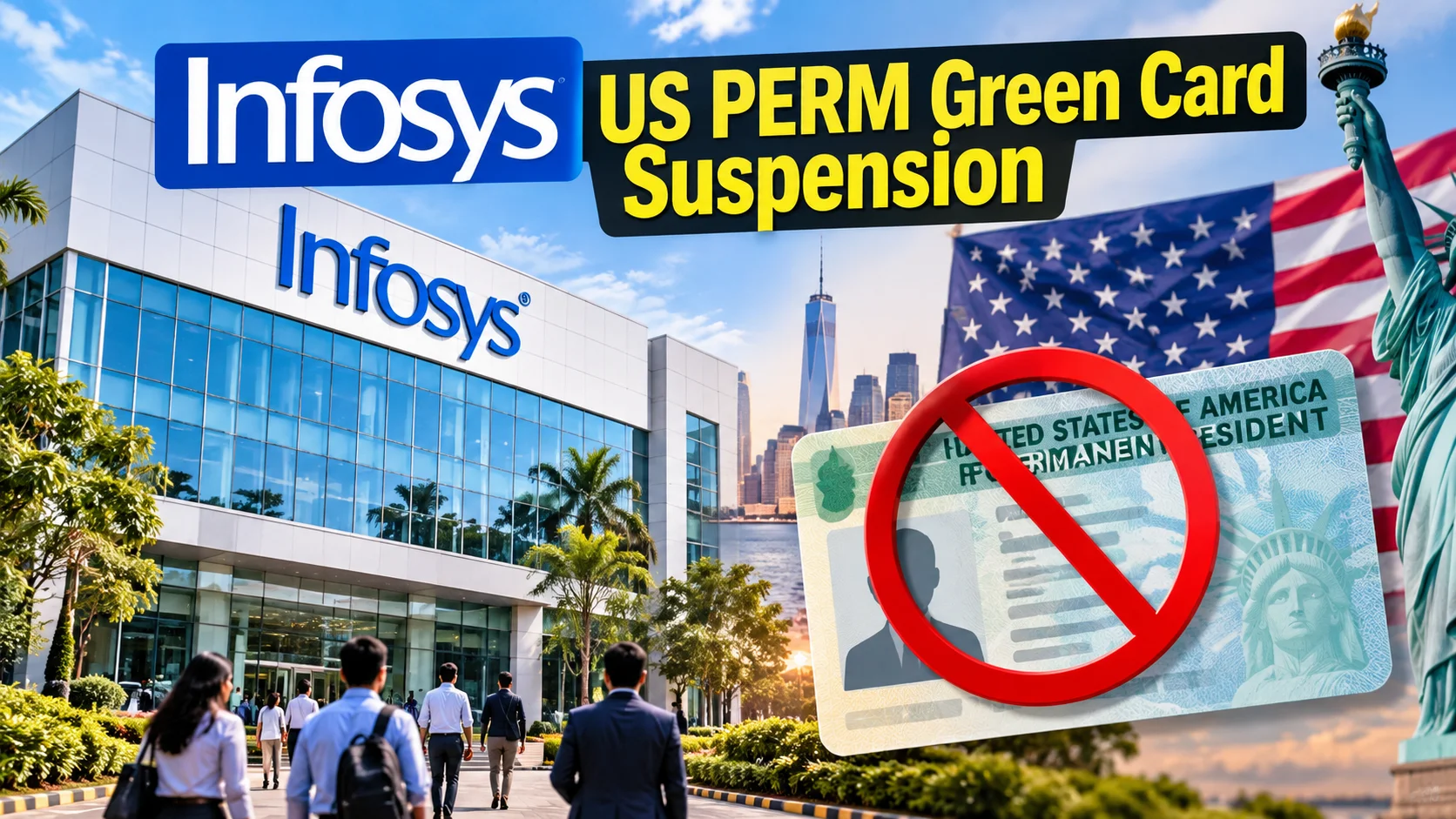
- US government PERM green card program-ல Infosys உள்பட பல பெரிய IT companies-க்கு suspension போட்டுருச்சு.
- PERM என்பது, ஒரு foreign employee-க்கு permanent residency (green card) வழிக்கு company sponsor செய்யும் process.
- Infosys இது தங்க business-ல 'material impact' ஏற்படுத்தாது என்று தெளிவா சொல்லிருச்சு.
- H-1B visa-க்கும் இதற்கும் நேரடி தொடர்பு இல்லை, இரண்டும் வேற வேற process.
- இந்தியாவுல இருந்து US போக ஆசைப்படும் IT staff-க்கு இது ஒரு short-term speed bump, முடிவு இல்ல.
What just happened?
Okay, so here's the news in plain terms. The US government announced it's suspending PERM processing for a bunch of major global tech and IT firms. Infosys is on that list.
PERM stands for Program Electronic Review Management. It's basically the first legal step a company has to clear before it can sponsor an employee for a US green card based on their job. No PERM clearance, no green card application moving forward, at least not through this route.
Infosys came out and said this doesn't worry them much. No panic statement, no drama. Just a confident 'we don't expect this to hit our numbers in any big way' kind of line.
And honestly, that tracks. Infosys runs most of its US delivery through a mix of local hires, H-1B visa holders, and offshore teams in India. PERM green card sponsorship is a small slice of that whole machine, not the engine.
How does this actually work?
Let's slow down and actually understand PERM, because most people mix it up with H-1B visa and think it's the same thing. It's not.
H-1B is a temporary work visa. You get it, you work in the US for a few years, you renew it. PERM is different — it's step one of the green card journey, the path to becoming a permanent resident.
Here's how it usually goes. A company wants to sponsor an employee for a green card. Before that, US labour law says the company has to prove no qualified American worker was available for that exact job. That proving process, with wage checks and job postings and all, that's PERM.
உதாரணமா சொன்னா, ஒரு US company ஒரு Indian engineer-க்கு green card sponsor பண்ண நெனைச்சா, முதல்ல அந்த company 'இந்த வேலைக்கு local-ஆ யாரும் qualified ஆ கிடைக்கல' என்று Department of Labor-கிட்ட prove பண்ணனும். அந்த process-தான் PERM.
Once PERM clears, the company moves to the next stage of the green card process. If PERM itself gets suspended or paused for a company, that pipeline just stalls at step one. Nobody gets rejected outright, the queue just doesn't move.
So when the US government suspends PERM for a company, it's not cancelling anyone's visa or deporting anyone. It's freezing a specific administrative gate that controls how fast green card sponsorships can be filed and processed.
What changes for people in India?
இது படிக்கும்போது பயப்பட வேண்டாம், ஆனா கொஞ்சம் கவனமா புரிஞ்சுக்கணும். நேரடியா Infosys-ல வேலை பார்க்கும் staff-க்கு இது ஒரு immediate problem இல்ல.
Here's the thing most headlines skip. H-1B visa holders already working in the US on Infosys payroll aren't affected by this. They can continue working, their visa status doesn't change overnight because of a PERM suspension.
What gets affected is the small group of employees who were in the queue for green card sponsorship, specifically through PERM applications filed or about to be filed by Infosys. For them, that path just slows down or pauses for a while.
From a company earnings and stock point of view, this is small stuff. Infosys makes its real money from project deliveries, cloud and AI consulting deals, and large enterprise contracts, not from how many green cards it processes in a quarter. That's exactly why the company could say 'no material impact' without hesitation.
இந்தியாவுல இருக்குற IT employees-க்கு இந்த மாதிரி news கேக்கும்போது, 'US போக முடியாதா' என்று பயம் வரலாம். ஆனா இது H-1B visa issue இல்ல, PERM green card step மட்டும்தான் affect ஆகுது.
There's also a bigger pattern here worth noticing. US immigration rules around skilled worker green cards have been tightening on and off for years, across different administrations. IT companies, Indian and American alike, have built their business models to not depend heavily on any single visa or green card category. That's the real reason this didn't rattle Infosys.
What should you do now?
If you're an IT employee in India dreaming of a US onsite role one day, here's the honest picture. PERM suspensions come and go in cycles, this isn't the first and won't be the last.
Don't make a career decision based on one news headline. Watch whether your specific employer clarifies your personal visa or green card status directly, through HR, not through news articles.
For investors tracking Infosys stock, this kind of regulatory news usually causes a small dip in sentiment, not in actual revenue. Infosys itself has signalled this is noise, not a structural problem for their US business.
If you work at Infosys or a similar firm and you're mid-way through a green card sponsorship, the smart move is to just ask your immigration counsel or HR team for a direct update instead of assuming the worst from a headline. Suspensions like this often get reviewed, adjusted, or lifted within a few months as policy details get finalised.
Why does the US keep doing this to IT companies?
This isn't the first time Indian IT majors have found themselves in the crosshairs of US immigration policy, and it won't be the last. Every few years, a new administration or a new policy review looks at skilled worker programs and decides something needs tightening. PERM, H-1B, L1 visas — all of them have gone through phases of extra scrutiny, fee hikes, or processing slowdowns at some point in the last decade.
The pattern usually has less to do with any single company doing something wrong, and more to do with domestic political pressure in the US around jobs and wages. IT services firms like Infosys, Wipro, TCS, and Cognizant get named often simply because they're large employers of foreign skilled workers, so they show up at the top of any list when the US government wants to flex on immigration enforcement. Being singled out doesn't automatically mean a company broke a rule.
What's different now is how these companies have adapted their business models over the years. Instead of flying thousands of engineers to the US on fresh visas every year, most large IT firms have built strong local hiring pipelines in the US itself, alongside bigger offshore and nearshore delivery centres. That diversification is exactly why a PERM suspension stings less today than it might have a decade ago.
What does this mean for India's IT hiring story?
Zoom out a bit and look at the bigger picture for India's tech workforce. Companies like Infosys have spent years building delivery capacity in cities like Bengaluru, Pune, Hyderabad, and Chennai specifically so that a visa hiccup in the US doesn't choke their ability to deliver projects. A huge chunk of client work for American banks, retailers, and insurance firms is now done remotely from India, with far fewer people needing to physically relocate.
For the Indian techie dreaming of an onsite US posting, this story is a reminder that the onsite dream itself has been shrinking for a while now, PERM suspension or not. Remote delivery, hybrid global teams, and AI-assisted project management have changed how much face time with the client in the US actually matters. That's not necessarily bad news, it just means career growth inside Indian IT increasingly depends on skill depth in cloud, AI, and cybersecurity rather than purely on landing a US visa.
Going forward, keep an eye on how long this PERM suspension actually lasts, and whether other large IT employers get added to or removed from that list in the coming months. If Infosys and its peers keep posting steady guidance despite these headlines, that's a fairly reliable signal that the structural dependence on US green card pipelines has genuinely come down, not just in words but in how the business actually runs quarter after quarter.





Comments (0)
Be the first to comment!