


Key Takeaways
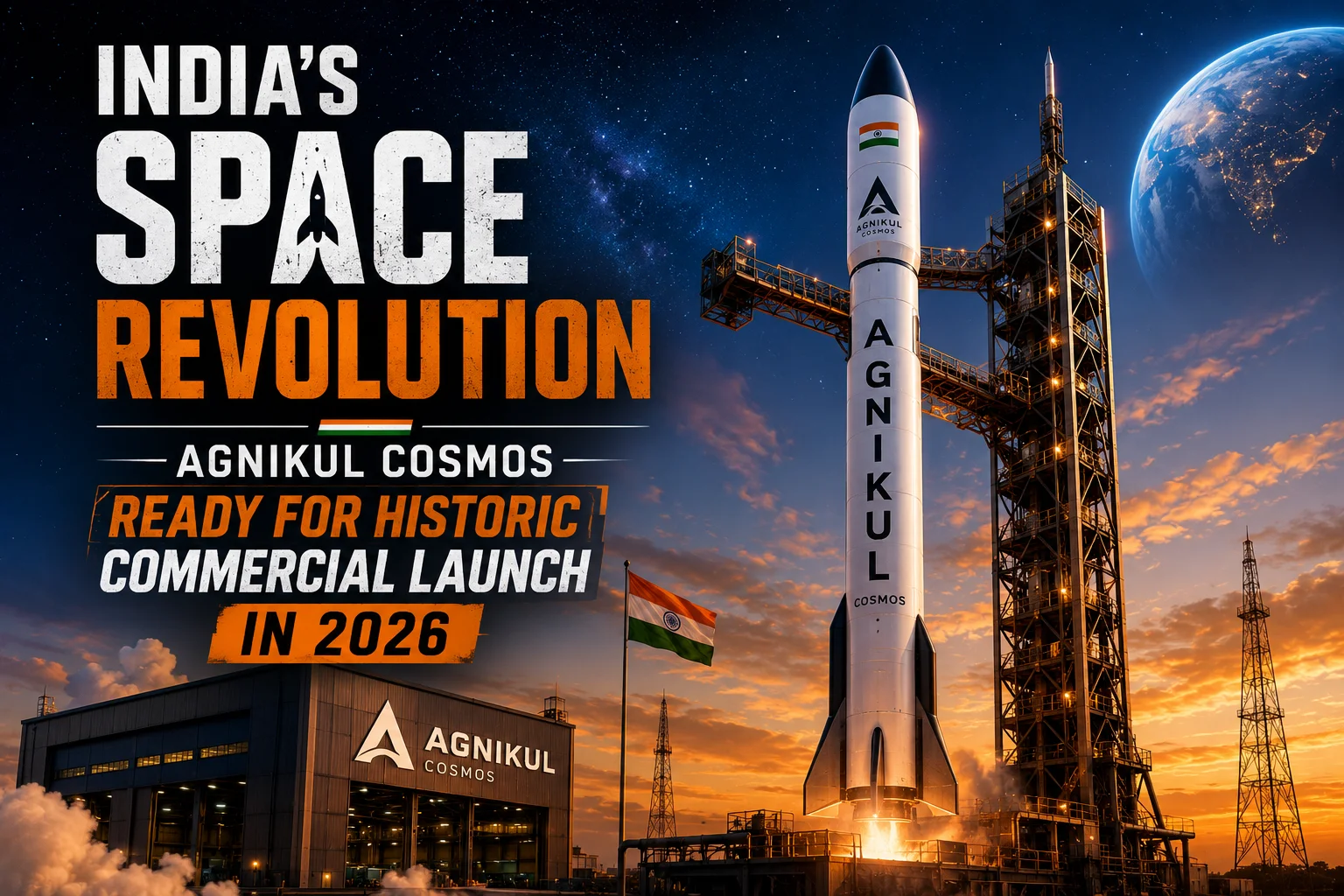
- Agnikul Cosmos is set to launch its Agnibaan rocket with a 100% 3D-printed semi-cryogenic engine this month.
- The private space sector in India is now valued at over $13 billion as of July 2026.
- Launch costs for small satellites have dropped by nearly 40% compared to traditional heavy-lift missions.
- TamilTech Verdict: India is officially the world's most affordable and reliable hub for small satellite launches.
The Big Launch: Why July 2026 is a Milestone
So, here is the thing—if you thought India's space journey was only about ISRO, you are living in the past. Today, Friday, 17 July 2026, we are witnessing a massive shift. Agnikul Cosmos, a Chennai-based startup, is all set to launch its latest mission from their own private launchpad at Sriharikota. This isn't just another test flight; it’s a full-scale commercial mission that’s going to put India on the map as a private space powerhouse. I’ve been tracking these guys since their early days at IIT Madras, and honestly, the progress they’ve made is wild.
What makes this launch special? It’s the 'Agnibaan' rocket. This isn't your typical multi-stage giant. It’s a highly customizable, two-stage launch vehicle that can carry up to 100 kg to a 700 km low earth orbit (LEO). But the real kicker is the engine. They call it the 'Agnilet'. It’s the world’s first single-piece 3D-printed engine. No assembly, no hundreds of tiny parts to fail—just one solid piece of engineering. This is the kind of tech that even the big players in the US are still perfecting, and here we have a home-grown startup doing it right in our backyard.
How Did We Get Here? The Road to 2026
Let’s take a step back. A few years ago, the idea of a private company launching a rocket from Indian soil sounded like science fiction. Everything was controlled by ISRO. But then came the formation of IN-SPACe and the new Space Policy. By 2024 and 2025, we saw the first successful sub-orbital flights. Those were the 'proof of concept' moments. Now, in 2026, we are seeing the 'commercialization' phase. The government didn't just open the doors; they literally built a highway for these startups.
The reason India is winning this race is the 'Space Ecosystem.' We have the talent from top IITs, the manufacturing prowess of small-scale industries in places like Coimbatore and Pune, and a government that finally realized that space is a business, not just a prestige project. Currently, we have over 200 space-tech startups in India. Some are building satellites, some are working on ground stations, and others, like Agnikul and Skyroot, are building the 'Uber' for space—the rockets that take you there.
The Tech Specs: 3D Printing and Semi-Cryogenics
Let's talk numbers because that’s what matters. The Agnibaan rocket uses a semi-cryogenic engine. For those who aren't space nerds, this means it uses a combination of liquid oxygen and aviation-grade kerosene. It’s much cleaner and easier to handle than the toxic fuels used in older rockets. But the 3D printing part is what blows my mind. Traditional rocket engines take months to manufacture and assemble. Agnikul can 3D print an engine in less than 72 hours. Let that sink in.
Because the engine is 3D printed as a single piece, the weight is significantly lower, and the structural integrity is much higher. This allows the rocket to be 'plug-and-play.' If a customer wants to launch a 30 kg satellite, Agnikul can adjust the engine configuration and launch within weeks, not years. This flexibility is exactly what the global 'SmallSat' market is screaming for. While SpaceX is busy with massive Starship missions, India is capturing the high-frequency, small-payload market that runs our modern world.
The India Impact: Pricing and Jobs
How does this affect you? You might think, "I'm not launching a satellite, why should I care?" Well, every time a private rocket goes up, the cost of data, GPS, and weather forecasting comes down. In India, the cost of launching a small satellite has traditionally been around ₹10-15 crores. With these private players, we are looking at costs dropping below ₹6-7 crores. This makes it affordable for Indian universities, research labs, and even deep-tech startups to put their own hardware in space.
Furthermore, this sector is creating thousands of high-paying jobs. We are no longer seeing a 'brain drain' where our best aerospace engineers head to NASA or SpaceX. They are staying in Chennai, Hyderabad, and Bangalore. The 'Space-as-a-Service' model is becoming a reality in India. We are seeing a massive influx of foreign investment—over $500 million has flowed into Indian space startups just in the first half of 2026. This is huge for our economy.
How to Launch a Satellite (The Step-by-Step)
If you’re a startup or a researcher looking to use these services, here’s how the process looks in 2026. First, you don't go to ISRO anymore; you go to the IN-SPACe digital portal. You submit your mission requirements—weight, orbit, and frequency. Once cleared, you choose a private provider like Agnikul or Skyroot. They provide the 'bus' (the structure that holds your satellite) and handle all the telemetry and integration. You literally just ship your satellite to their facility, and they handle the rest. It’s becoming as simple as booking a courier service.
Comparison: India vs The World
Look, everyone talks about SpaceX, and yes, Elon Musk is in a league of his own with reusable rockets. But SpaceX is like a massive bus—it’s great if you want to go where everyone else is going. Indian startups like Agnikul are like private taxis. They take you exactly where you want to go, when you want to go. Compared to Rocket Lab (the US-NZ leader in small launches), Indian launches are nearly 30% cheaper. That price advantage is India's 'X-factor.' We are doing for space what we did for IT services and generic medicines—making high-tech affordable for everyone.
TamilTech's Honest Take
So, what do we think? Honestly, this is one of the proudest moments for Indian tech. For decades, we were dependent on foreign agencies to launch our heavy satellites. Then ISRO became self-reliant. Now, we are moving to a stage where we are the ones helping the rest of the world. My only concern is the regulatory speed. While the policy is great, the paperwork for private launches still takes a bit of time. If the government can streamline the 'single-window' clearance even further, nobody can stop India.
Expect more frequent launches in the coming months. We might even see the first Indian private astronaut mission by late 2027. The sky is no longer the limit; it’s just the starting point. If you are a student, now is the best time to get into aerospace engineering. The next decade belongs to the stars, and India is leading the way.

Comments (0)
Be the first to comment!