



Key Takeaways
- Skyroot Aerospace's Vikram-1 rocket is scheduled for its first orbital launch by late 2026, marking a major win for India's private space sector.
- The Vikram-1 is a multi-stage solid-fuel rocket capable of carrying up to 300kg payloads to Low Earth Orbit (LEO).
- AST SpaceMobile is reportedly exploring becoming a rocket company to handle its massive backlog of satellite launches for global 5G connectivity.
- This shift could significantly lower launch costs for Indian startups looking to put small satellites into space.
- The bottom line: India is no longer just about ISRO; private players like Skyroot and Agnikul are now serious global competitors.
The Private Space Race is Getting Real
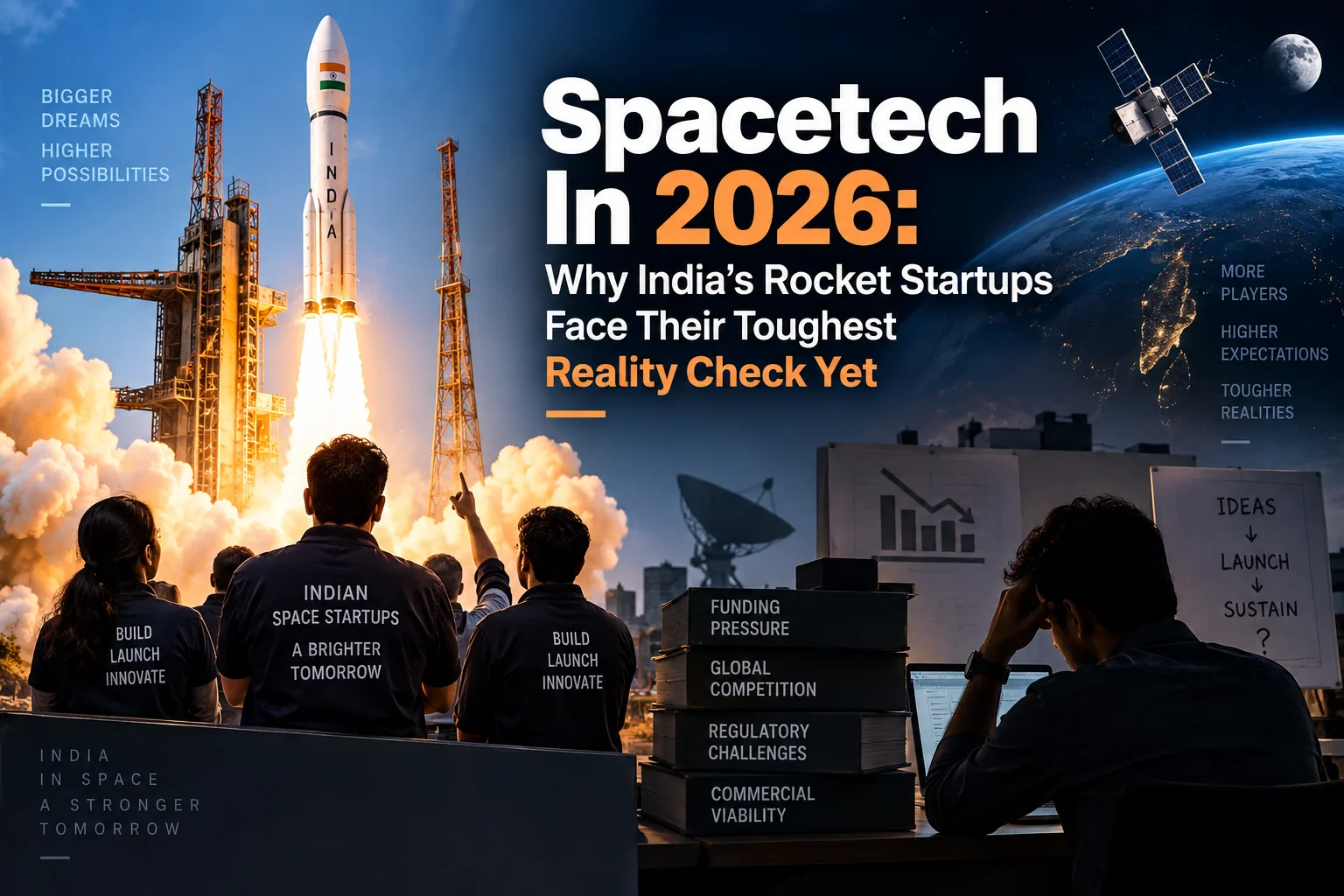
Remember when space was just something ISRO handled? Well, those days are long gone. As of July 2026, the Indian private space scene is absolutely buzzing. While we've seen sub-orbital tests before, the real deal is finally here. Skyroot Aerospace, the Hyderabad-based startup that gave us a teaser with Vikram-S a couple of years ago, is now on the verge of launching Vikram-1. This isn't just another test; it's a full-scale orbital mission. If they pull this off, it changes everything for how India handles small satellite launches. We are talking about a future where launching a satellite is as easy as booking an Uber.
But that's not the only shocker in the industry. There's some serious talk about AST SpaceMobile—the company famous for trying to give your regular smartphone satellite connectivity—moving into the rocket business. Usually, satellite companies just pay SpaceX or ISRO to carry their gear. But AST is looking at the massive queue for launches and thinking, "Why don't we just build our own?" This kind of vertical integration is what made Elon Musk’s SpaceX so dominant, and seeing another player try it tells you how desperate the world is for more rockets. Let's dive deep into what this means for us in India and the global tech landscape.
How We Got Here: The Skyroot Journey
To understand why Vikram-1 is such a big deal, we have to look back at the journey of Skyroot Aerospace. Founded by ex-ISRO scientists Pawan Kumar Chandana and Naga Bharath Daka, this company has been on a mission to prove that private Indian companies can match the precision of national space agencies. In 2022, they made history with Vikram-S, the first private rocket to reach space from India. But that was a sub-orbital flight—it went up and came right back down. Vikram-1 is the real test because its job is to reach orbit and stay there while deploying satellites.
The Indian government’s decision to open up the space sector via IN-SPACe has been the biggest catalyst. Before 2020, private players were mostly suppliers to ISRO. Now, they are independent entities designing, building, and launching their own hardware. Vikram-1 is the culmination of years of testing carbon-fiber structures and 3D-printed rocket engines. It’s designed specifically for the "smallsat" market, which is currently the fastest-growing segment in the space industry. Everyone from climate researchers to telecom companies wants small satellites in orbit, and Skyroot is positioning itself as the most affordable way to get them there.
Vikram-1: The Tech Under the Hood
Let's talk specs, because Vikram-1 is a beast in a small package. It’s a multi-stage launch vehicle, and what makes it unique is that it primarily uses solid fuel. Why solid fuel? Because it’s easier to handle, requires less infrastructure, and can be launched on short notice. Most traditional rockets use liquid fuel which is complex and takes days to prep. Vikram-1 is built for speed and frequency. The rocket’s body is made of high-strength carbon composites, which makes it incredibly light but strong enough to withstand the intense pressure of leaving Earth's atmosphere.
The payload capacity is around 300kg to 480kg depending on the orbit. Now, compared to a SpaceX Falcon 9 which carries 22,000kg, this might seem small. But that’s exactly the point. Large rockets are like buses—you have to wait for them to fill up before they go. Vikram-1 is like a private cab. If a startup in Bengaluru has a 50kg satellite, they don't want to wait two years for a spot on a heavy lifter. They can just book a slot on Vikram-1 and get to space in weeks. This "on-demand" launch capability is the holy grail of the modern space economy, and India is now right at the center of it.
AST SpaceMobile: From Satellites to Rockets?
Now, let's look at the global side of things. AST SpaceMobile has been the talk of the town because of their ambitious goal to eliminate dead zones by providing 5G directly from space to your existing phone—no special hardware needed. They’ve already started launching their BlueBird satellites, but here’s the problem: these satellites are huge. They have massive phased-array antennas that unfold in space. To provide global coverage, they need hundreds of them. Right now, they are at the mercy of launch providers like SpaceX, who are also their competitors (via Starlink).
The rumors that AST might become a rocket company—or at least develop its own specialized launch systems—make a lot of sense. If you control the rocket, you control your destiny. In 2026, the wait times for a SpaceX launch are getting longer, and prices are creeping up. By moving into the launch business, AST could potentially bypass the bottleneck. While they might not build a heavy-lift rocket to rival the Falcon 9, they could develop "kick stages" or specialized small rockets to replace aging satellites in their constellation. This move would signify a massive shift where the line between satellite operators and rocket manufacturers completely disappears.
What This Means for India and Your Wallet
You might be wondering, "Why should I care about rockets?" Well, it directly affects the tech you use every day. More rockets mean more satellites. More satellites mean better GPS, faster internet in rural areas, and more accurate weather forecasting for our farmers. For India, the success of Vikram-1 means we can stop sending our money to foreign launch providers. In fact, we’ll be the ones making money by launching satellites for other countries. The cost of launching a satellite from India is expected to be 30-40% lower than in the US or Europe.
For the average Indian consumer, this competition will eventually lead to cheaper satellite internet and better connectivity during travel. Think about the last time you were on a train through a remote part of India and lost signal. In a few years, thanks to constellations like those from AST SpaceMobile and the cheap launches provided by Skyroot, those dead zones will be a thing of the past. Moreover, this creates a massive ecosystem of high-tech jobs in cities like Hyderabad and Chennai, which are becoming the "Space Valleys" of India.
How It Works: Launching a Private Satellite
If you're a tech founder today, how do you actually get something into space? It used to be a nightmare of paperwork and government meetings. Today, it’s becoming a structured process. First, you design your satellite (usually a CubeSat). Then, you approach a company like Skyroot. You provide your orbit requirements—how high and at what angle you want to be. Skyroot then integrates your satellite into the Vikram-1 payload fairing.
The beauty of the Vikram-1 system is its modularity. Because they use 3D printing for many components, they can customize the rocket's configuration based on the mission. Once the launch window is cleared by IN-SPACe (the Indian regulator), the rocket is moved to the launch pad at Sriharikota or the new private launch pads coming up in Tamil Nadu's Kulasekarapattinam. Within minutes of ignition, your satellite is in orbit. This streamlined process is what will allow India to host dozens of launches every year, rather than just one or two every few months.
The Competition: Vikram-1 vs The World
Skyroot isn't alone in this race. Within India, Agnikul Cosmos is another major player with their Agnibaan rocket, which uses a fully 3D-printed semi-cryogenic engine. While Skyroot uses solid fuel for simplicity, Agnikul is going for the more complex liquid fuel route. Then there's ISRO’s own SSLV (Small Satellite Launch Vehicle), which is the government's answer to the private sector. Globally, Skyroot is competing with Rocket Lab’s Electron and Firefly Aerospace.
What gives India the edge? Cost and talent. The engineering cost in India is a fraction of what it is in New Zealand or California. However, Rocket Lab has a massive head start with over 50 successful launches. For Skyroot to truly compete, Vikram-1 needs to not just fly, but fly reliably. One failure can set a startup back by years. But given the testing rigor we've seen from the Skyroot team, the industry is very optimistic. They aren't just building a rocket; they are building a reputation for Indian private engineering.
TamilTech's Take: Is the Hype Real?
Look, space is hard. We've seen many companies promise the moon and fail. But Skyroot feels different. They've been methodical, hitting every milestone they promised since 2020. The Vikram-1 launch isn't just about one rocket; it's a statement that India's private sector is ready for the big leagues. As for AST SpaceMobile, their pivot to rockets might be a bit too ambitious, but in 2026, being ambitious is the only way to survive in the satellite business. If they even manage to build a specialized deployment system, it’ll be a game changer.
What should you do? Keep an eye on the launch date. When Vikram-1 takes off from Indian soil, it’s a proud moment for all of us. It’s the start of an era where "Made in India" isn't just on your phone or car, but on the rockets that explore the stars. We expect the first flight to have some minor hiccups—that's just how rocket science works—but the long-term trajectory for India’s space economy is clearly pointing up. Stay tuned to TamilTech, and we'll bring you the live updates when the countdown begins!



Comments (0)
Be the first to comment!