


Key Takeaways
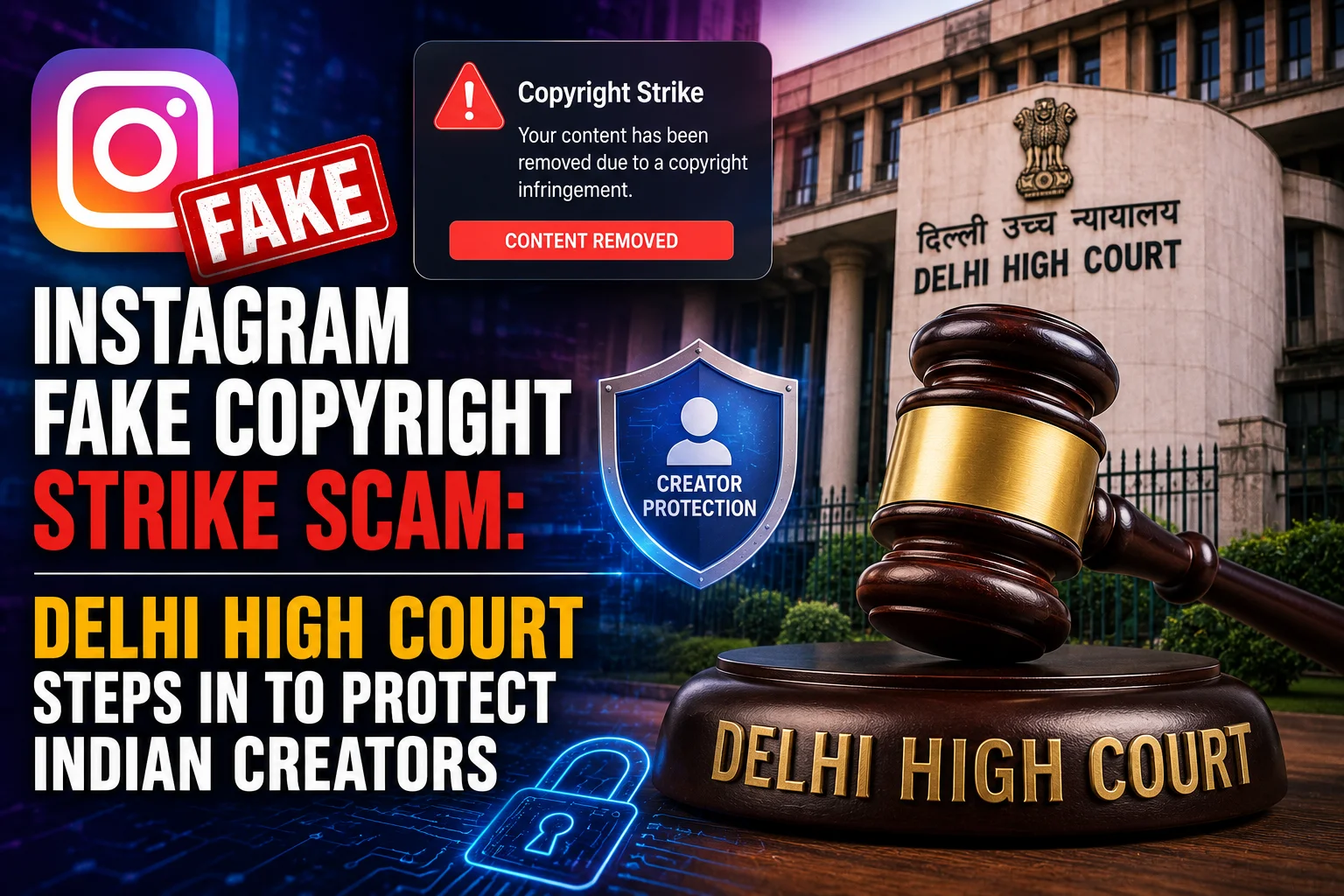
- Scammers are weaponizing Instagram's automated DMCA system to issue fake copyright strikes against popular Indian creators.
- Extortionists demand payments ranging from ₹50,000 to ₹5,00,000 via crypto or UPI to 'withdraw' the fake claims.
- The Delhi High Court is currently hearing a petition seeking to make Meta (Instagram) liable for failing to verify copyright claims manually.
- Under the 'Three Strikes' rule, Instagram accounts are permanently deleted without a human ever reviewing the validity of the reported content.
- Indian creators are advised to file counter-notifications immediately and avoid paying any ransom to these digital blackmailers.
The Nightmare of Every Instagram Creator in 2026
Imagine spending five years building your brand, posting every single day, and finally reaching 500,000 followers. One morning, you wake up to a notification saying your post has been removed for copyright infringement. Before you can even process it, two more notifications pop up. Your account is suddenly disabled. Then comes the DM or an email from an anonymous account: 'Pay 1 Lakh in Bitcoin, or your account is gone forever.' This isn't a hypothetical horror story; it is the reality for hundreds of Indian creators in 2026. The weaponization of Instagram's copyright system has reached such a peak that the Delhi High Court has finally stepped in to address this digital extortion racket.
We at TamilTech have been receiving messages from several creators who have lost their livelihood in just a matter of minutes. The core of the problem lies in how Instagram handles reports. Their system is almost entirely automated, meaning if someone claims they own your video, Instagram's AI takes it down first and asks questions later. Scammers have figured out how to trick this AI, and they are using it to hold creators for ransom. It’s a systemic failure that has left the creative community feeling helpless and unprotected by the platforms they helped build.
How the Extortion Racket Actually Works
The process is chillingly simple and highly effective. These scammers, often referred to as 'Copyright Trolls,' use automated bots to scan high-engagement reels and posts. They then create fake documents or backdated websites to 'prove' they own the content. When they report a post to Instagram, the platform’s automated Digital Millennium Copyright Act (DMCA) system kicks in. Because the system is designed to avoid legal liability for Meta, it defaults to removing the content immediately. If a creator gets three of these strikes within a short period, Instagram’s 'Three Strikes' policy automatically nukes the entire account.
Once the account is disabled or under threat, the scammer reaches out. They know that for a full-time influencer, their Instagram account is their office, their shop, and their bank account. They demand money to 'retract' the strike. Since Instagram’s official appeal process can take weeks or even months—and often ends with a generic bot response—many desperate creators feel they have no choice but to pay. However, paying the ransom rarely works; often, the scammers just ask for more money or vanish without actually withdrawing the strikes. It is a vicious cycle of digital bullying that Meta has ignored for too long.
The Delhi High Court Petition: A Turning Point
The recent petition filed before the Delhi High Court argues that Meta’s current 'strike' system is unconstitutional and violates the right to livelihood. The petitioner, a prominent digital creator, alleges that Instagram provides no 'human' oversight before nuking an account. The court is being asked to direct the government and Meta to implement a mandatory manual verification process for copyright claims originating from India. This is a huge deal because, until now, social media giants have hidden behind 'Safe Harbor' protections, claiming they are just intermediaries and not responsible for what users report.
The petition highlights that the current system is being 'gamed' by criminals who have no actual rights to the content. It demands that Instagram should not be allowed to delete an account until a human moderator reviews the evidence from both sides. If the Delhi High Court rules in favor of the creators, it could force Meta to change its global policy on how copyright strikes are handled. This isn't just about one or two accounts; it's about setting a legal precedent that protects the digital economy of India, which is worth billions in 2026.
Why Indian Creators are the Main Targets
You might wonder, why India? The reason is simple: the volume of content and the lack of localized support. India has the largest Instagram user base in the world as of 2026. However, Meta’s support systems for Indian creators are notoriously slow. While a high-profile creator in the US might get a dedicated account manager to resolve these issues, most Indian creators are left screaming at a brick wall of automated forms. Scammers know this 'support gap' exists and they exploit it. They know that by the time an Indian creator gets a human to look at their case, their brand deals would have evaporated and their followers would have moved on.
Furthermore, the rise of UPI and easy crypto transfers in India has made it easier for these extortionists to collect money anonymously. We've seen cases where scammers use stolen identities to create bank accounts, making it nearly impossible for the police to track the money trail. This combination of a massive creator pool, weak platform support, and easy digital payments has made India the 'ground zero' for copyright extortion. It’s a mess, and honestly, it’s high time the law stepped in to hold these platforms accountable for the chaos their bots are causing.
What to Do if You Get a Fake Strike: A Step-by-Step Guide
If you find yourself targeted by these scammers, do not panic and, most importantly, do not pay them. Here is the exact process you should follow. First, immediately file a 'Counter-Notification' through the link provided in the copyright email from Instagram. Be very specific: state that the claim is fraudulent and that you own all rights to the content. Under DMCA rules, once you file a valid counter-notice, the person who reported you has 10-14 business days to prove they have filed a court case against you. If they don't, Instagram is legally required to restore your content.
Second, document everything. Take screenshots of the extortion messages, the email addresses used, and the copyright claim details. Do not engage with the scammer beyond telling them you have reported the matter to the authorities. Third, report the incident to the National Cyber Crime Reporting Portal (cybercrime.gov.in). Having a formal police complaint or an FIR can significantly speed up the process when you are talking to Instagram’s legal team. Finally, try to reach out to Meta’s India grievance officer, whose details are legally required to be listed on their website under the IT Rules of India.
TamilTech’s Verdict: Meta Needs a Reality Check
At TamilTech, we believe that AI and automation are great, but they cannot be the judge, jury, and executioner of someone’s career. Meta is a multi-billion dollar company; the fact that they don't have enough human moderators to verify a 'life-ending' account deletion is frankly unacceptable in 2026. They are quick to take our data and show us ads, but when a creator is being extorted on their platform, they hide behind 'automated systems.' This Delhi HC case is a wake-up call. We need a system where 'Strike 1' triggers a human review, not a bot-driven countdown to deletion.
To all the creators out there: start backing up your content and, if possible, build an audience on multiple platforms like YouTube or your own website. Don't put all your eggs in the Instagram basket. The platform has become a 'wild west' where the sheriff is a blind robot. We will be closely following the Delhi High Court’s proceedings and will keep you updated. Stay safe, stay informed, and don't let these digital thugs win.

Comments (0)
Be the first to comment!