


Key Takeaways
- Meta's AI strategy is shifting from simple chatbots to building foundational, world-changing technology, aiming for a future where AI is as ubiquitous as electricity.
- The company is focusing on creating a 'personal AI' for every user, with an AI assistant, AI characters, and AI business tools, all powered by its next-gen Llama models.
- This bold vision could significantly impact India's digital economy, potentially creating new opportunities for developers and businesses on the Llama platform while raising questions about data privacy and AI safety.
What's the news
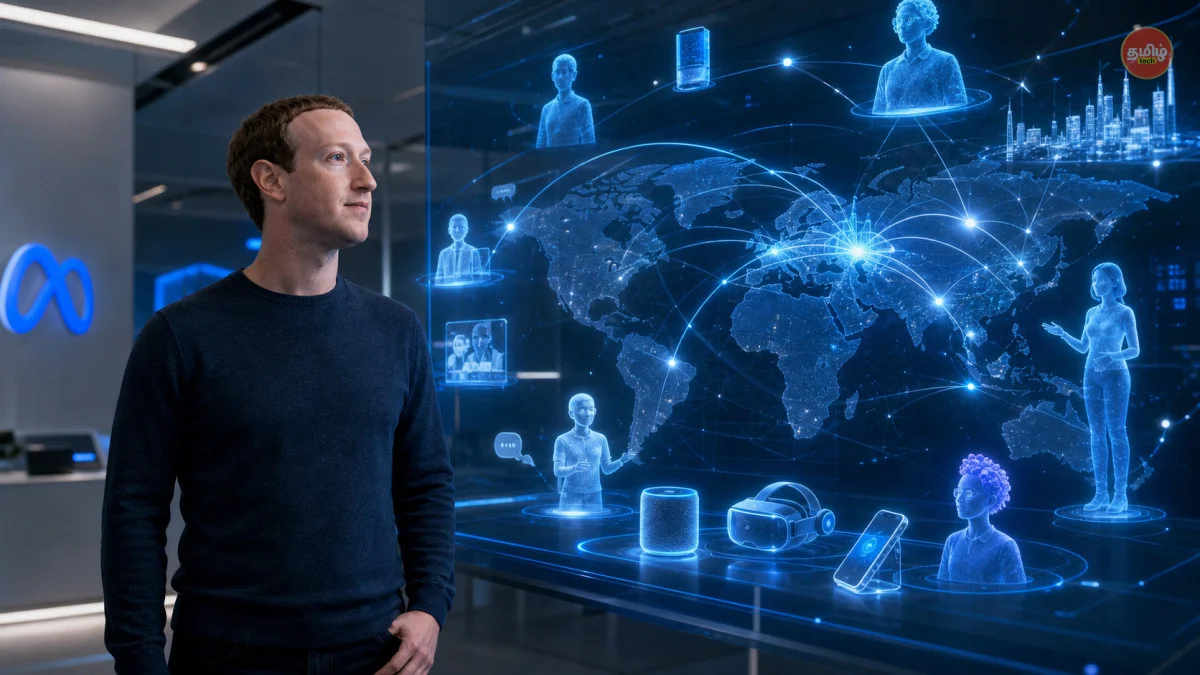
Mark Zuckerberg is at it again. This time, it's not about a new app or a metaverse update. The Meta boss just dropped a manifesto-style post that's more of a tech futurist's dream journal. He's sketching out a long-term ambition for artificial intelligence that's less about beating ChatGPT in a chatbot race and more about fundamentally rewiring how we live, work, and interact with the digital world.
Forget just another AI feature. Zuckerberg is talking about building the next-generation infrastructure for AI itself. He envisions a future where AI is the invisible layer powering everything, from your personal assistant to the tools that run small businesses in India. This isn't just about Meta's products; it's about creating a new platform for innovation, with the open-source Llama models at its core.
Details
The core idea is a three-pronged attack on the AI landscape. First, there's the 'personal AI' for every Meta user. This goes beyond the current AI assistant. Zuckerberg imagines AI characters that can act as companions or experts, and AI-powered business tools that can help a Kirana store owner in Mumbai manage inventory or a freelance designer in Bengaluru find clients.
Second, Meta is doubling down on its Llama family of models. They're not just making them bigger; they're aiming for a new class of foundational models that are more capable, efficient, and open. This is a direct play to attract developers and companies, especially in emerging markets like India, who want to build on top of powerful but customizable AI without being locked into a single vendor.
Third, and this is the really ambitious part, is the push for open-source AI. While competitors like Google and OpenAI often keep their most powerful models under wraps, Meta is betting that the future of AI is collaborative. By making Llama models more accessible, they're hoping to foster a global community of builders, which could accelerate innovation at a pace that closed systems can't match.
India Impact
For India, this is big news. The country is already a global hub for software development, and an open, powerful AI platform like Llama could be a game-changer. Imagine a startup in Hyderabad using Meta's models to create a local language AI for legal documents or a healthcare AI that understands regional dialects. The potential for creating India-specific solutions is immense.
It could also democratize AI access. Instead of relying on expensive, proprietary AI from foreign companies, Indian developers and businesses could build and customize their own AI solutions on the Llama stack. This aligns perfectly with the 'Make in India' ethos and could fuel the next wave of the digital economy, creating high-skilled jobs and fostering homegrown innovation.
Use Cases
Zuckerberg's vision isn't just abstract. He paints a picture of concrete applications. For the average person, it's an AI assistant that truly gets you, your context, and your needs. For creators, it's an AI that can help you script a YouTube video or design a graphic. For businesses, it's an AI that can automate customer service, analyze sales data, and even help with marketing, all in Indian languages and tailored to local markets.
Think of it as a super-powered version of the AI features already in WhatsApp or Instagram, but applied across the board. It's about making AI a practical, everyday tool rather than a novelty.
Honest Take
Let's be real. This is incredibly ambitious, and ambition doesn't always translate into success. Building foundational AI is a monumental task, and Meta has its share of critics who will question its commitment to openness when its own products are the primary beneficiaries.
The execution is key. Can Meta deliver on this grand vision? Can it build AI that is not only powerful but also safe, ethical, and accessible? The competition is fierce, and the pressure is on. But if anyone has the resources and the audacity to try, it's Meta. This manifesto might just be the start of the next big chapter in the AI race, and it's one we'll all be watching closely.





Comments (0)
Be the first to comment!