


Key Takeaways
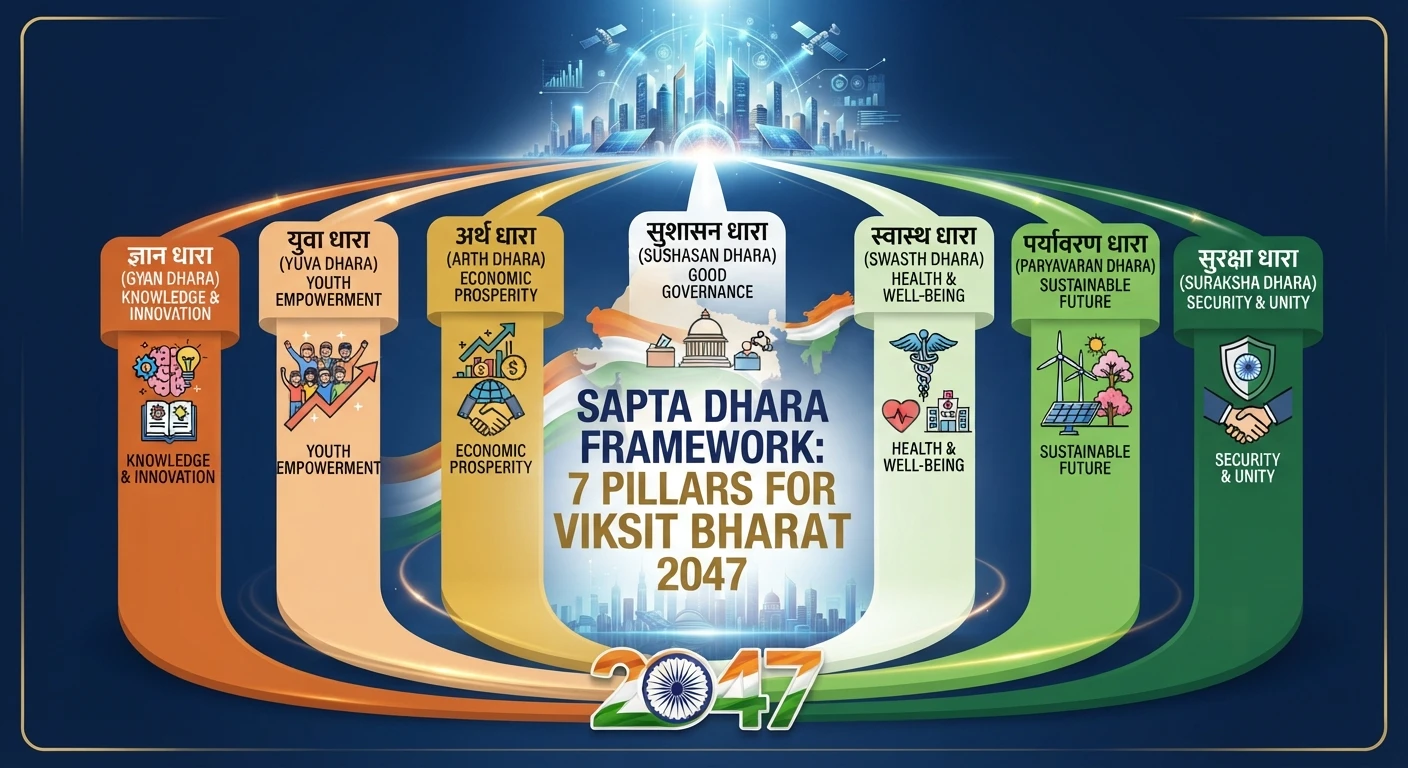
- PM Modi unveiled Sapta Dhara framework targeting Viksit Bharat by 2047
- Framework emphasizes digital infrastructure, green energy, and inclusive growth
- Each pillar integrates technology to drive economic transformation
- Focus on creating 100 million jobs through innovation and entrepreneurship
- Framework aligns with India's G20 presidency achievements and global positioning
What's the News
Prime Minister Narendra Modi recently unveiled the Sapta Dhara (seven-point) framework as the strategic roadmap for Viksit Bharat (Developed India) by 2047. This comprehensive approach integrates technology, sustainability, and inclusive growth to accelerate India's development trajectory. The framework builds upon India's achievements during its G20 presidency and positions the country as a global technology leader.
Details
The Sapta Dhara framework consists of seven interconnected pillars that form the foundation for India's development vision. Each pillar focuses on leveraging technology and innovation to address critical challenges while creating opportunities for sustainable growth. The framework emphasizes the role of digital infrastructure, renewable energy, healthcare accessibility, educational transformation, agricultural modernization, manufacturing excellence, and urban development.
Digital infrastructure forms the backbone of this vision, with plans to expand 5G coverage to rural areas, strengthen BharatNet connectivity, and promote digital public infrastructure. The green energy pillar targets 500 GW of renewable capacity by 2030, positioning India as a global leader in sustainable energy transition. Healthcare transformation focuses on leveraging AI and telemedicine to bridge the urban-rural healthcare divide.
India Impact
This framework directly impacts India's economic trajectory by creating an ecosystem where technology drives inclusive growth. The emphasis on digital public infrastructure aligns with India's success with UPI and Aadhaar, potentially creating similar platforms for healthcare, education, and financial services. The manufacturing focus builds upon the success of 'Make in India' and Production-Linked Incentive (PLI) schemes, targeting higher value-added production.
The framework also addresses India's demographic dividend by focusing on skill development and job creation. By integrating technology with traditional sectors like agriculture and textiles, the framework aims to create modern jobs while preserving India's cultural heritage. This approach could potentially position India as the world's back-office and innovation hub.
Use Cases
In practice, the Sapta Dhara framework manifests through several initiatives. Digital agriculture platforms could help farmers access real-time market data, weather information, and modern farming techniques through mobile apps. Smart city projects under the urban development pillar could integrate IoT sensors for traffic management, waste collection, and energy efficiency. Healthcare transformation might involve AI-powered diagnostic centers in tier-2 and tier-3 cities, connected to specialist hospitals in metro areas.
Manufacturing hubs could emerge around renewable energy parks, creating integrated ecosystems for green technology production. Educational institutions might adopt hybrid learning models combining physical classrooms with virtual reality labs and AI tutors, making quality education accessible beyond urban centers.
Honest Take
While the Sapta Dhara framework presents an ambitious vision, its success hinges on effective implementation and addressing ground-level challenges. India's track record with technology-led initiatives like Digital India and UPI shows promise, but scaling these to rural areas remains challenging. The framework's emphasis on green energy aligns with global trends but requires significant investment and technological transfer.
The seven-pillar approach provides a comprehensive roadmap, but coordination between central and state governments will be crucial. India's federal structure means states must actively participate in realizing this vision. The framework's focus on job creation through technology is forward-thinking, but reskilling the workforce for emerging technologies remains a significant challenge.
Nevertheless, the Sapta Dhara framework represents a thoughtful approach to balancing tradition with technology, creating opportunities while preserving cultural identity. If implemented effectively, it could genuinely transform India's development trajectory and position the country as a global leader in inclusive, technology-driven growth.





Comments (0)
Be the first to comment!