


Key Takeaways
- Astrobase is developing a fully reusable liquid-fuel rocket engine in Bengaluru as of July 2026.
- The startup's goal is to reduce satellite launch costs by nearly 40% using advanced 3D printing and Methalox fuel.
- Their upcoming launch vehicle is designed to carry a 500kg payload to Low Earth Orbit (LEO).
- This development positions India as a serious competitor to global players like SpaceX in the small-satellite market.
Space technology in India has taken a massive leap forward. While we used to look at NASA or SpaceX for 'cool' rocket tech, the action has shifted right to our backyard in Bengaluru. Astrobase, a homegrown startup, is currently working on something that was considered impossible for a private Indian company just a few years ago: a fully reusable rocket engine and a dedicated launch vehicle. It is Friday, July 31, 2026, and the Indian space-tech ecosystem is buzzing with this news because it’s not just about reaching space anymore; it’s about doing it repeatedly with the same hardware.
The Shift from 'Use and Throw' to Reusable Rockets
For decades, rockets were like disposable pens. You use them once to put a satellite in orbit, and the expensive engine and booster parts fall back into the ocean or burn up in the atmosphere. This is why space missions used to cost hundreds of millions of dollars. But things changed when reusability became the gold standard. Astrobase is now implementing this philosophy in India. They are building a vertical-takeoff, vertical-landing (VTVL) system. This means the rocket goes up, releases the satellite, and the first stage comes back to land on a designated pad, just like what we see in those viral videos from the US.
What makes Astrobase special is their focus on the small-satellite market. Nowadays, everyone from internet service providers to weather monitoring agencies wants to send 'cubesats' or small satellites into orbit. Big rockets like the GSLV are often too large and expensive for these small players. Astrobase is building a 'taxi service' for space—a smaller, more efficient, and reusable rocket that can launch frequently without the massive overhead costs of traditional missions. This is a huge win for the 'Make in India' initiative in the high-tech sector.
The Tech Behind the Engine: Methane and 3D Printing
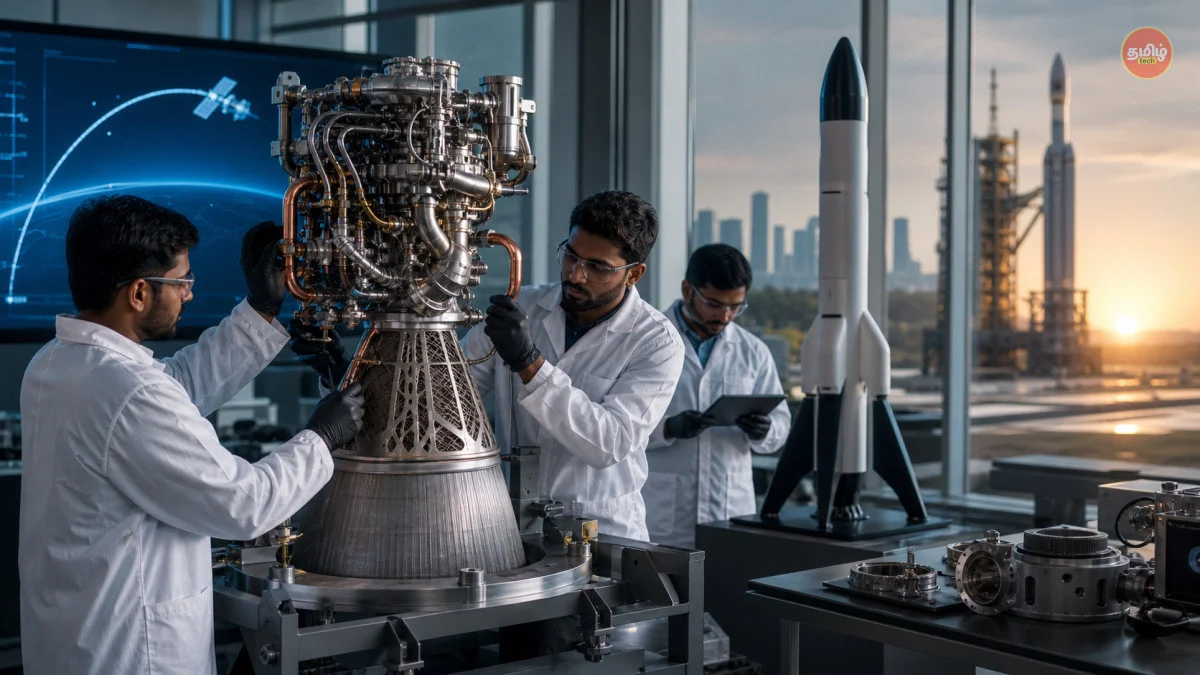
Let's talk about the heart of the machine—the engine. Astrobase is using a Methane-Liquid Oxygen (Methalox) propellant system. Why methane? Because it burns cleaner than traditional kerosene-based fuels (RP-1). When you want to reuse an engine, you don't want a lot of soot and gunk building up inside the valves and chambers. Methane keeps the engine clean, making it much easier to refurbish and fly again within a few days. This is the same tech path chosen by the world's most advanced space companies, and seeing a Bengaluru startup master this is incredible.
Another secret sauce is 3D printing. Traditional rocket engines have thousands of tiny, complex parts that need to be welded together, which takes months and increases the chance of failure. Astrobase is using industrial-grade metal 3D printing to manufacture the entire combustion chamber as a single piece. This reduces the part count significantly, makes the engine lighter, and allows them to iterate designs in weeks rather than years. In our view at TamilTech, this level of engineering speed is what will allow Indian startups to beat global giants who are bogged down by older manufacturing processes.
India Impact: Why This Matters for Your Pocket
You might wonder, 'How does a rocket in Bengaluru affect me?' Well, it's all about the data. Most of the services we use today—GPS navigation, high-speed rural internet, and even agricultural monitoring for farmers—depend on satellites. When companies like Astrobase bring down the cost of launching these satellites, the cost of the data they provide also drops. We are looking at a future where satellite-based internet could become as affordable as a 5G recharge plan in India because the infrastructure costs in space have plummeted.
Furthermore, this creates a massive job market for Indian engineers. We no longer have to see our best minds migrate to the US or Europe to work on cutting-edge aerospace projects. Bengaluru has officially become the 'Space City' of Asia. With the support of IN-SPACe (the Indian government's space regulator), companies like Astrobase are getting access to ISRO’s testing facilities, which is a perfect example of a public-private partnership working effectively in 2026. This ecosystem is attracting global investors who now see India as the most cost-effective place to build and launch space hardware.
How It Works: The Launch and Landing Sequence
The Astrobase launch vehicle operates in a very specific sequence. First, the main engine ignites, producing enough thrust to lift the 500kg payload. Once it reaches a certain altitude, the stages separate. While the second stage continues its journey to deliver the satellite to Low Earth Orbit, the first stage performs a 'boost-back burn.' This is where the magic happens. Using complex algorithms and grid fins (small foldable wings), the rocket steers itself back toward the landing zone.
As it nears the ground, the engine relights for a 'landing burn' to slow down the descent to just a few kilometers per hour. Leg-like structures deploy, and the rocket touches down softly. After a quick inspection and refueling, this same engine can be ready for another mission. This cycle is what makes the economics work. Instead of building a new ₹100 crore rocket every time, you are just paying for the fuel and basic maintenance, which is a fraction of the original cost.
Comparing Astrobase with Global and Local Rivals
In the global arena, SpaceX is the king of reusability, but their rockets are designed for massive loads. Astrobase is carving out a niche in the 'Small Lift' category. Locally, we have players like Skyroot and Agnikul who have already done amazing work. However, Astrobase is doubling down on 'total reusability' from day one. While others might focus on 3D printing or solid fuels, Astrobase’s bet on the Methalox VTVL system puts them in a different league of efficiency.
The pros of the Astrobase approach are clear: lower costs, faster turnaround times, and a greener footprint. The cons? It is incredibly hard to get the landing right. One small software glitch and the rocket becomes a very expensive firework. But based on the simulation data and the static fire tests they’ve conducted in early 2026, the team seems confident. They are not just building a rocket; they are building a sustainable business model for the next decade of space exploration.
TamilTech’s Honest Take
At TamilTech, we think this is the most exciting time to be following Indian technology. We've seen the smartphone revolution and the UPI revolution; now we are witnessing the Space revolution. Astrobase’s move to build a reusable engine in Bengaluru is a bold statement to the world. It shows that Indian startups aren't just good at software and apps—we are now world-class in heavy hardware and complex physics too.
If you are a student or a tech enthusiast, keep an eye on this space. The demand for aerospace engineers, data analysts, and materials scientists is going to skyrocket (pun intended). We expect Astrobase to conduct its first full-scale orbital attempt by the end of this year or early 2027. If they succeed in landing that booster back on Indian soil, it will be a 'Chandrayaan moment' for the private sector. Stay tuned to TamilTech for more updates on this!


Comments (0)
Be the first to comment!