


Key Takeaways
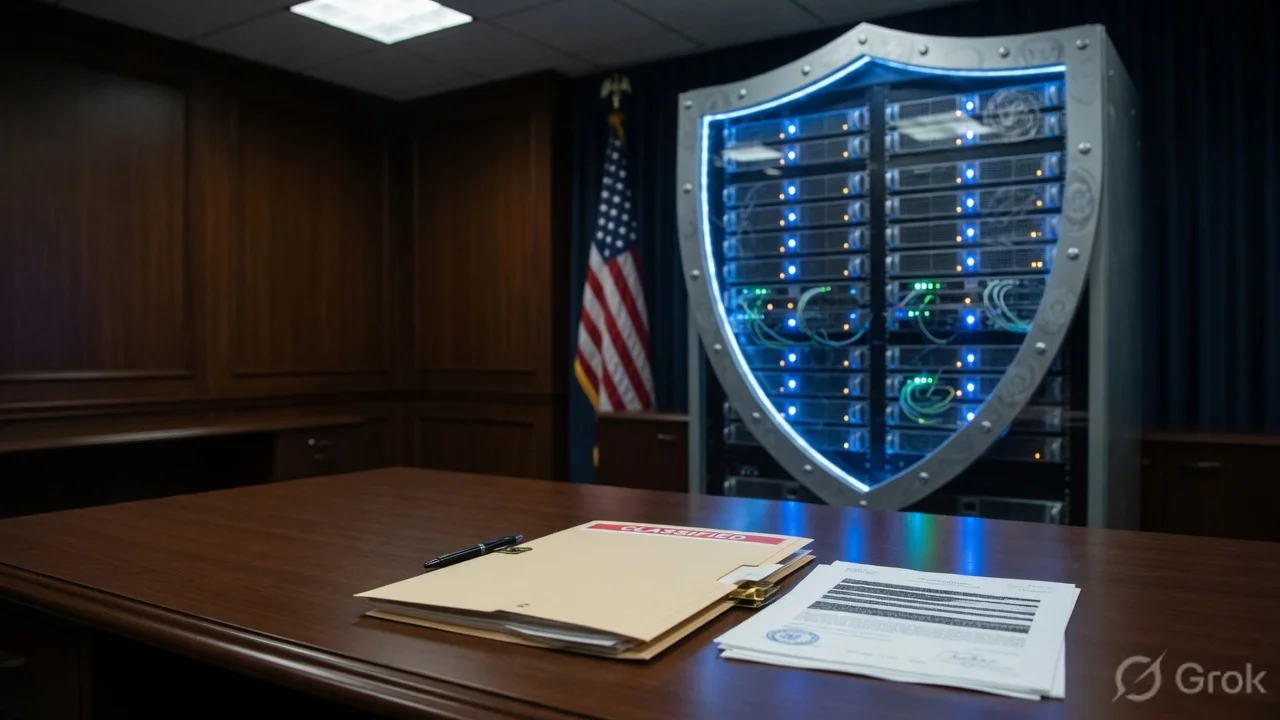
- President Trump signed a new AI Executive Order on June 2, 2026, focusing primarily on AI's impact on national cybersecurity.
- The new order is a 'scaled-back' version, removing many strict reporting requirements for AI model training that were part of previous proposals.
- Tech companies will face less scrutiny regarding bias and social impact, with the government shifting focus to preventing AI-driven hacking and infrastructure attacks.
- For the Indian tech sector, this signals a potential global shift towards 'pro-innovation' deregulation, making it easier for startups to deploy models without heavy compliance costs.
- The bottom line: The US is prioritizing AI speed and security over safety guardrails to maintain a competitive edge against global rivals.
The Big Shift in US AI Policy
So, here is the big news coming in from the White House. President Trump has officially signed a new Executive Order (EO) regarding Artificial Intelligence, and it is causing quite a stir in the tech world. If you have been following the AI regulation saga over the last couple of years, you know that there has been a massive debate: do we slow down to keep things safe, or do we speed up to stay ahead? It looks like the US government has made its choice. This new order is a significant departure from the more restrictive drafts we saw circulating late last year and in early 2026. Instead of putting AI under a microscope for every possible social risk, the focus has narrowed down to one major thing: Cybersecurity.
I have been looking through the details, and the most striking part is how much has been cut out. This isn't just a tweak; it is a full-scale redesign of how the government intends to interact with companies like OpenAI, Google, and Meta. While the previous administration and even some earlier drafts from this year pushed for deep 'transparency reports' where companies had to disclose exactly how they trained their models, this new EO takes a much lighter touch. It seems the goal is to let the tech giants run as fast as they can, provided they don't accidentally hand the keys of the nation's power grid to a hacker using an AI tool.
What is Actually in the Order?
Let’s talk about the meat of the document. The core of this Executive Order is the protection of 'Critical Infrastructure.' We are talking about power plants, water systems, and financial networks. The order mandates that AI developers must ensure their powerful models cannot be easily 'jailbroken' to create biological weapons or launch massive automated cyberattacks. This makes sense—nobody wants a rogue AI helping a bad actor shut down the internet. However, the way they are enforcing this is much less 'hands-on' than before. Sources close to the drafting process say that the mandatory 'pre-release' government audits that were once on the table have been replaced by a more voluntary self-certification process for most applications.
Another major change is the removal of strict language regarding AI bias and 'algorithmic fairness.' In 2024 and 2025, there was a lot of talk about making sure AI doesn't discriminate. But in this 2026 version, those sections have been heavily diluted. The administration’s logic seems to be that over-regulating for bias could stifle innovation and let other countries—specifically China—take the lead in the AI arms race. By scaling back these requirements, the US is essentially telling tech companies, 'We trust you to handle the ethics; just make sure the software is secure from hackers.'
The India Angle: Why Should We Care?
Now, why does this matter for us in India? You might think, 'That’s a US policy, how does it affect my life in Bengaluru or Chennai?' Well, it affects us a lot. Most of the AI models we use every day—from ChatGPT to the underlying tech in our favorite apps—come from these US-based companies. When the US government relaxes its rules, these companies can move faster, launch features sooner, and lower their operational costs. For Indian developers and startups building on top of these models, this could mean more powerful tools becoming available without the 'red tape' that often delays global rollouts.
Furthermore, India is currently working on its own AI framework, the 'India AI Mission.' Historically, our regulators look at what the US and the EU are doing before finalizing our own laws. With the US taking a 'pro-innovation' and 'light-regulation' stance, it puts pressure on Indian policymakers to do the same. If India becomes too strict while the US is being lenient, we risk our best AI talent moving to the States where they can build faster. I expect to see a lot of debate in the Indian parliament about whether we should follow this 'cybersecurity-first' approach or stick to a more comprehensive safety-first model like the European Union's AI Act.
TamilTech’s Analysis: Is This a Good Move?
Honestly, this is a double-edged sword. On one hand, the tech enthusiast in me is excited. Less regulation means we get to see what these AI models are truly capable of without them being 'nerfed' by government committees. We are at a point in 2026 where AI is helping us write code, discover new medicines, and manage traffic in real-time. If we slow that down too much, we lose out on those benefits. The focus on cybersecurity is also spot on—in an age where deepfakes and automated phishing are becoming common, we need the government to ensure our digital borders are safe.
On the other hand, 'less scrutiny' is a phrase that should make us a bit nervous. We have seen what happens when tech companies are left to 'self-regulate'—think back to the early days of social media. By removing the requirements to report on training data and bias, we might be opening a Pandora's box of misinformation and unfair systems that will be very hard to fix later. If an AI model starts making biased decisions about who gets a loan or a job, and there’s no government oversight to catch it, the social cost could be huge. My take? It’s a win for the stock market and tech progress, but a potential headache for digital rights and long-term safety.
What Happens Next?
Expect the big tech CEOs to be very happy with this. We will likely see a surge in new model releases over the next six months as companies no longer fear being bogged down by the 'scrapped' version of the EO. However, don't be surprised if this leads to a clash with the EU. Europe is going in the opposite direction with very strict rules, and we might end up with a 'splinternet' where AI features available in the US and India are banned in Europe. For now, keep an eye on how these companies handle their new freedom. Will they use it to innovate responsibly, or will they cut corners? We’ll be tracking every update right here at TamilTech.


Comments (0)
Be the first to comment!